
All products

Sort by:
106 products
106 products
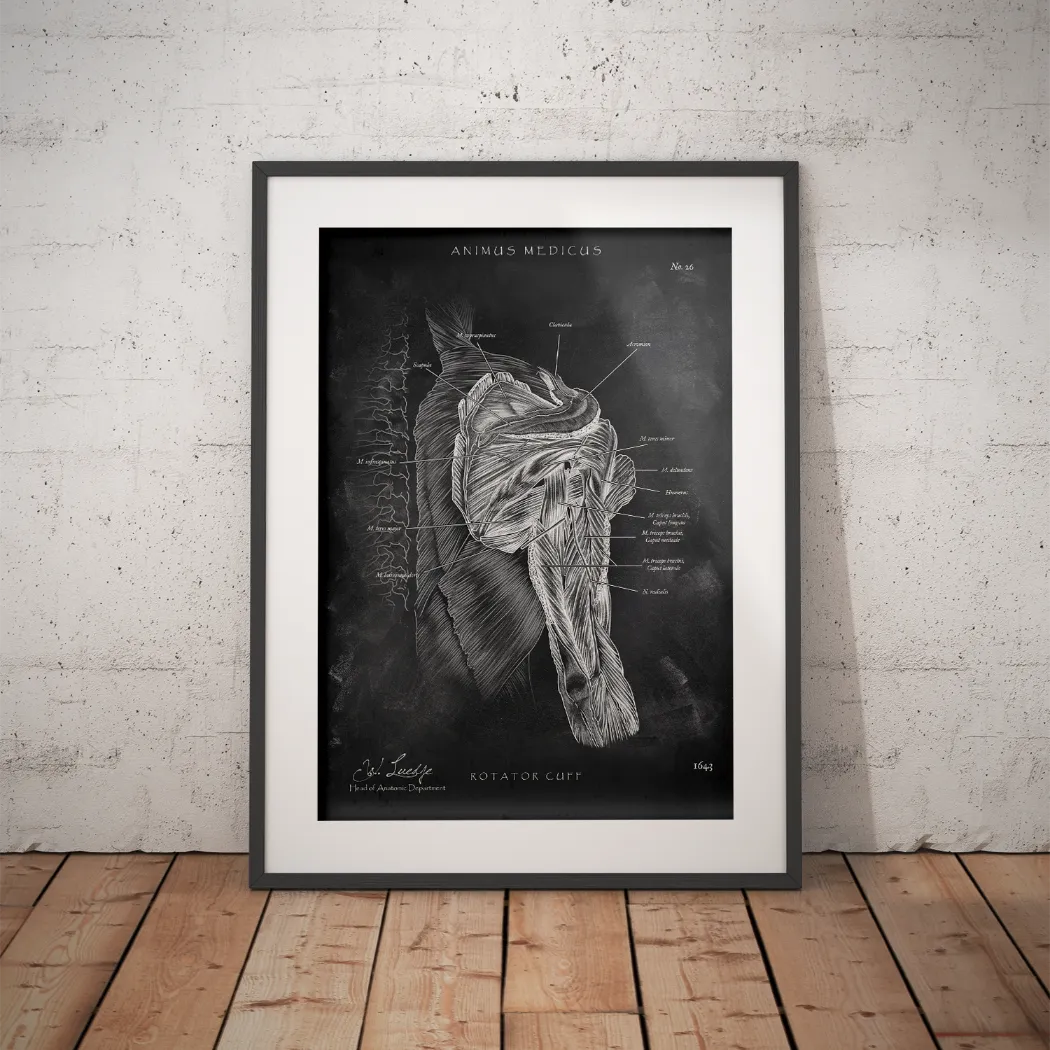
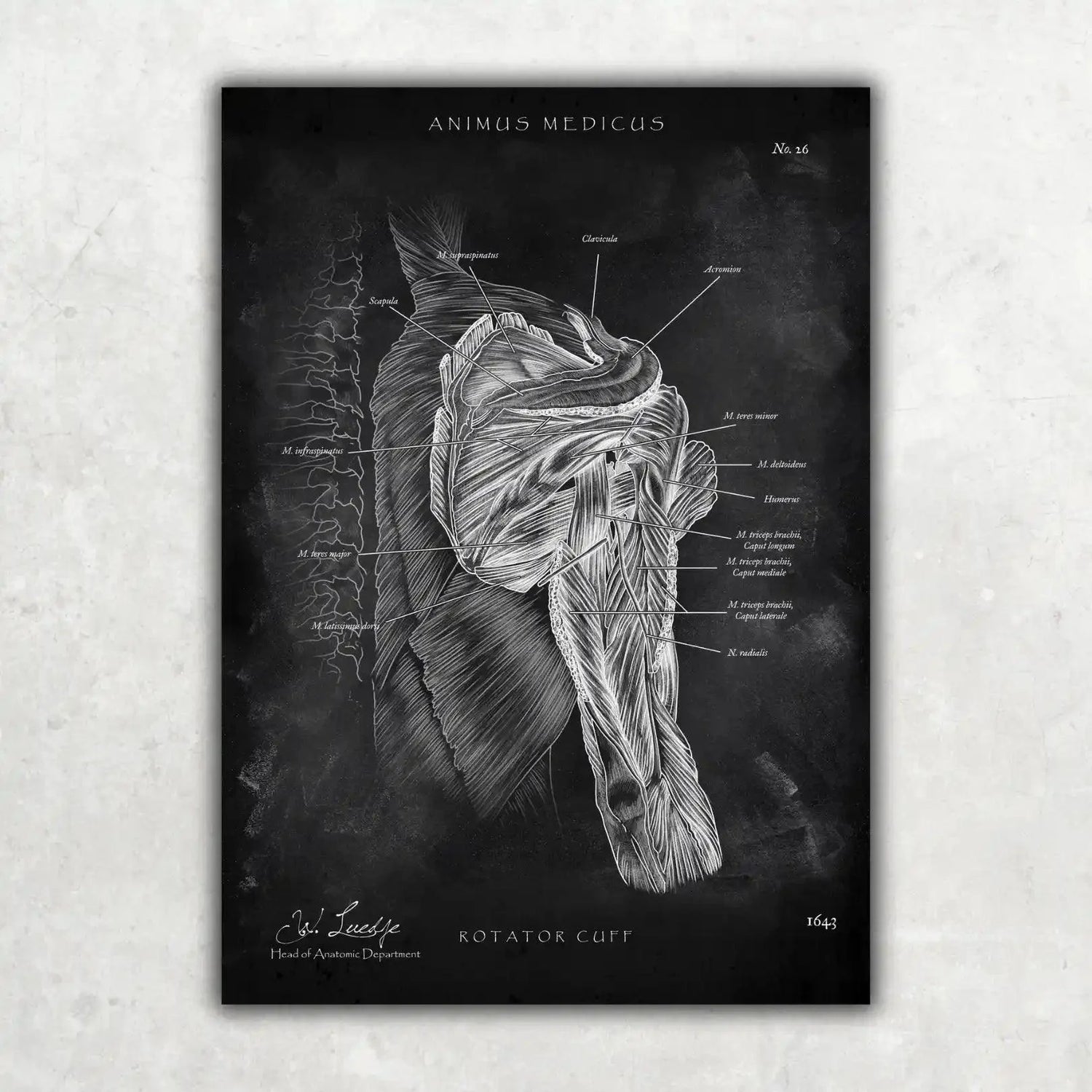
What is the rotator cuff?
Unlike the hip joint, the shoulder joint has only weak bony guidance due to its relatively small socket. Although this allows for a great deal of freedom of movement, it offers little stability. An important function of the rotator cuff is therefore to stabilize the shoulder joint. The individual muscles are responsible for internal and external rotation as well as abduction of the arm.
If you are a fan of the shoulder yourself or have difficulty explaining the rotator cuff to others, then this motif is just right for you!
Which muscles belong to the rotator cuff?
The rotator cuff includes:
1. M. infraspinatus
2. M. supraspinatus
3. M. subscapularis
4. M. teres minor
What you get:
- Overview of the shoulder girdle in the Chalkboard Edition
- Printed on high-quality premium paper
- UV protective laminate for long-lasting colors
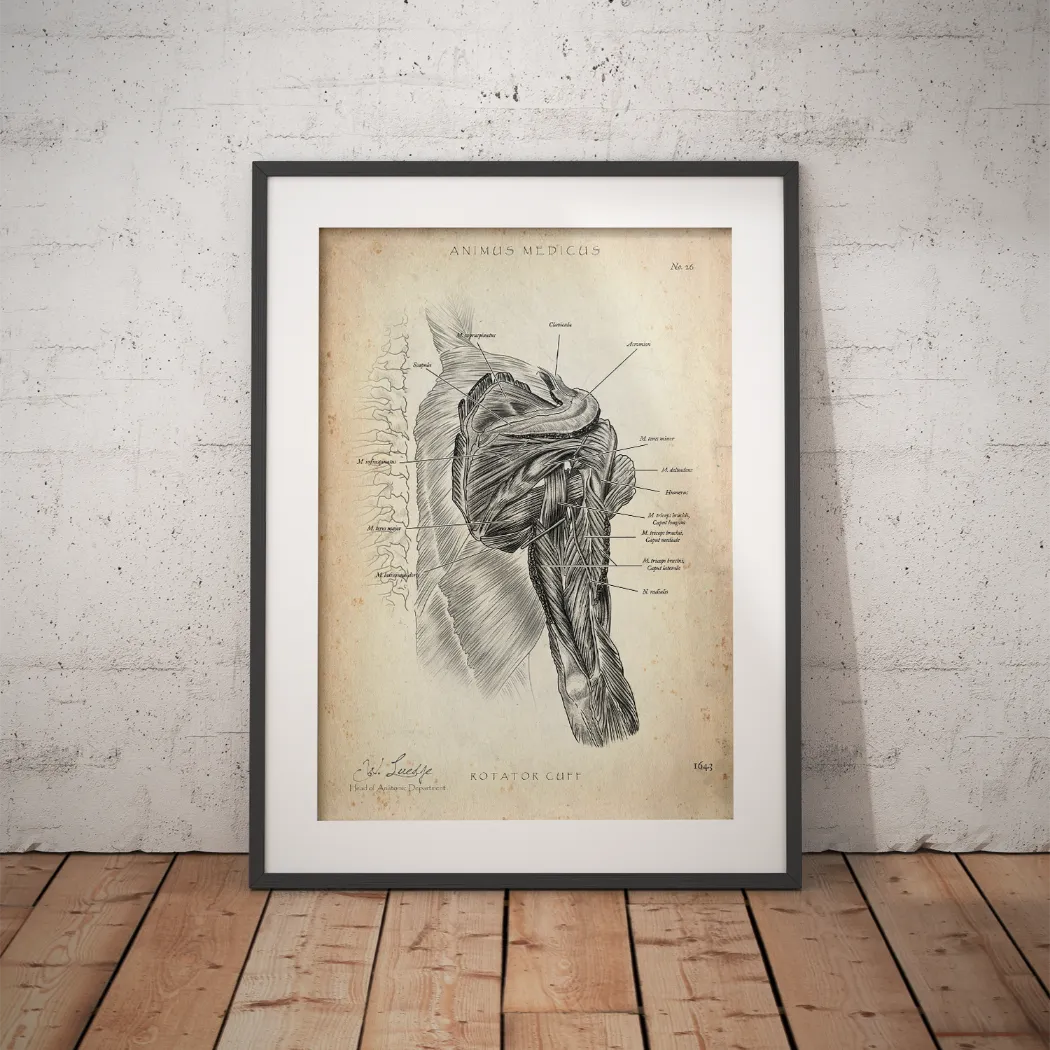
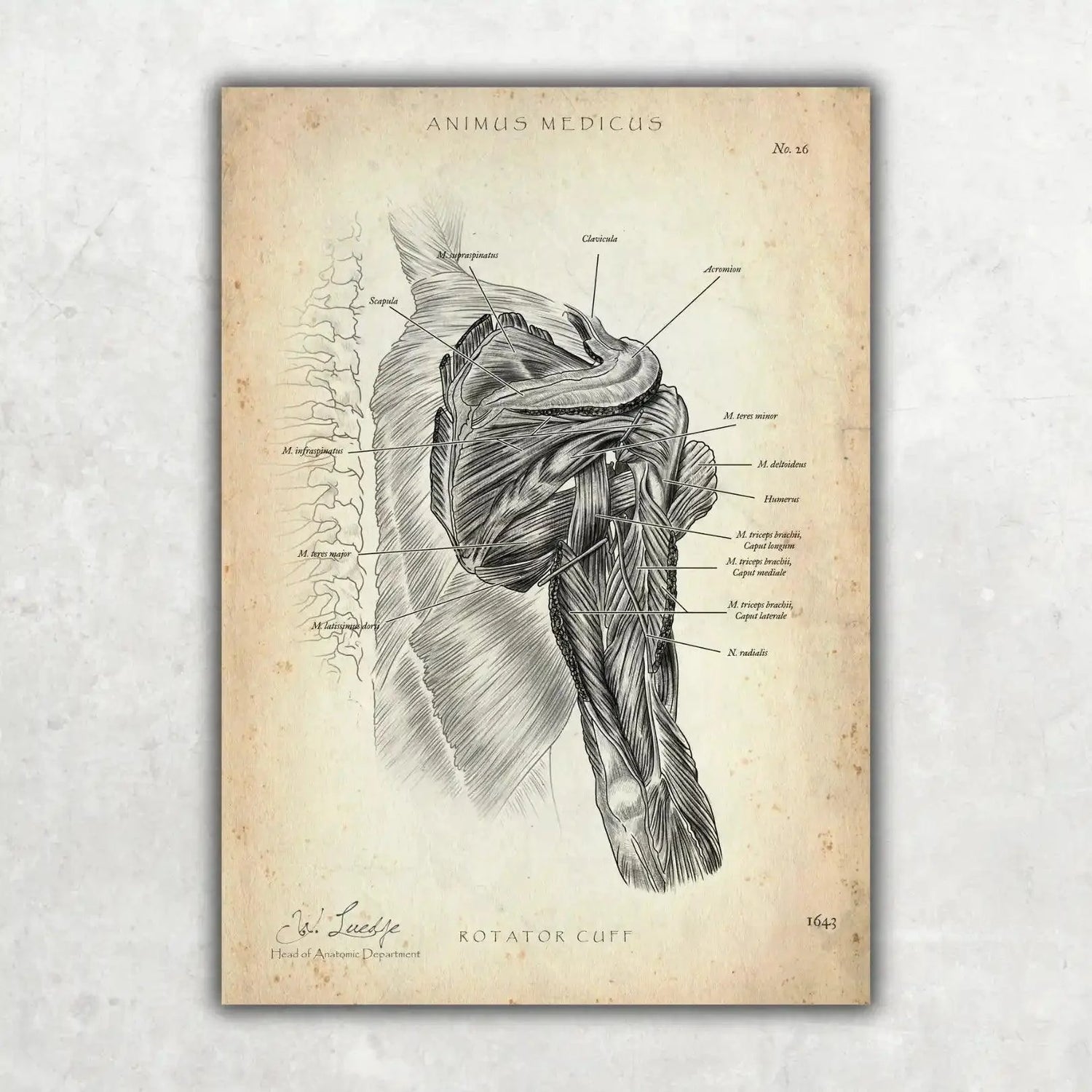
What is the Rotator Cuff?
Unlike the hip joint, the shoulder joint has only a weak bony guidance due to its relatively small glenoid cavity. While it offers a lot of freedom of movement, it provides little stability. Therefore, one of the essential functions of the rotator cuff is to stabilize the shoulder joint. The individual muscles are responsible for internal and external rotation as well as abduction of the arm.
If you're a fan of the shoulder or have difficulty explaining the rotator cuff to others, then this poster is just what you need!
Which Muscles Make Up the Rotator Cuff?
The rotator cuff includes:
- Infraspinatus muscle (M. infraspinatus)
- Supraspinatus muscle (M. supraspinatus)
- Subscapularis muscle (M. subscapularis)
- Teres minor muscle (M. teres minor)
What You Get:
- Overview of the shoulder girdle
- Printed on premium quality paper
- UV-protective laminate for long-lasting colors
- Optionally available with a black frame without matting
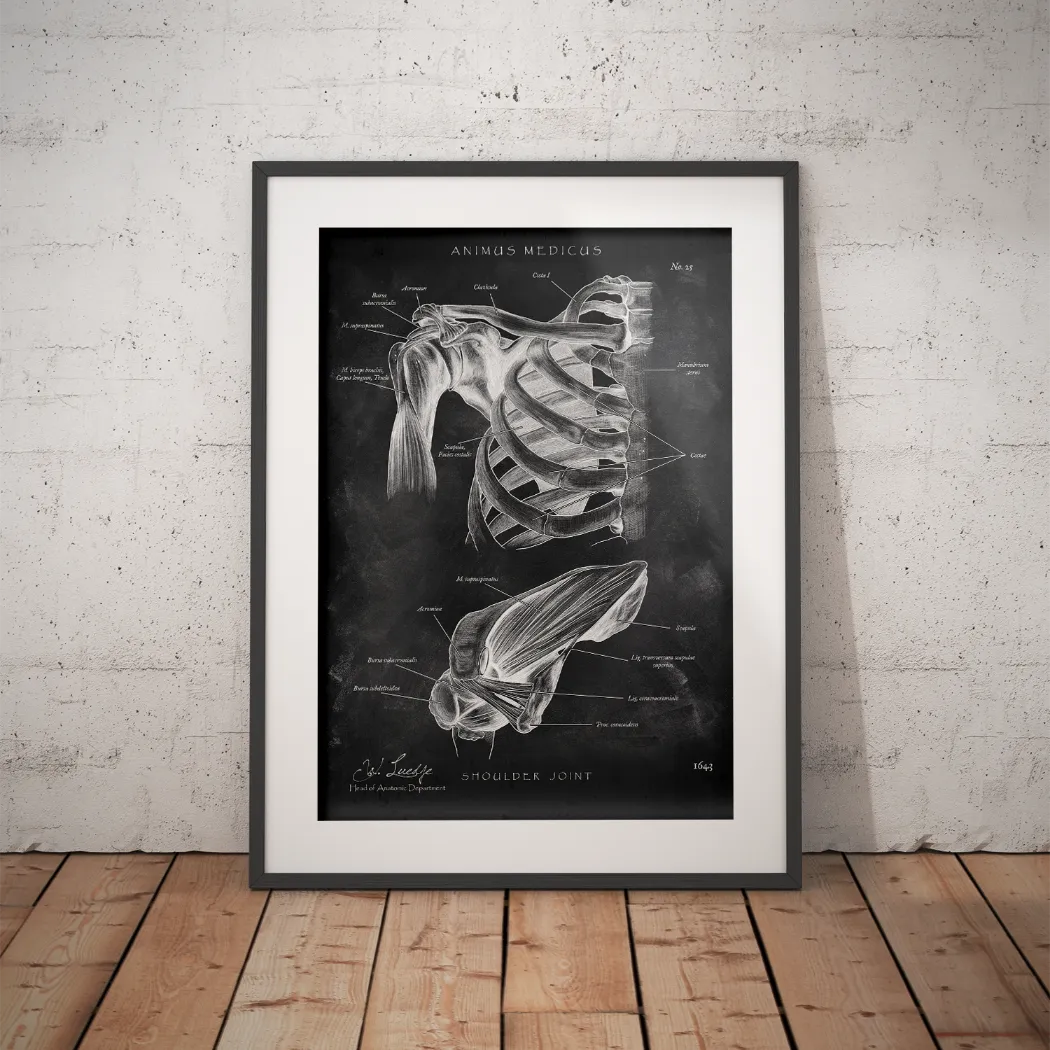
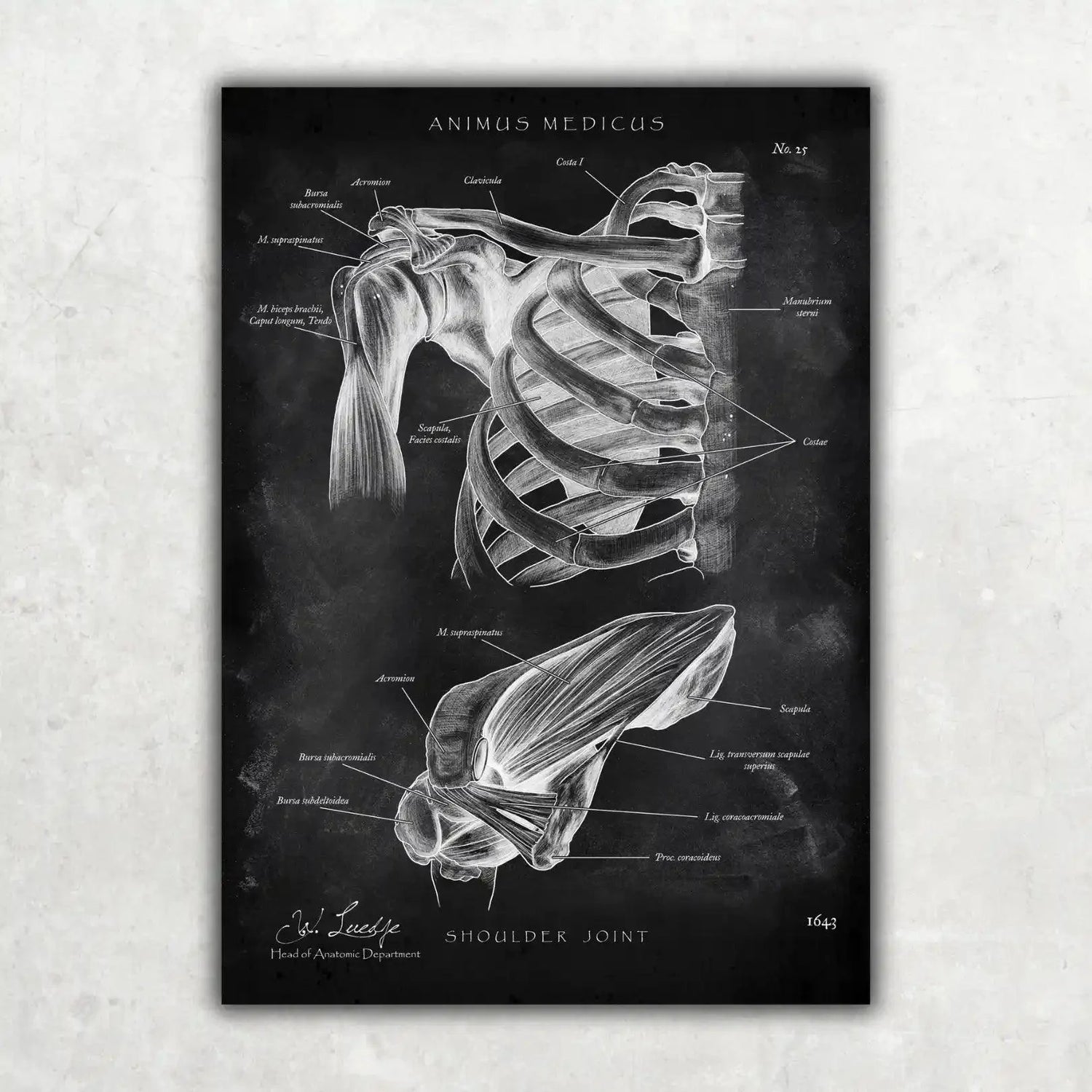
How is the shoulder joint structured?
A total of five joints are involved in shoulder movements. In addition, there are numerous muscles and ligaments. In contrast to the hip, the shoulder is significantly more mobile, but also more unstable.
The largest and most important joint here is the shoulder joint. In the shoulder joint, the head of the humerus articulates with the joint surface of the scapula.
However, the shoulder is also very susceptible to injury and pain, which is why a thorough knowledge of its anatomy can be extremely helpful in preventing, understanding, and treating injuries.
Can you already explain the shoulder perfectly? This motif will definitely help you do so, and it looks great too...
What you get:
- Detailed overview of the shoulder joints in the Chalkboard Edition
- Printed on high-quality premium paper
- UV protective laminate for long-lasting colors
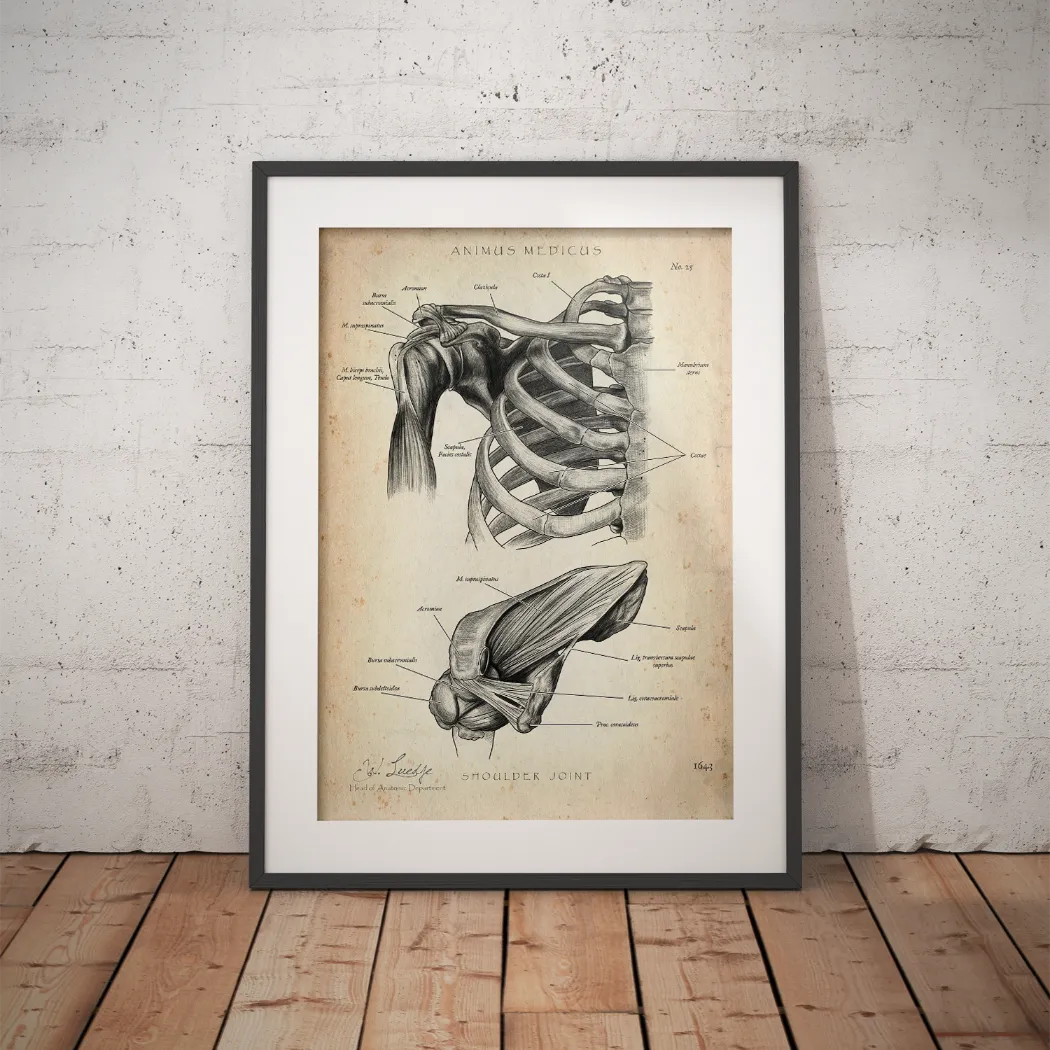
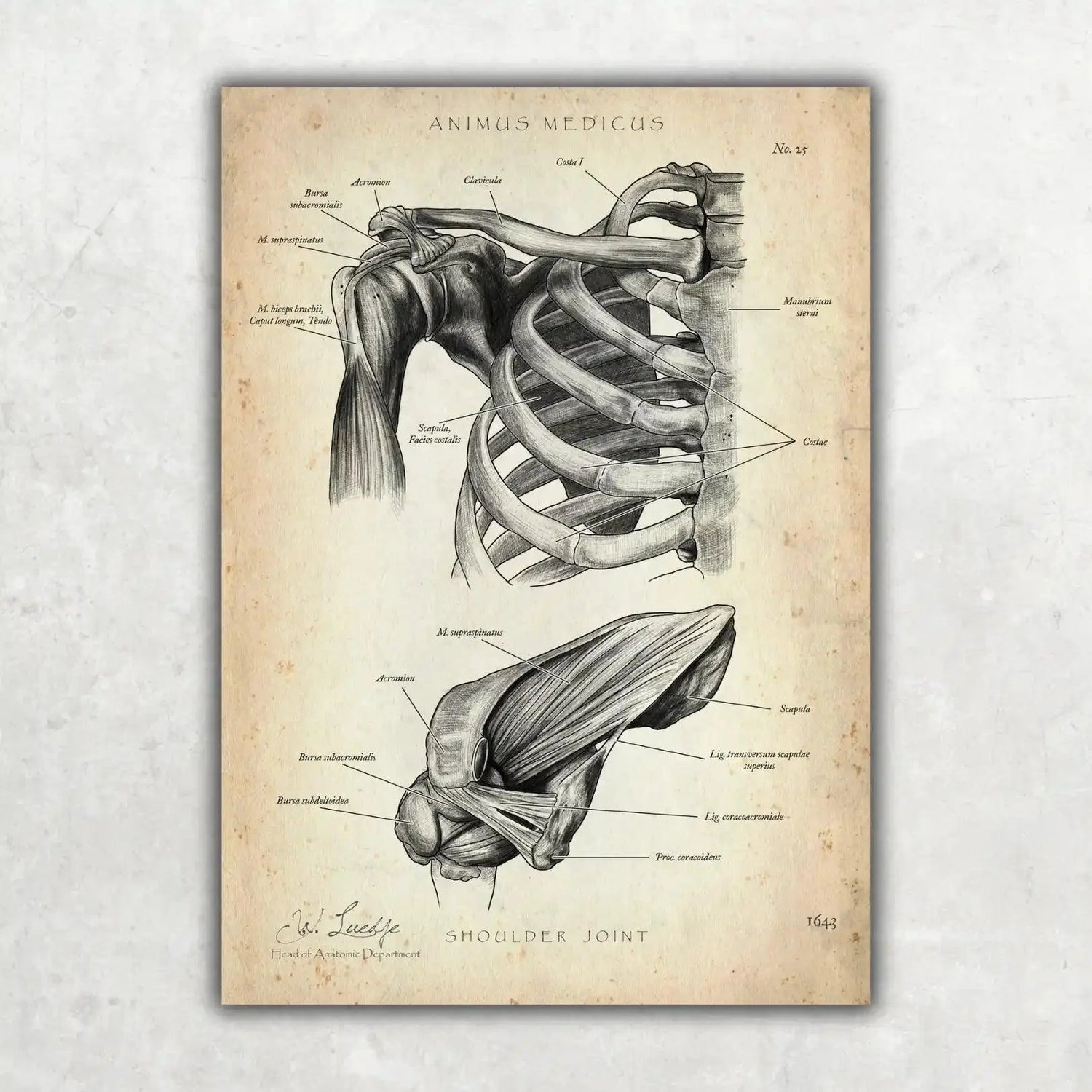
How is the Shoulder Joint Structured?
A total of 5 joints are involved in shoulder movements, along with numerous muscles and ligaments. The shoulder is much more mobile compared to the hip, but it is also less stable.
The largest and most important joint here is the shoulder joint. In the shoulder joint, the head of the humerus articulates with the glenoid cavity of the scapula.
However, the shoulder is also very susceptible to injuries and pain, which is why detailed knowledge of its anatomy can be extremely helpful in preventing, understanding, and treating injuries.
Can you already explain the shoulder perfectly? This poster will definitely help you and looks amazing at the same time...
What You Get:
- Detailed overview of the shoulder joints
- Printed on premium quality paper
- UV-protective laminate for long-lasting colors


What are the functions of the shoulder muscles?
The shoulder muscles move and stabilize the shoulder joint. Since the highly mobile shoulder joint is only weakly secured by ligaments, the shoulder muscles have an important protective function.
In addition, the shoulder muscles fix the shoulder girdle and thus the upper extremity to the torso. The shoulder muscles can be divided into the muscles that move the shoulder girdle and the muscles that move the upper arm.
Do you know all the muscles of the shoulder and can you explain them perfectly? With this motif, you'll never have any trouble again!
What you get:
- Detailed illustration of the shoulder muscles in the Chalkboard Edition
- Printed on high-quality premium paper
- UV protective laminate for long-lasting colors
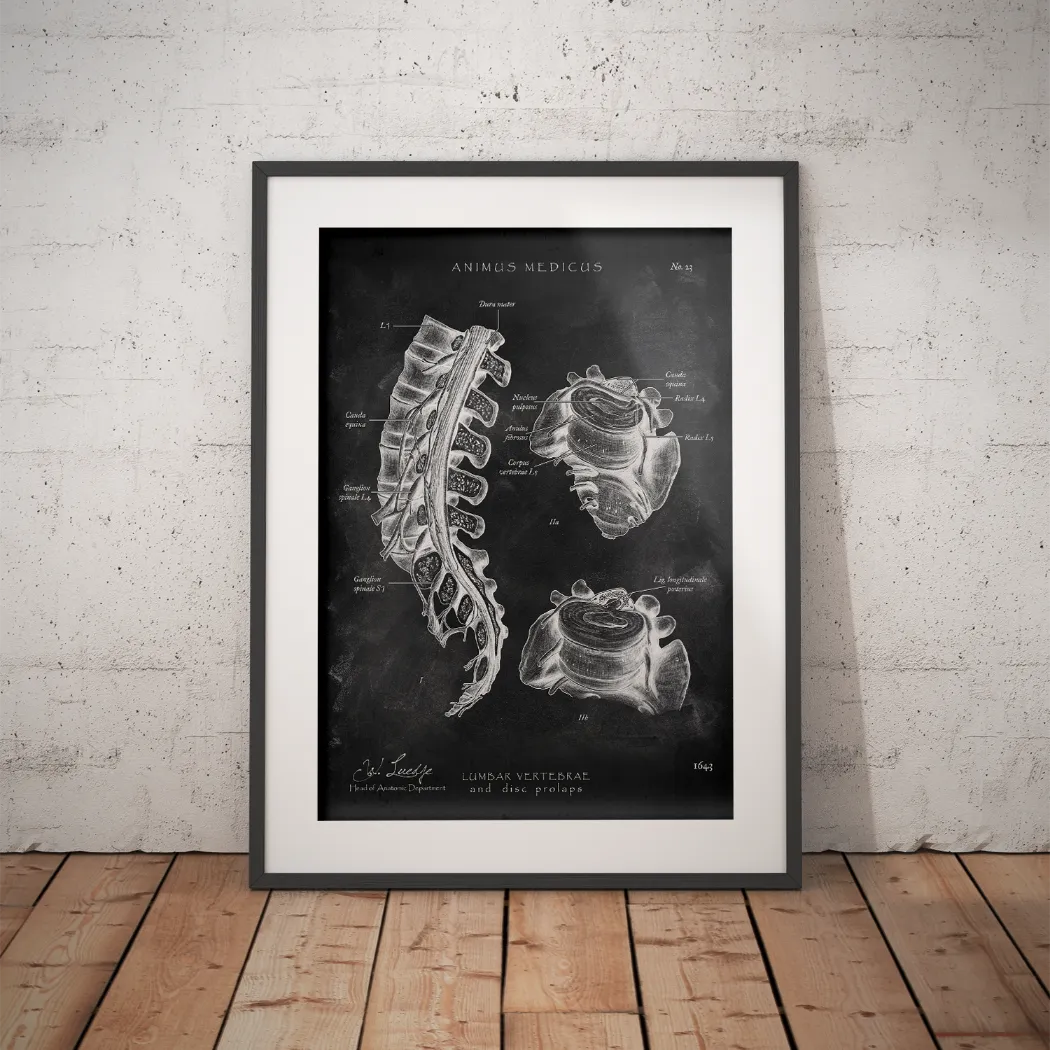
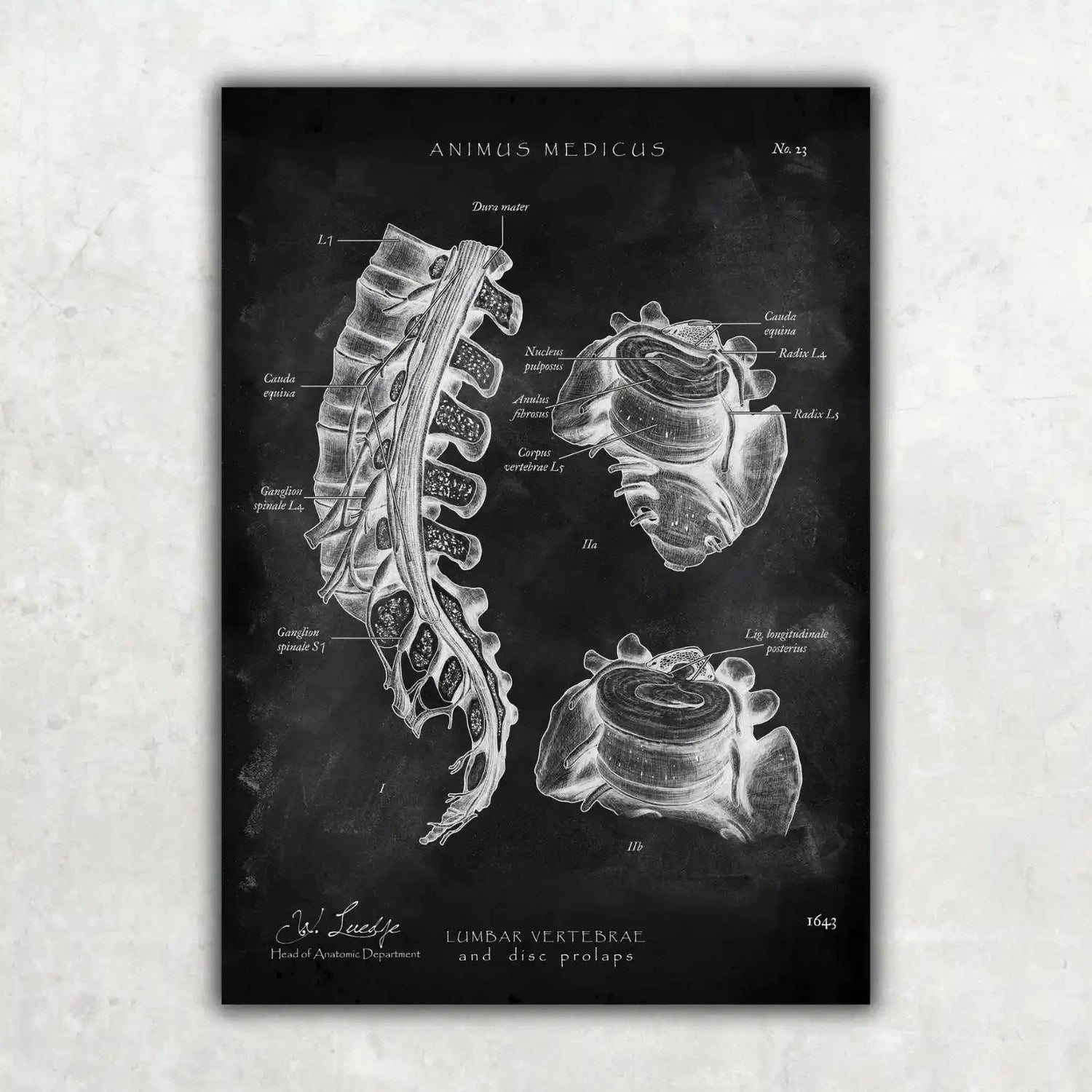
Have you ever had back pain?
We hope not—but did you know that around 20% of all 45- to 55-year-olds suffer from a herniated disc? That's quite common!
So it makes sense to know exactly what a herniated disc looks like, how it happens, and what you can do about it.
To help you explain the pathogenesis of a herniated disc to others—and do so in style—we have designed this prolapse motif.
If you are a doctor, student, physical therapist, or nurse, or if you are simply looking for the perfect gift for any occasion, then this artwork is a must-have!
What you will receive:
- Overview of a herniated disc in the Chalkboard Edition
- Print on high-quality premium paper
- UV protective laminate for long-lasting colors
- 100% satisfaction guarantee
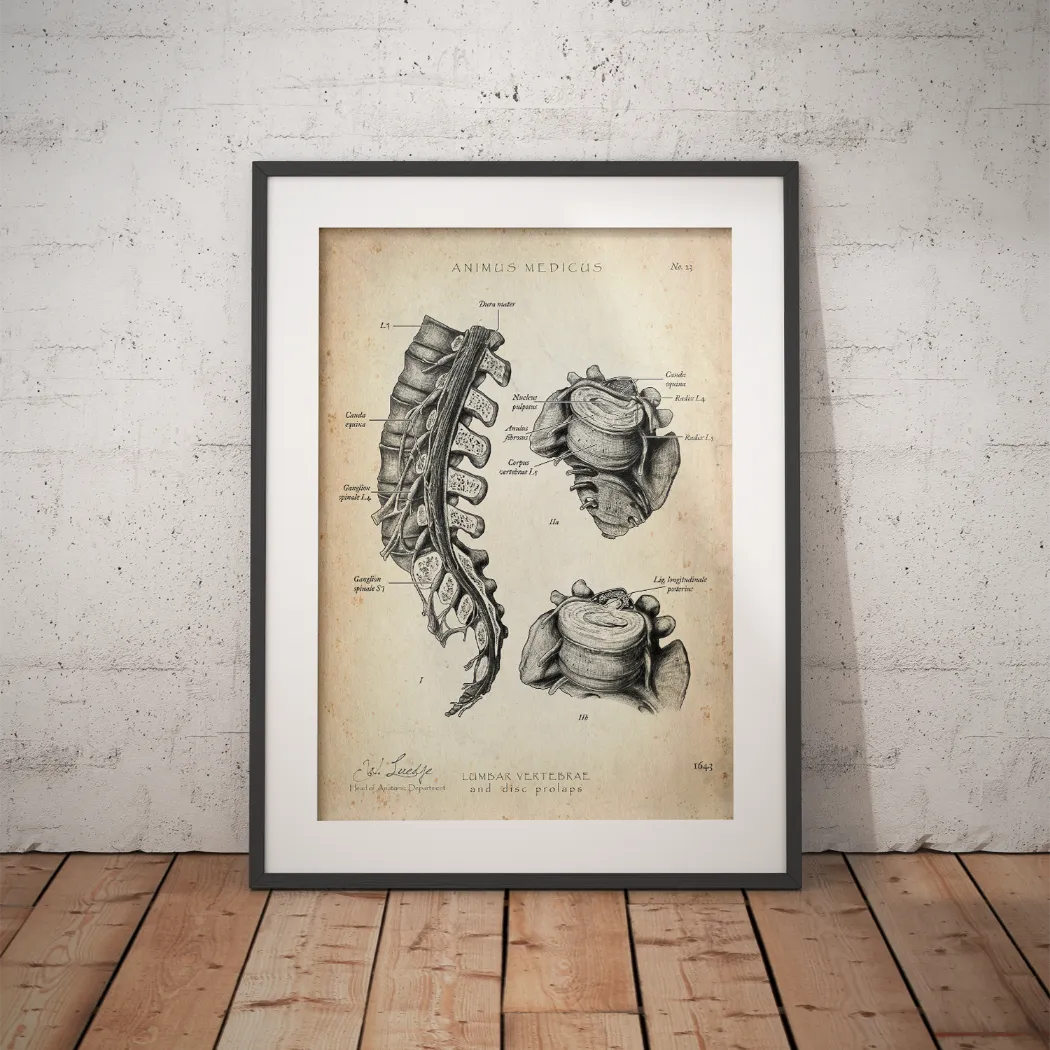
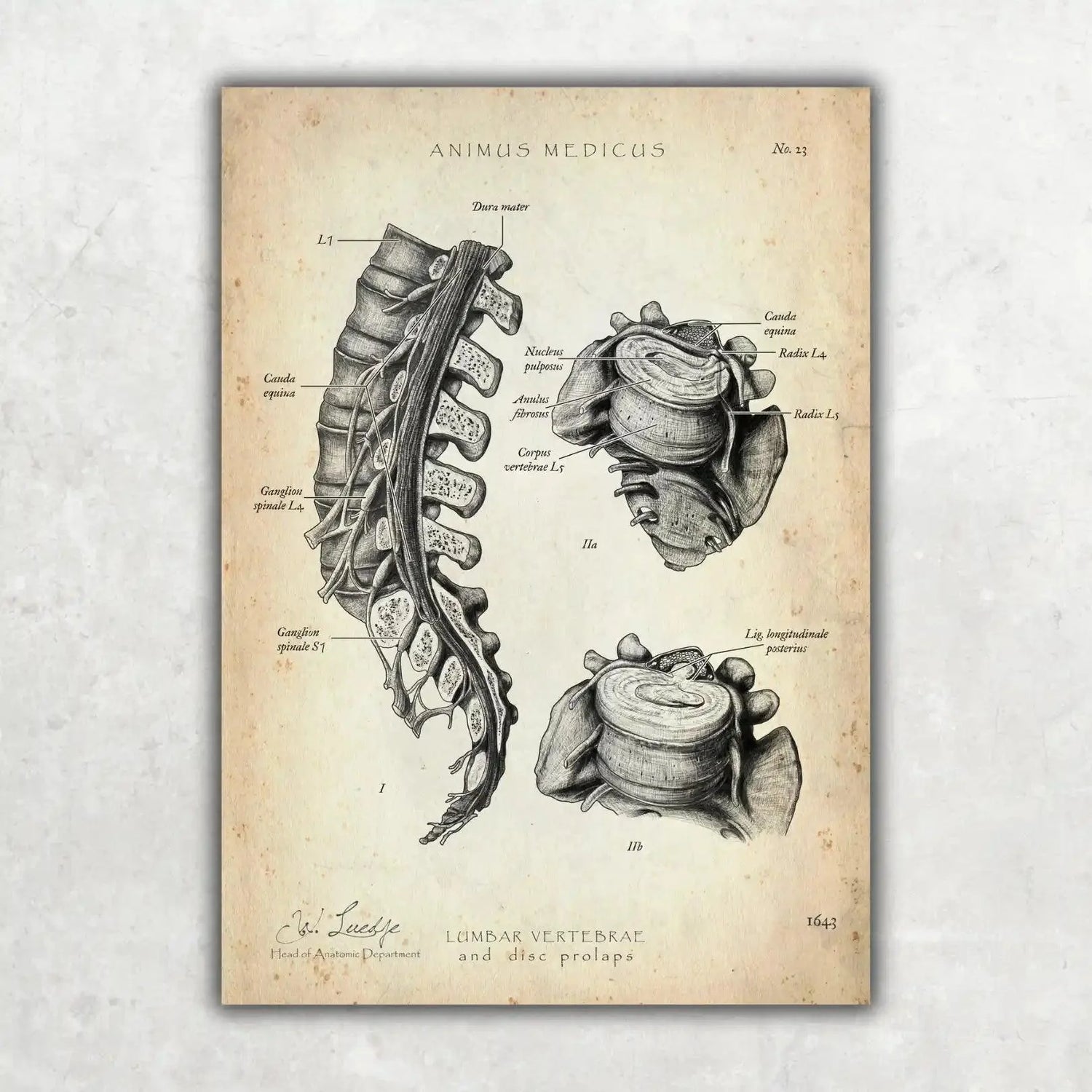
Have You Ever Had Back Pain?
We hope not – but did you know that approximately 20% of people aged 45-55 suffer from a herniated disc? That's qauite common!
It makes sense to know exactly what a herniated disc looks like, how it happens, and what can be done about it.
To help you explain the pathogenesis of a herniated disc to others – and do it with style – we've designed this Prolapse motif.
Whether you're a doctor, student, physiotherapist, nurse, or simply looking for the perfect gift for any occasion, this artwork is a must-have!
What You Get:
- Overview of a herniated disc
- Printed on premium quality paper
- UV-protective laminate for long-lasting colors
- 100% satisfaction guarantee
The center of the body
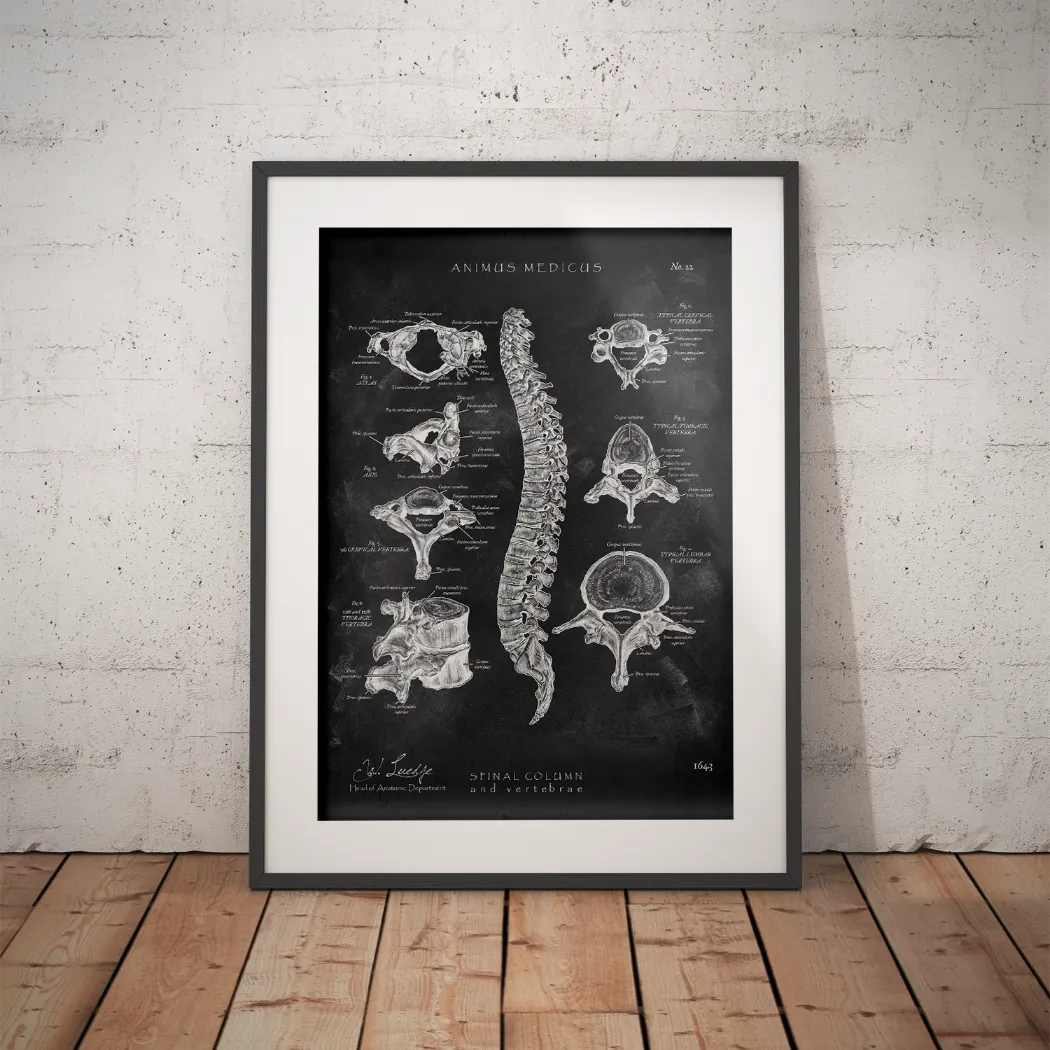
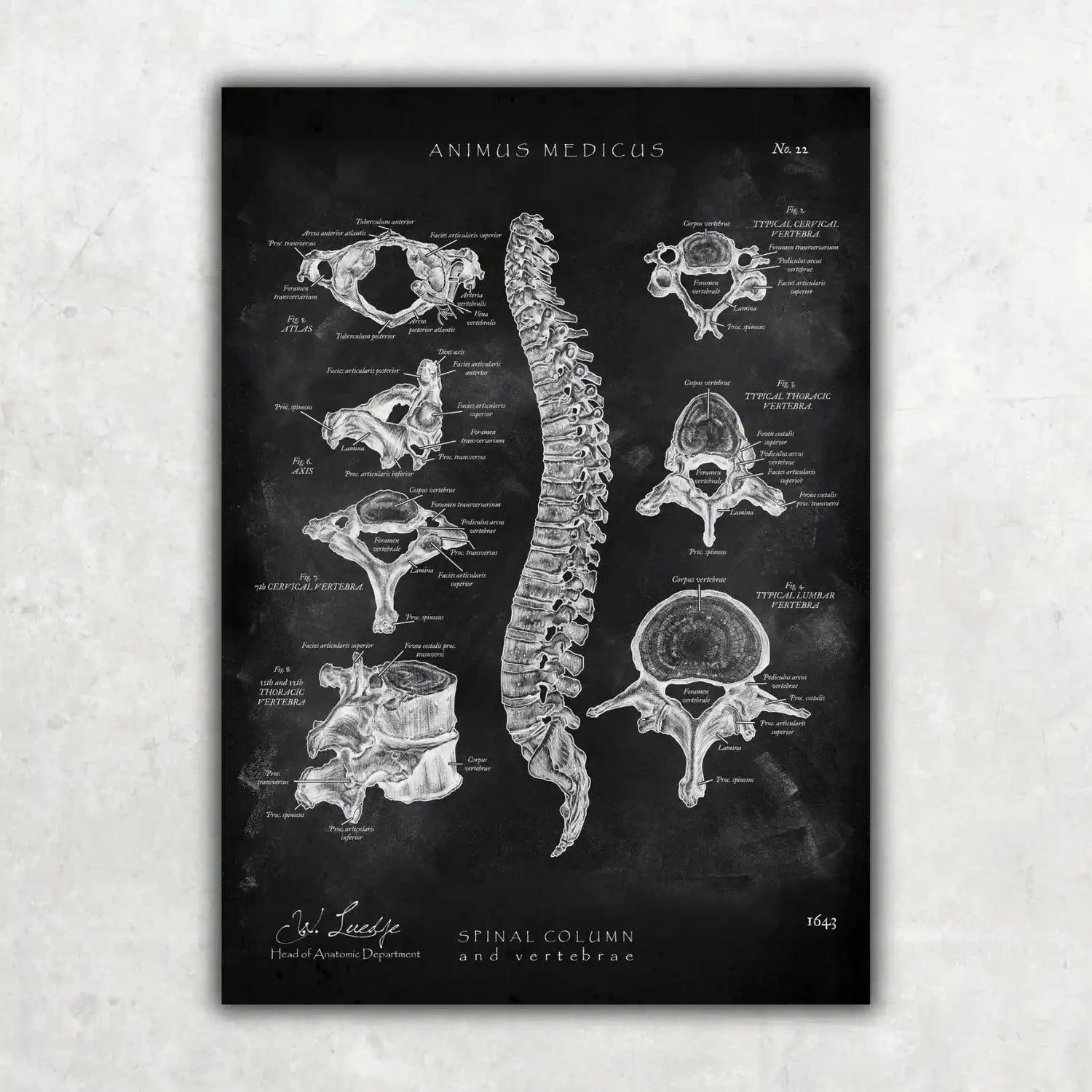
Do you know all the special features of the spine? For most people, their knowledge ends with vertebrae and intervertebral discs. But the spine offers much more than that. ⚕️
It can be divided into 5 sections. 7 cervical vertebrae, the first two of which also have a very special role, 12 thoracic vertebrae, 5 lumbar vertebrae, 5 sacral vertebrae, and 4-5 coccygeal vertebrae.
Explaining this phenomenon to others can quickly become complicated. That's exactly why we created this special motif, which you can use to perfectly explain the spine with its individual sections and special features.
At the same time, it also looks great...
If you are a doctor, student, physical therapist, or nurse, or if you are simply looking for the perfect gift for any occasion, then this artwork is a must-have!
What you get:
- Detailed overview of the spine in the Chalkboard Edition
- Printed on high-quality premium paper
- UV protective laminate for long-lasting colors
- 100% satisfaction guarantee
The Center of the Body
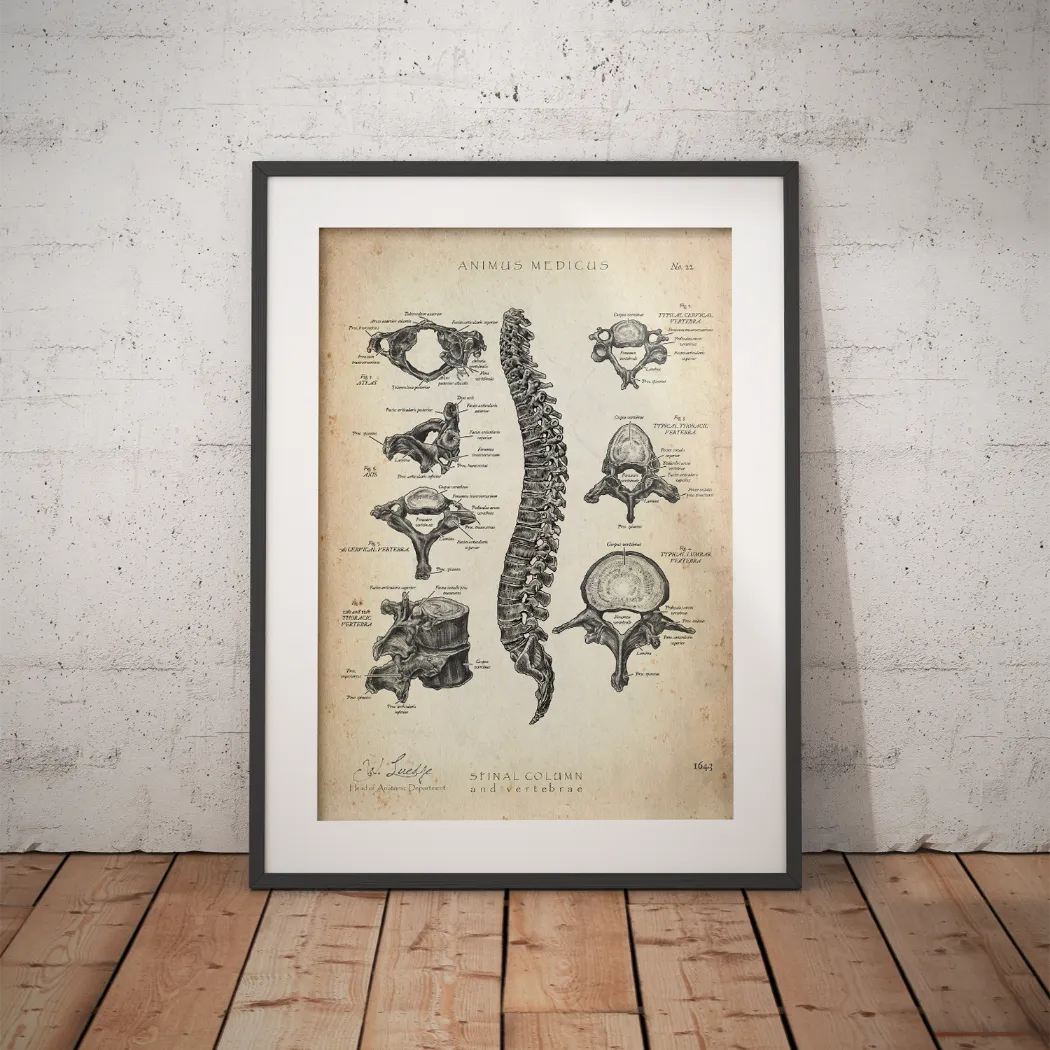
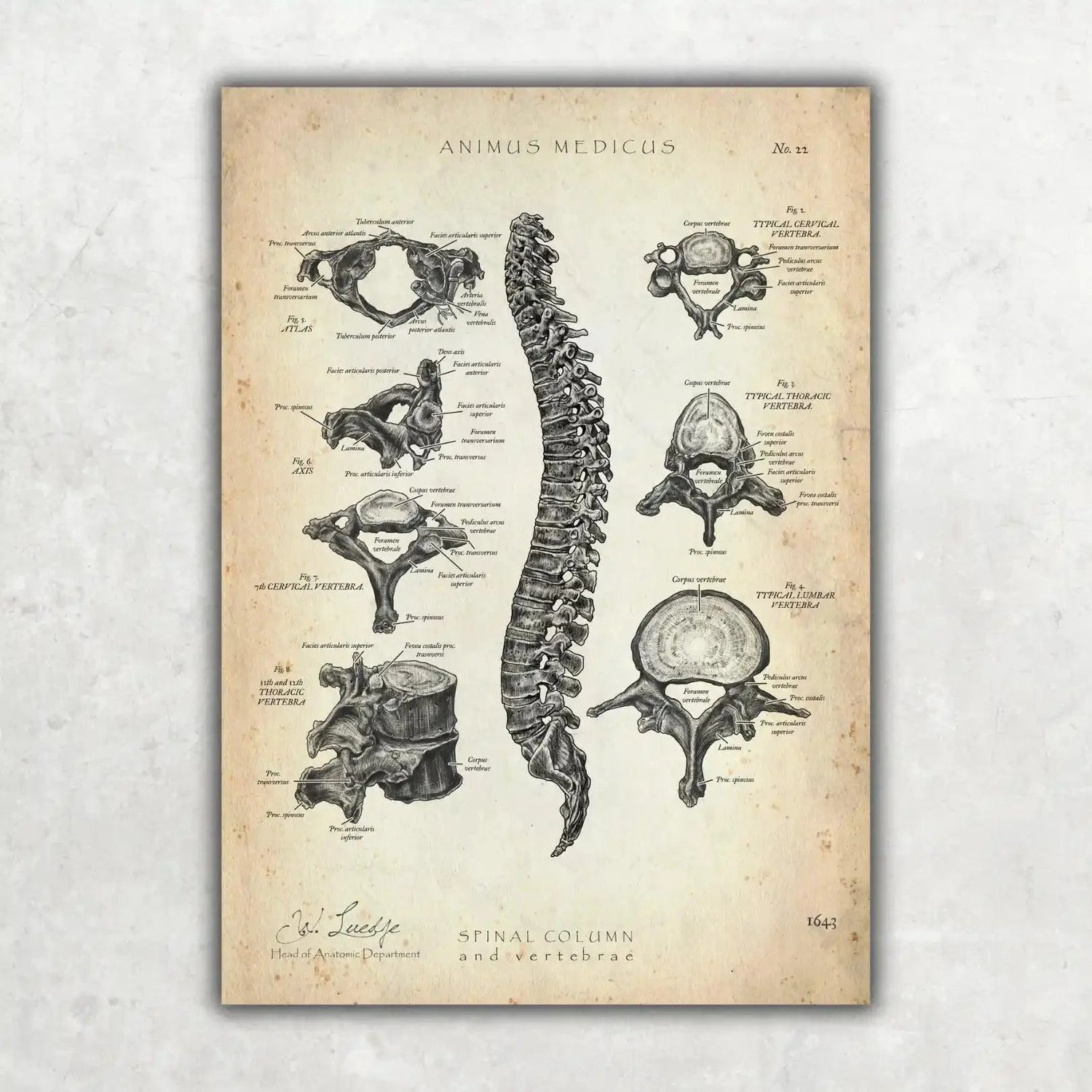
Do you know all the unique features of the spine? For most people, their knowledge stops at vertebrae and intervertebral discs. But the spine offers so much more. ⚕️
It can be divided into 5 sections: 7 cervical vertebrae, with the first two playing a particularly special role, 12 thoracic vertebrae, 5 lumbar vertebrae, 5 sacral vertebrae, and 4-5 coccygeal vertebrae.
Explaining these phenomena to others can quickly become complicated. That's precisely why we created this special motif, which allows you to perfectly explain the spine with its individual sections and unique features.
At the same time, it looks absolutely stunning...
Whether you're a doctor, student, physiotherapist, nurse, or simply looking for the perfect gift for any occasion, this artwork is a must-have!
What You Get:
- Detailed overview of the spine
- Printed on premium quality paper
- UV-protective laminate for long-lasting colors
- 100% satisfaction guarantee
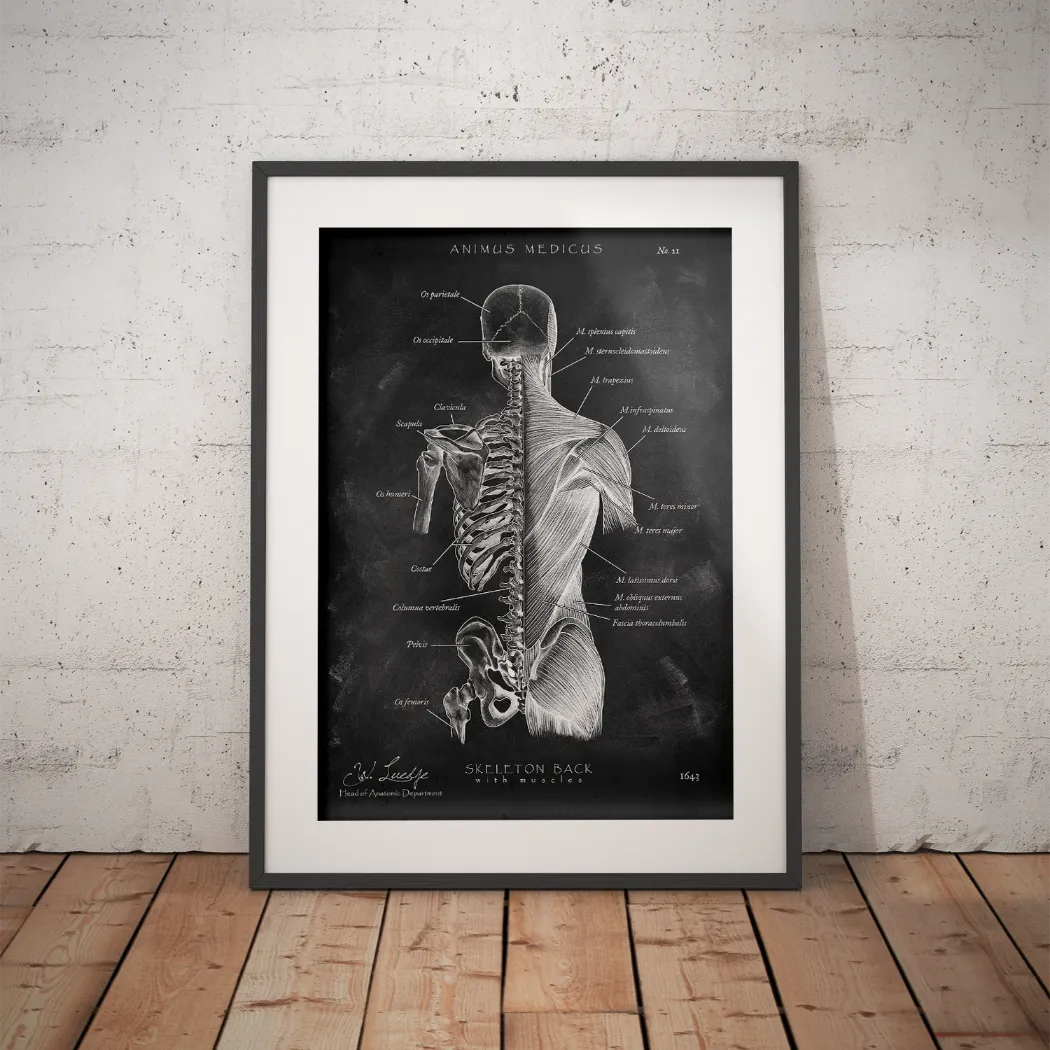
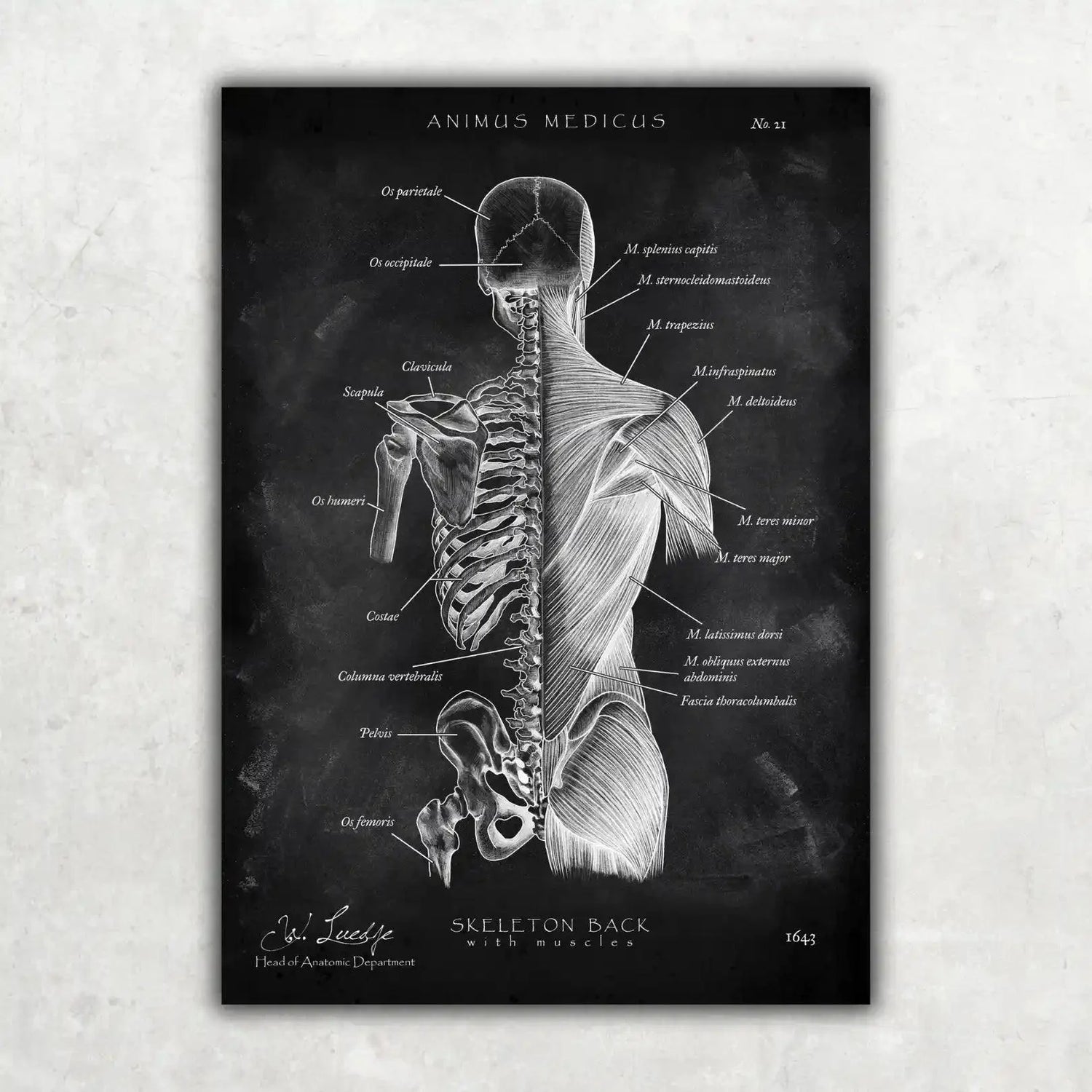
A beautiful back can also be delightful:
The human back is of central importance for health and well-being. Together with the spine and important muscle groups, it forms the most important part of the human support system.
Its numerous finely tuned muscle groups make it difficult to explain the bony or muscular structure to patients.
However, a thorough understanding of the anatomy and function of the back is very important, as a large part of the population experiences severe back pain at least once a year.
To help you easily understand and explain the structure of the back, we have designed Skeleton Back with Muscles. The motif shows the bony and muscular structure of the back in detail and also looks incredibly good...
What you get:
-
Detailed overview of the bone and muscle anatomy of the back
-
Printed on high-quality premium paper
-
UV protective laminate for long-lasting colors
- 100% satisfaction guarantee
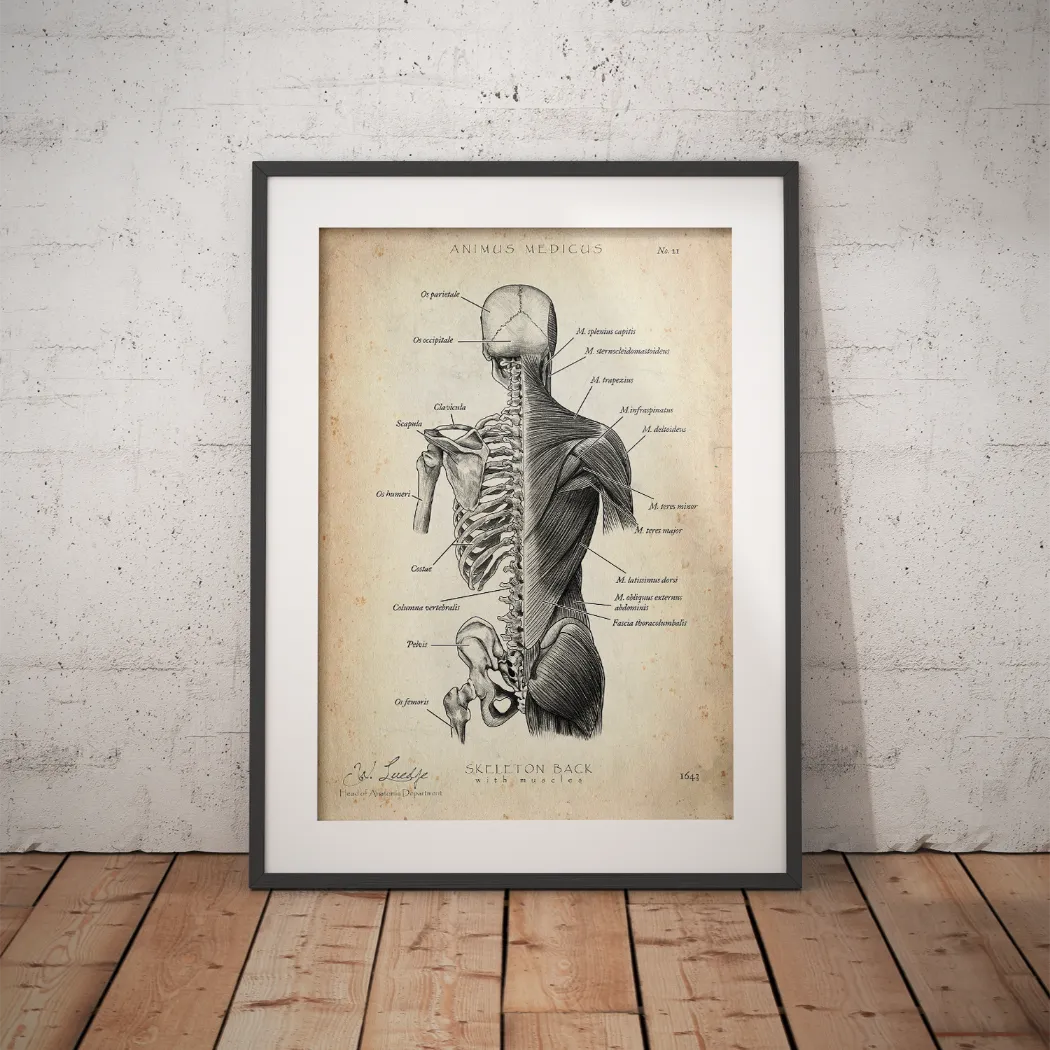
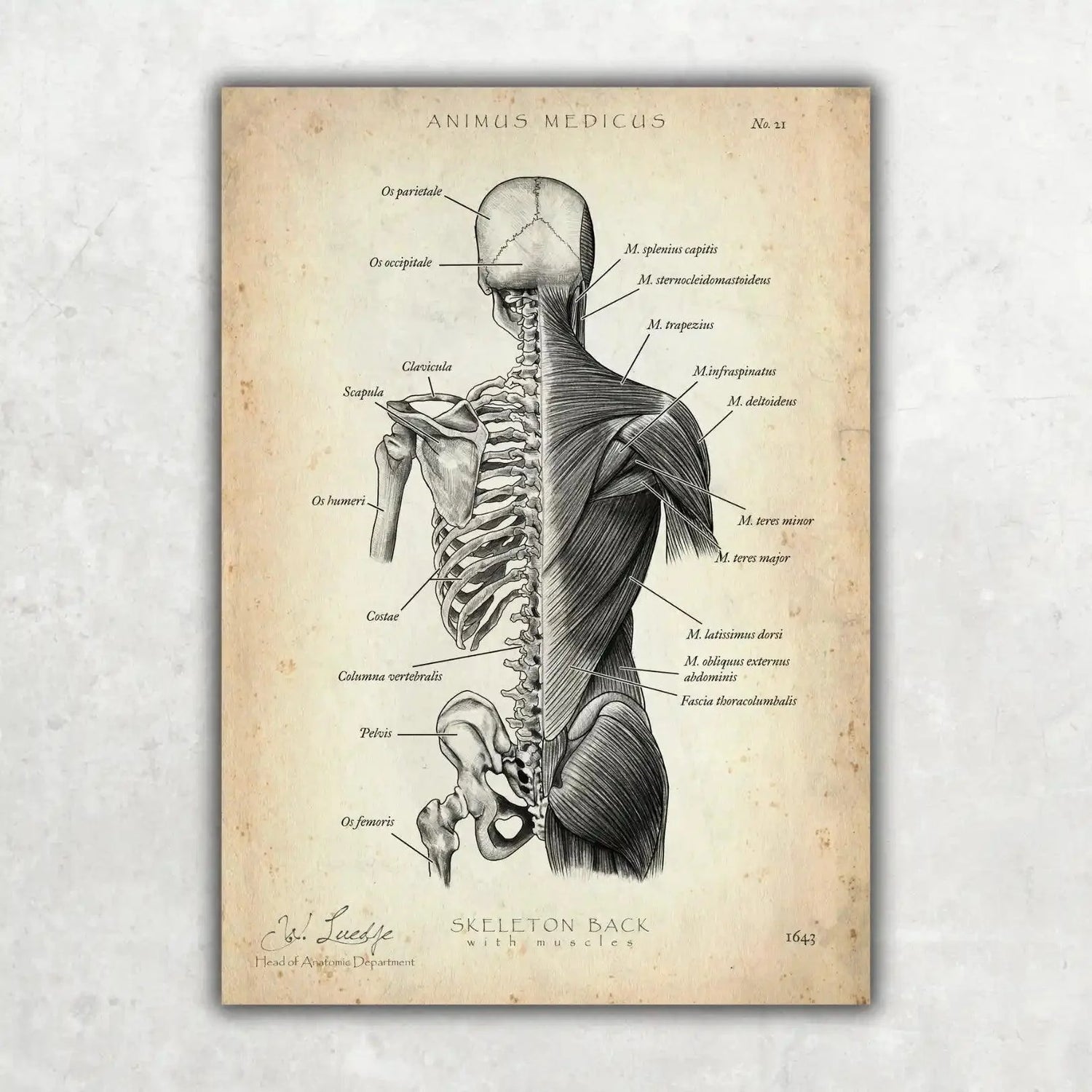
A Beautiful Back Can Also Delight:
The human back is of central importance for health and well-being. With its spine and essential muscle groups, it forms the most crucial part of the body's support system.
Its numerous finely-tuned muscle groups can make it challenging to explain the skeletal or muscular structure to patients.
A deep understanding of the anatomy and function of the back is vital, as a significant portion of the population experiences severe back pain at least once a year.
To help you easily understand and explain the structure of the back, we have designed the Skeleton Back with Muscles poster. This motif shows the detailed skeletal and muscular structure of the back and looks incredibly good while doing so...
What You Get:
- Detailed overview of the skeletal and muscular back anatomy
- Printed on premium quality paper
- UV-protective laminate for long-lasting colors
- 100% satisfaction guarantee


- Overview of the teeth
- Printed on high-quality premium paper
- UV protective laminate for long-lasting colors
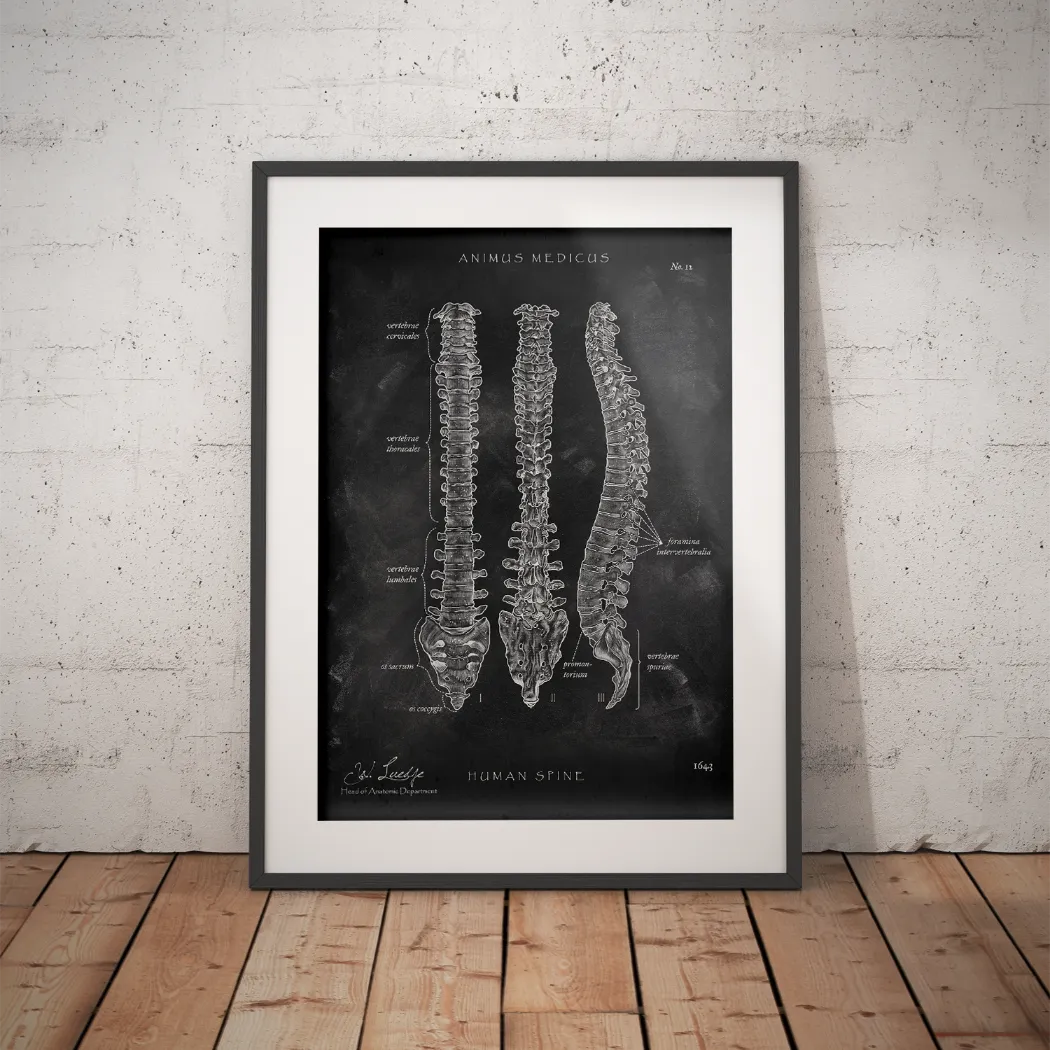
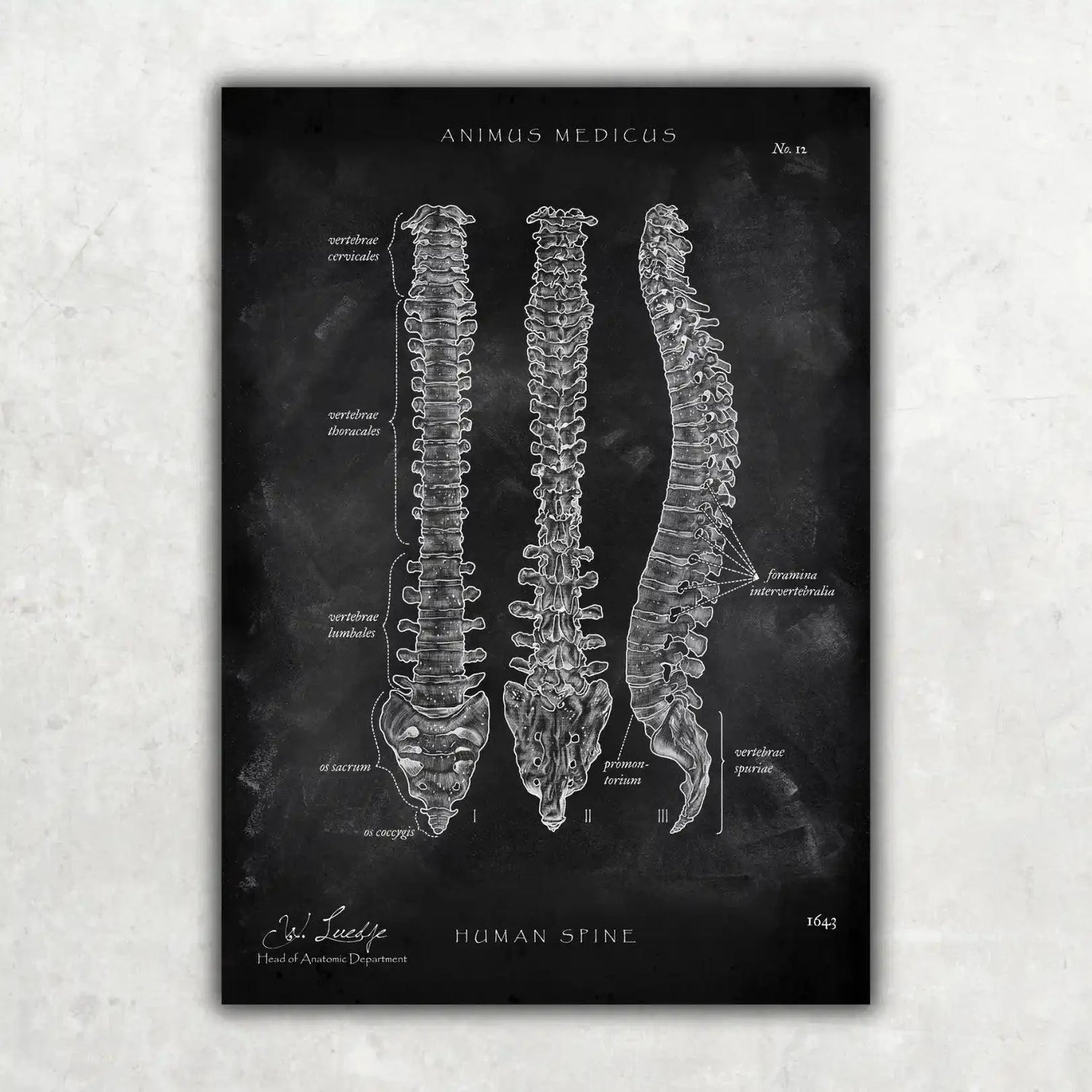
The center of the body
Do you know all the special features of the spine? For most people, their knowledge ends with vertebrae and intervertebral discs. But the spine offers much more than that. ⚕️
It can be divided into 5 sections. 7 cervical vertebrae, the first two of which also have a very special role, 12 thoracic vertebrae, 5 lumbar vertebrae, 5 sacral vertebrae, and 4-5 coccygeal vertebrae.
Explaining this phenomenon to others can quickly become complicated. That's exactly why we created this special motif, which you can use to perfectly explain the spine with its individual sections and special features.
At the same time, it also looks great...
If you are a doctor, student, physical therapist, or nurse, or if you are simply looking for the perfect gift for any situation, then this work of art is a must-have!
What you get:
- Detailed overview of the spine in the Chalkboard Edition
- Print on high-quality premium paper
- UV protective laminate for long-lasting colors
- 100% satisfaction guarantee
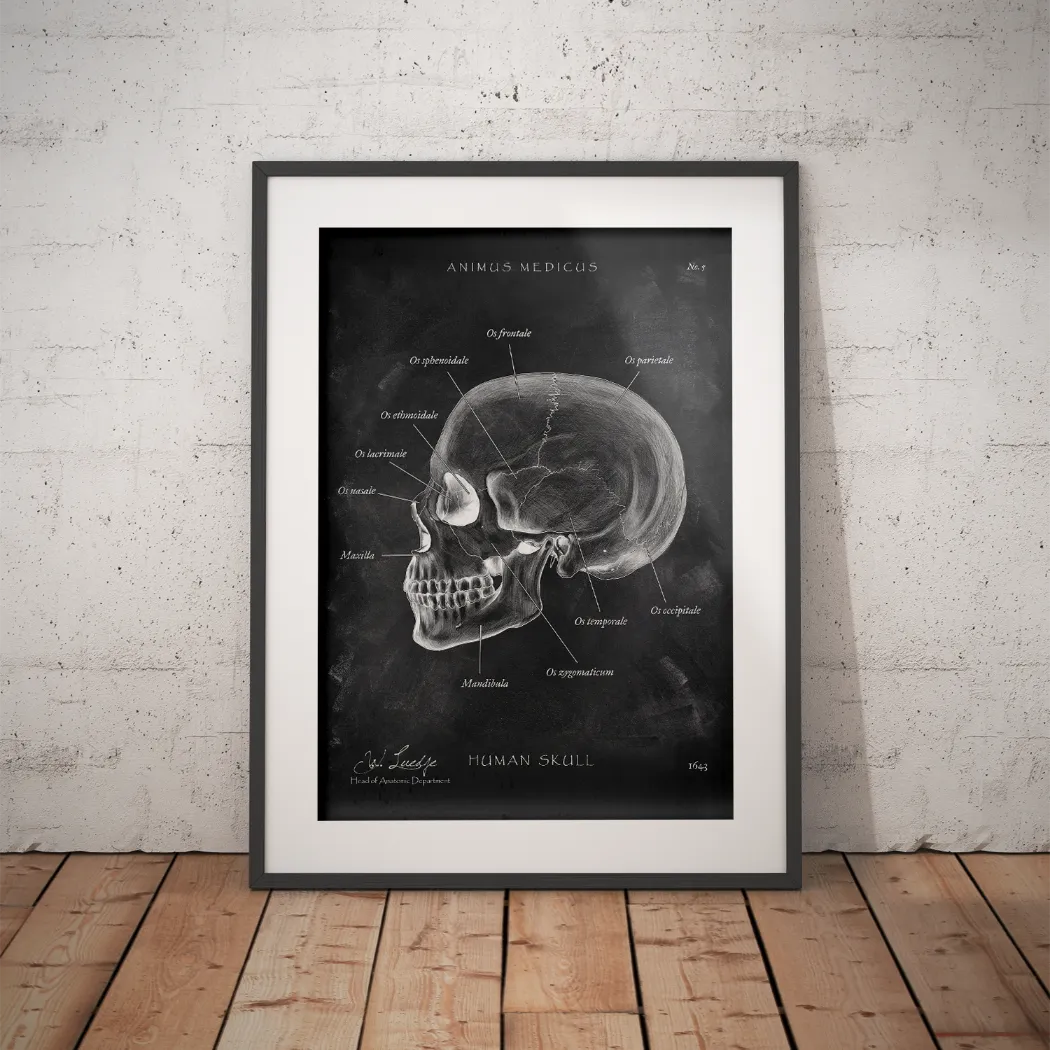
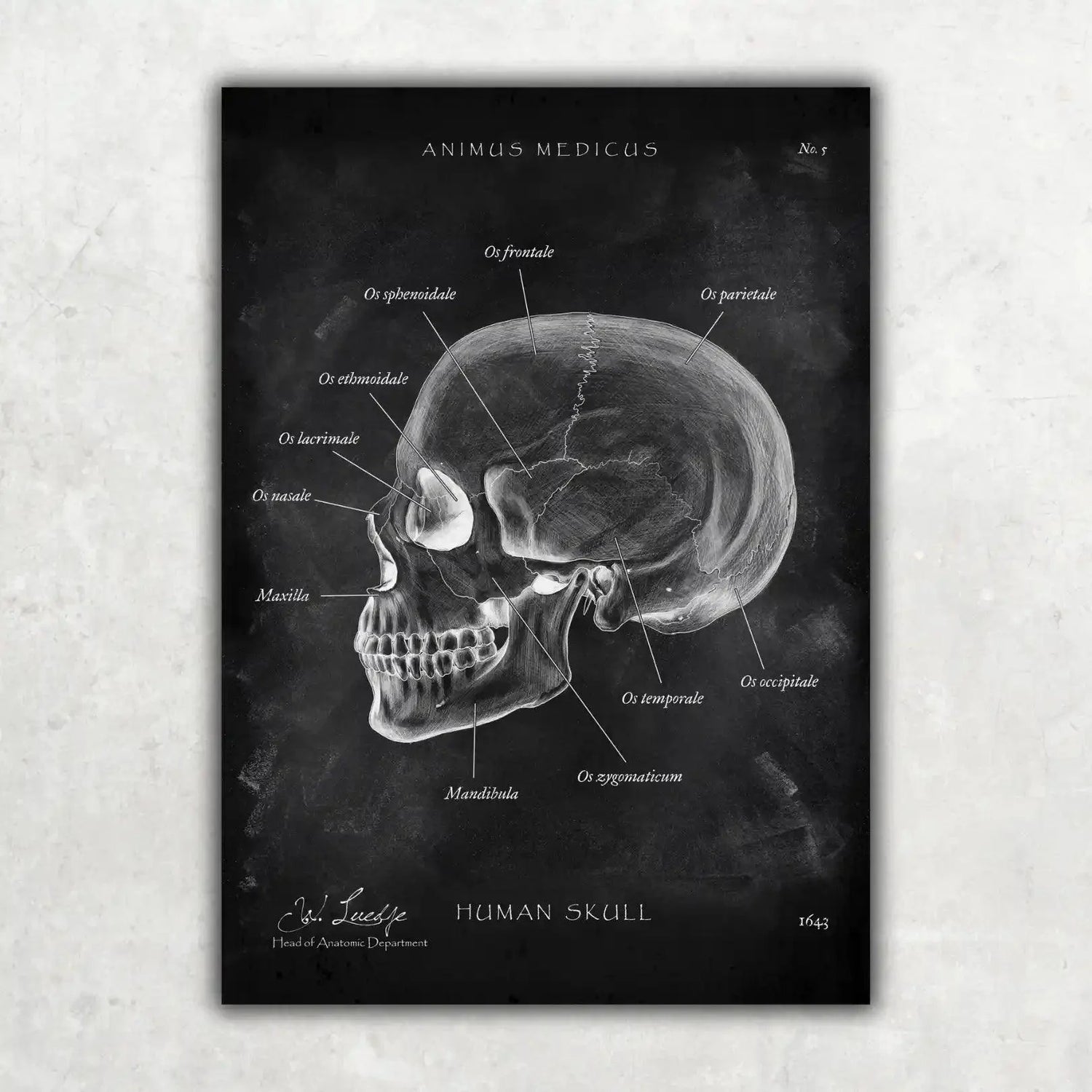
Why is the Skull Impressive?
The skull is a section of the human skeleton composed of 22 flat or irregularly shaped individual bones, known as cranial bones. It can be divided into the neurocranium (braincase) and viscerocranium (facial skeleton).
Have you ever had to memorize all the individual bones? This poster will help you learn at least the superficial bones with style.
Whether you're a doctor, student, physiotherapist, nurse, or simply looking for the perfect gift for any occasion, this artwork is a must-have!
What You Get:
- Overview of the human skull in the Chalkboard Edition
- Printed on premium quality paper
- UV-protective laminate for long-lasting colors
- 100% satisfaction guarantee


- Cross-section of the uterus
- Printed on high-quality premium paper
- UV protective laminate for long-lasting colors
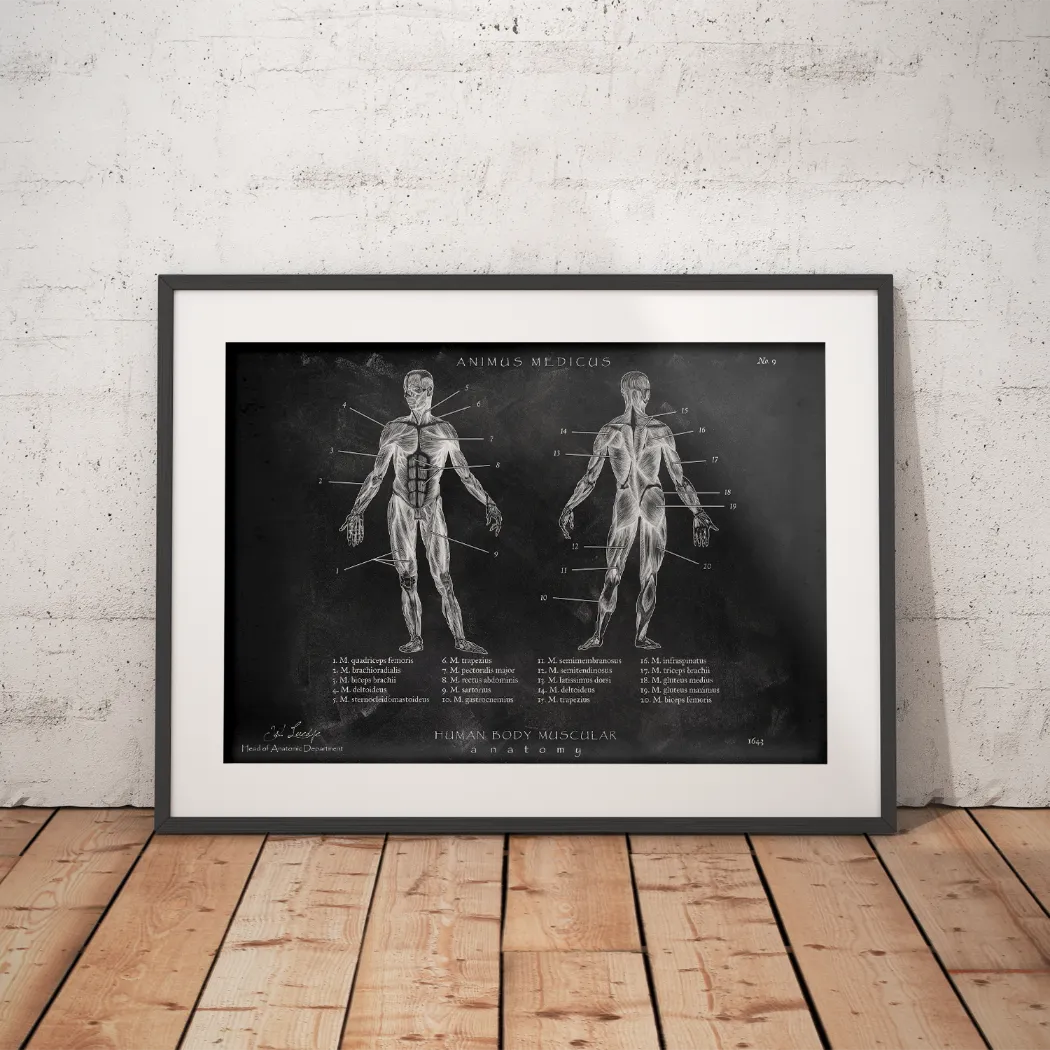
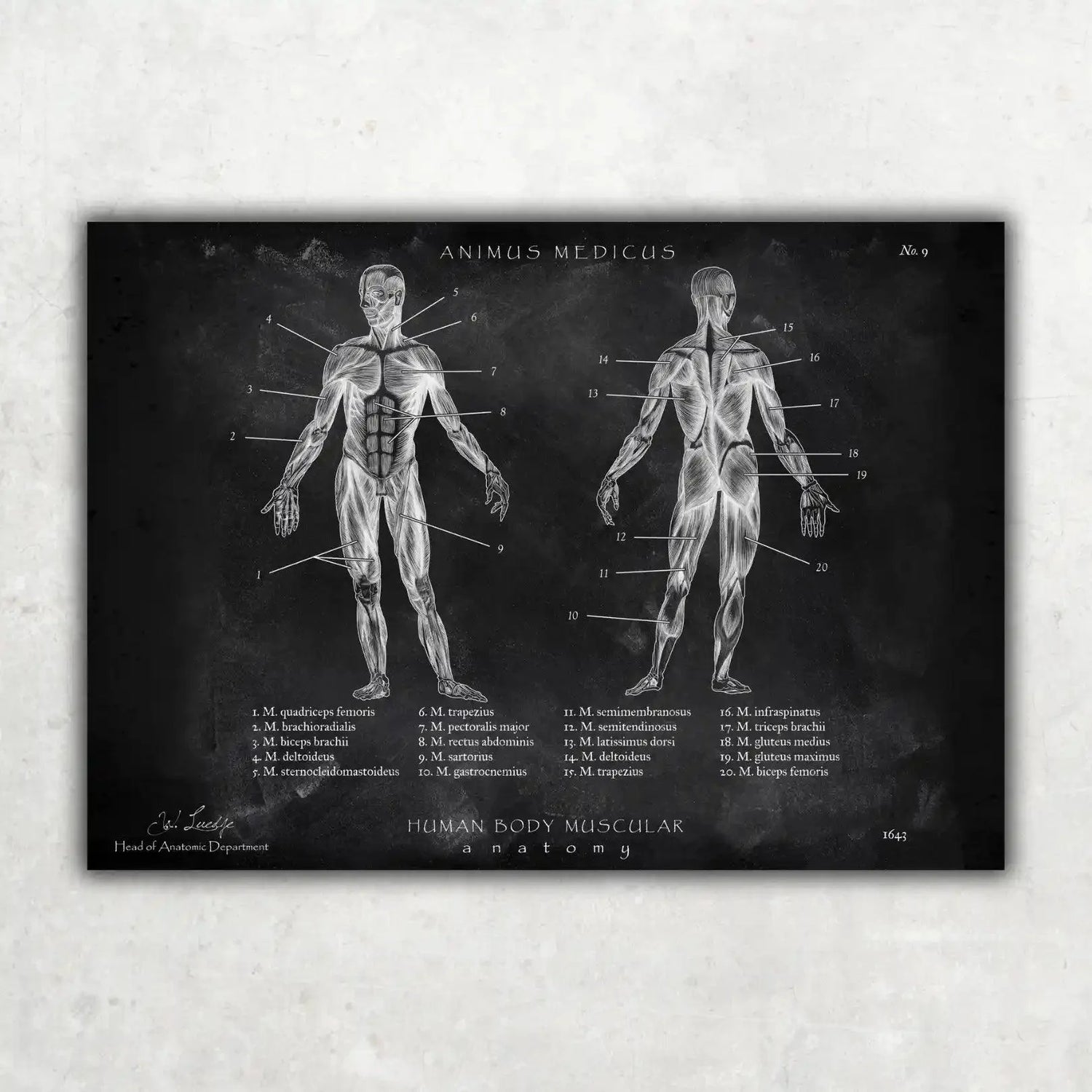
Is the Human Body a Work of Art?
Our answer is a resounding yes! The perfect interplay of muscles, ligaments, bones, and joints is simply impressive.
If you also find the anatomy of the human body fascinating, then you need this poster!
With it, you can admire and study the entire musculoskeletal system of the human body – even outside of anatomy class.
Whether you're a doctor, student, physiotherapist, nurse, or simply looking for the perfect gift for any occasion, this artwork is a must-have!
What You Get:
- Overview of the human musculoskeletal system in the Chalkboard Edition
- Printed on premium quality paper
- UV-protective laminate for long-lasting colors
- 100% satisfaction guarantee
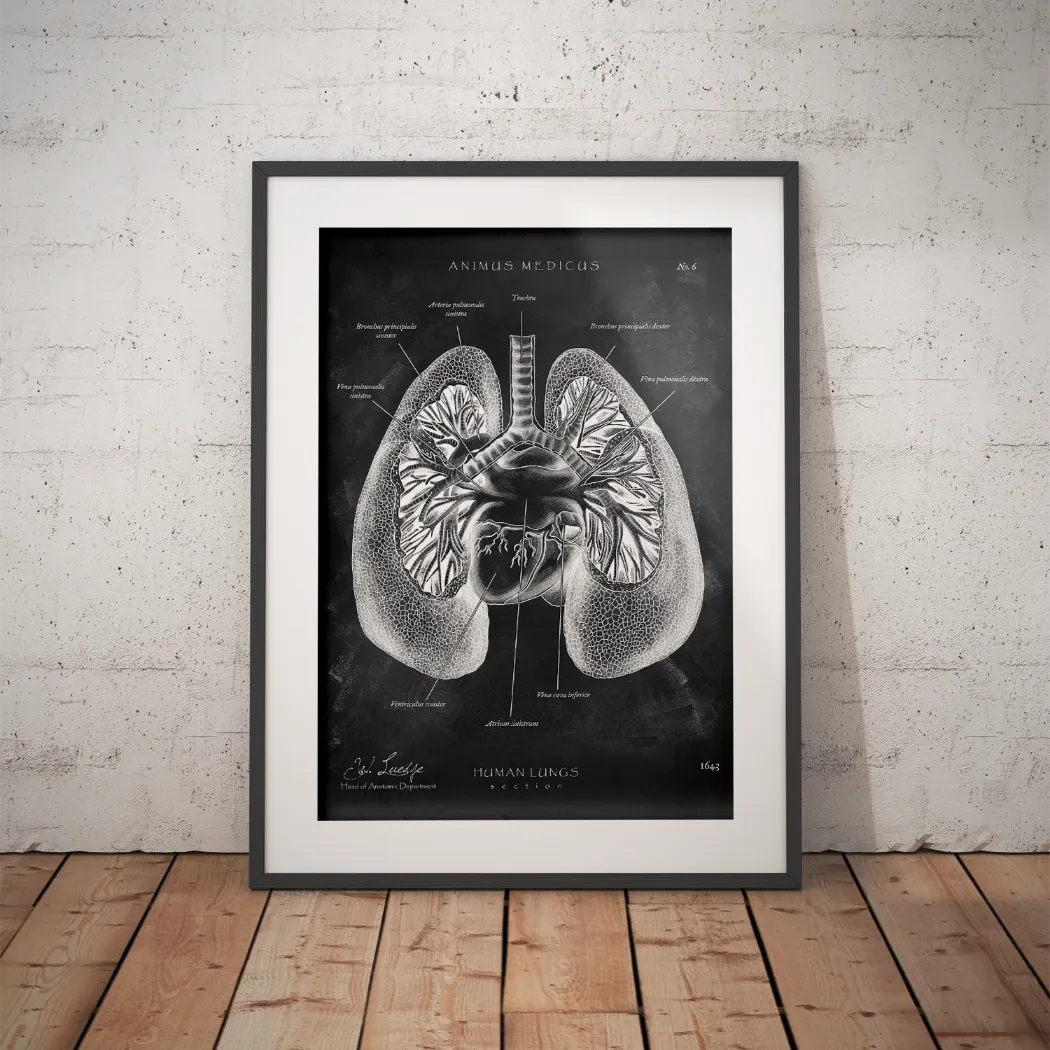
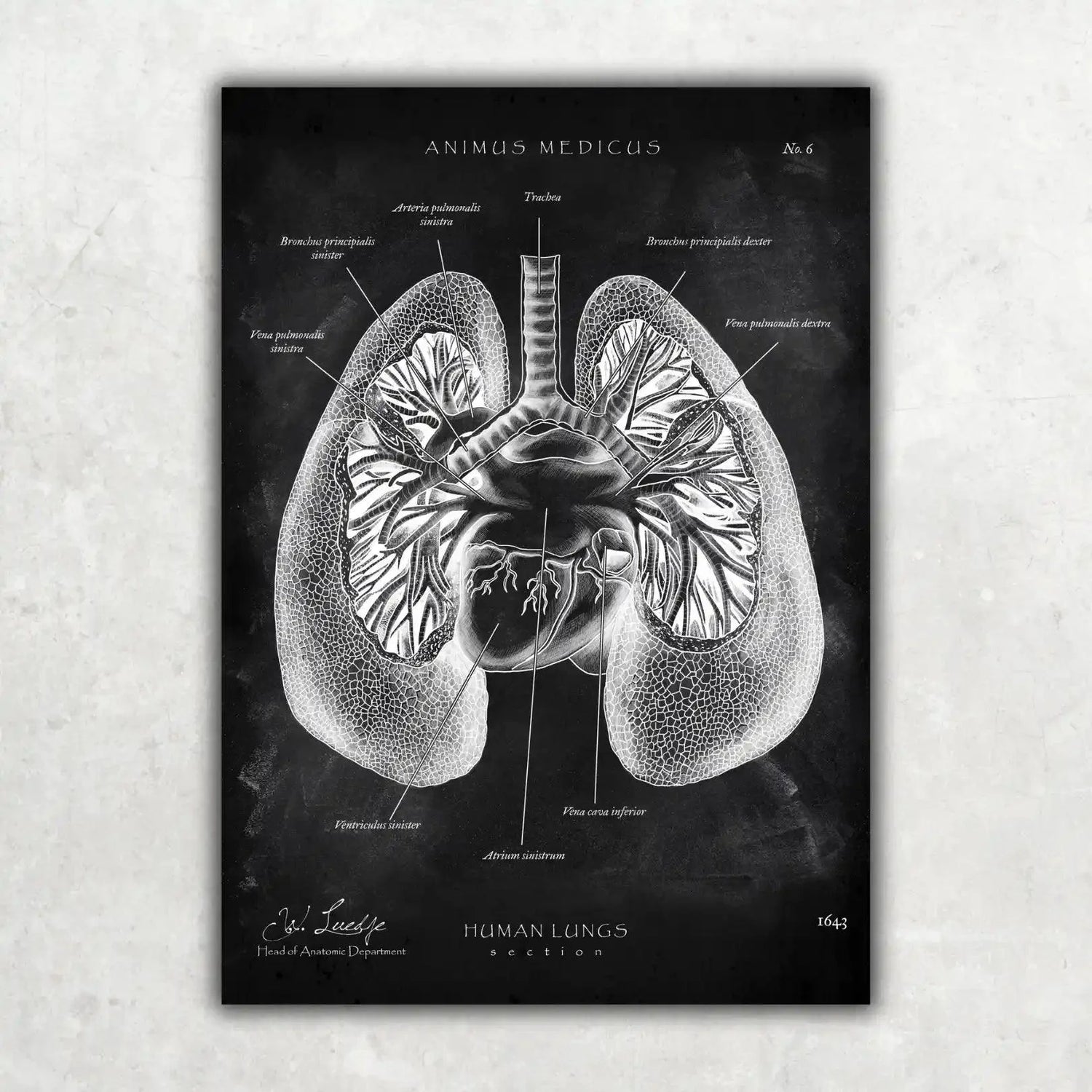
What Makes the Lungs So Special?
Every day, you breathe in up to 20,000 liters of air. This happens with up to 20,000 breaths. Quite impressive, right?
We thought so too. The lungs play a key role in our lives and can help you feel more energetic and relaxed when you use them properly.
Just take 5 deep breaths in and out. With this motif, we remind you to take a moment to breathe deeply and enjoy your life. 🫁
Whether you're a doctor, student, medical enthusiast, nurse, or simply looking for the perfect gift for any occasion, this artwork is a must-have!
What You Get:
- Overview of the lungs in the Chalkboard Edition
- Printed on premium quality paper
- UV-protective laminate for long-lasting colors
- 100% satisfaction guarantee


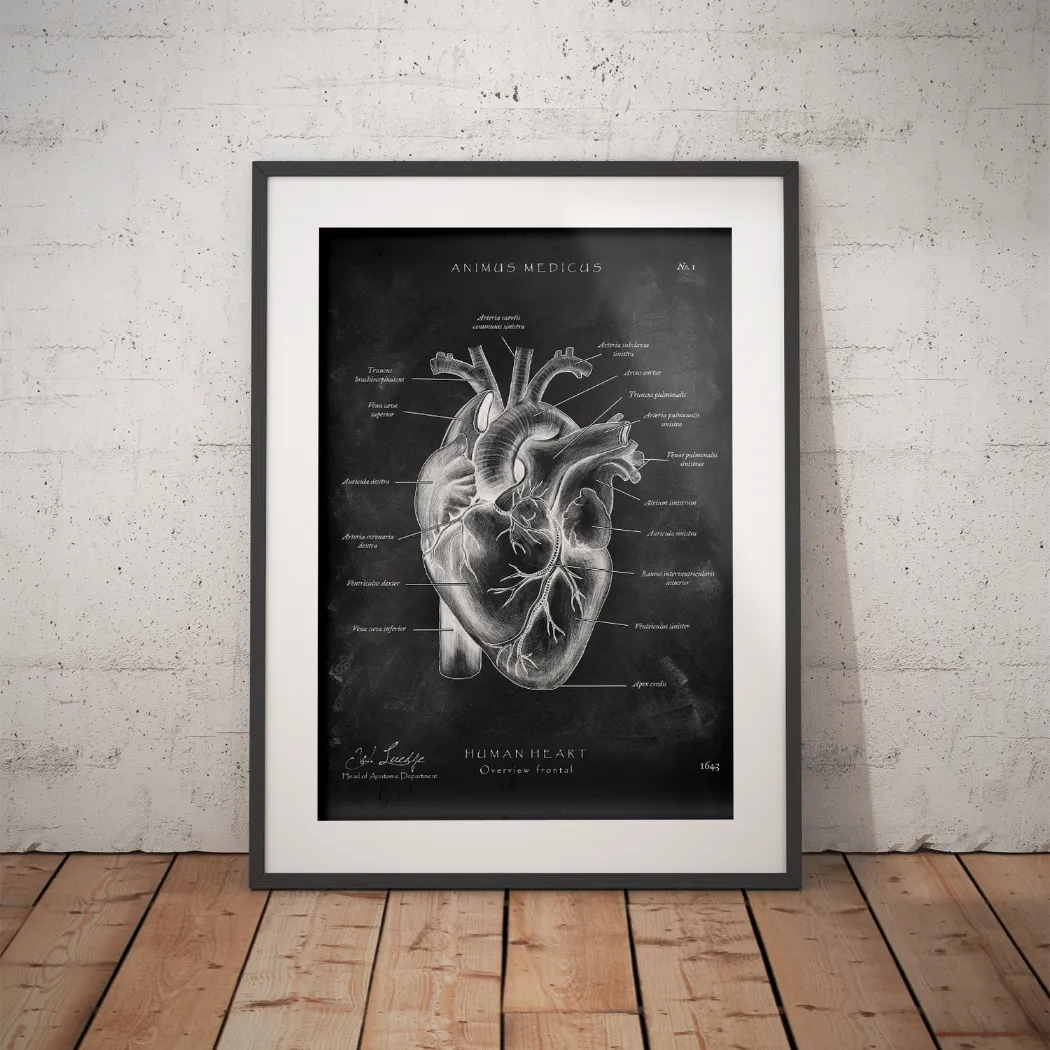
The Symbol of Love from Within - Chalkboard Edition
The human heart beats in our chest day after day, about 100,000 times daily, 24 hours a day, non-stop – it never takes a break. ♥️
But the heart is not only incredibly fascinating, it's also beautiful! It's no wonder that it is the symbol of love and the epitome of the human body.
So that you, unlike your heart, can take a moment to appreciate its beauty, we have designed this detailed Chalkboard Edition motif.
Whether you're a doctor, student, medical enthusiast, nurse, or simply looking for the perfect gift for any occasion, this artwork is a must-have!
What You Get:
- Cross-sectional overview of the heart in the Chalkboard Edition
- Printed on premium quality paper
- UV-protective laminate for long-lasting colors
- 100% satisfaction guarantee
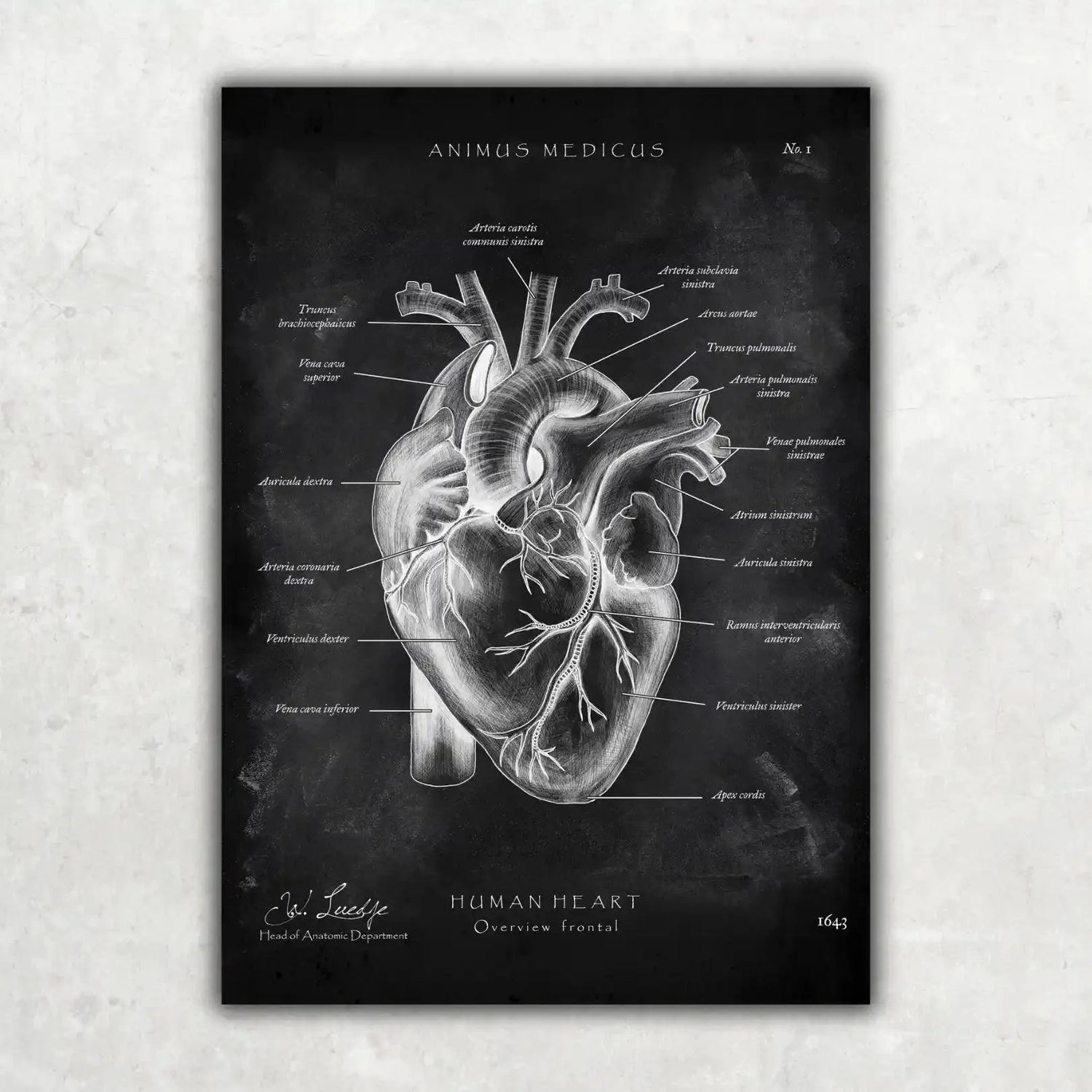
The Symbol of Love - Chalkboard Edition
The human heart beats in our chest day after day, about 100,000 times daily, 24 hours a day, non-stop – it never takes a break. ♥️
But the heart is not only incredibly fascinating, it's also beautiful! It's no wonder that it is the symbol of love and the epitome of the human body.
So that you, unlike your heart, can take a moment to appreciate its beauty, we have designed this detailed Chalkboard Edition motif.
Whether you're a doctor, student, medical enthusiast, nurse, or simply looking for the perfect gift for any occasion, this artwork is a must-have!
What You Get:
- Overview of the heart in the Chalkboard Edition
- Printed on premium quality paper
- UV-protective laminate for long-lasting colors
- 100% satisfaction guarantee
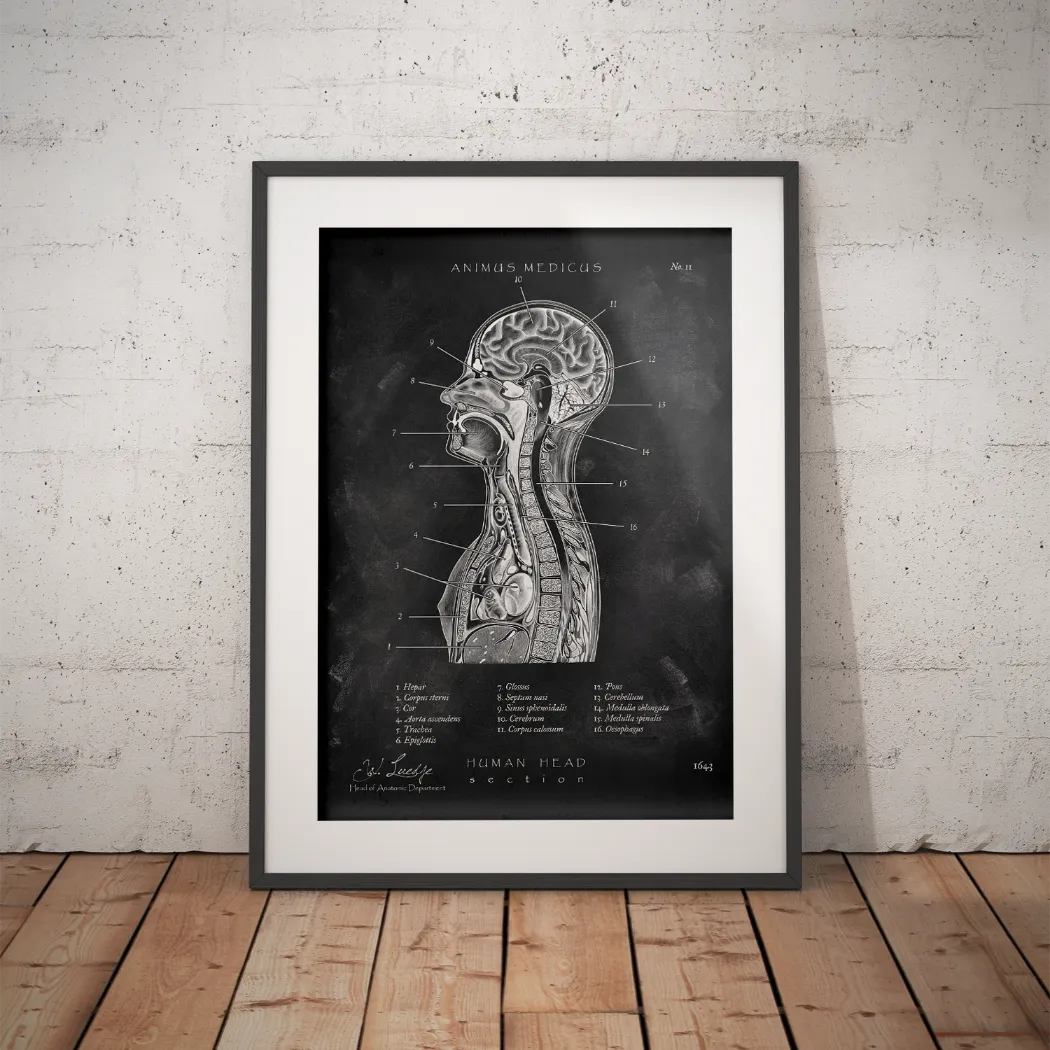
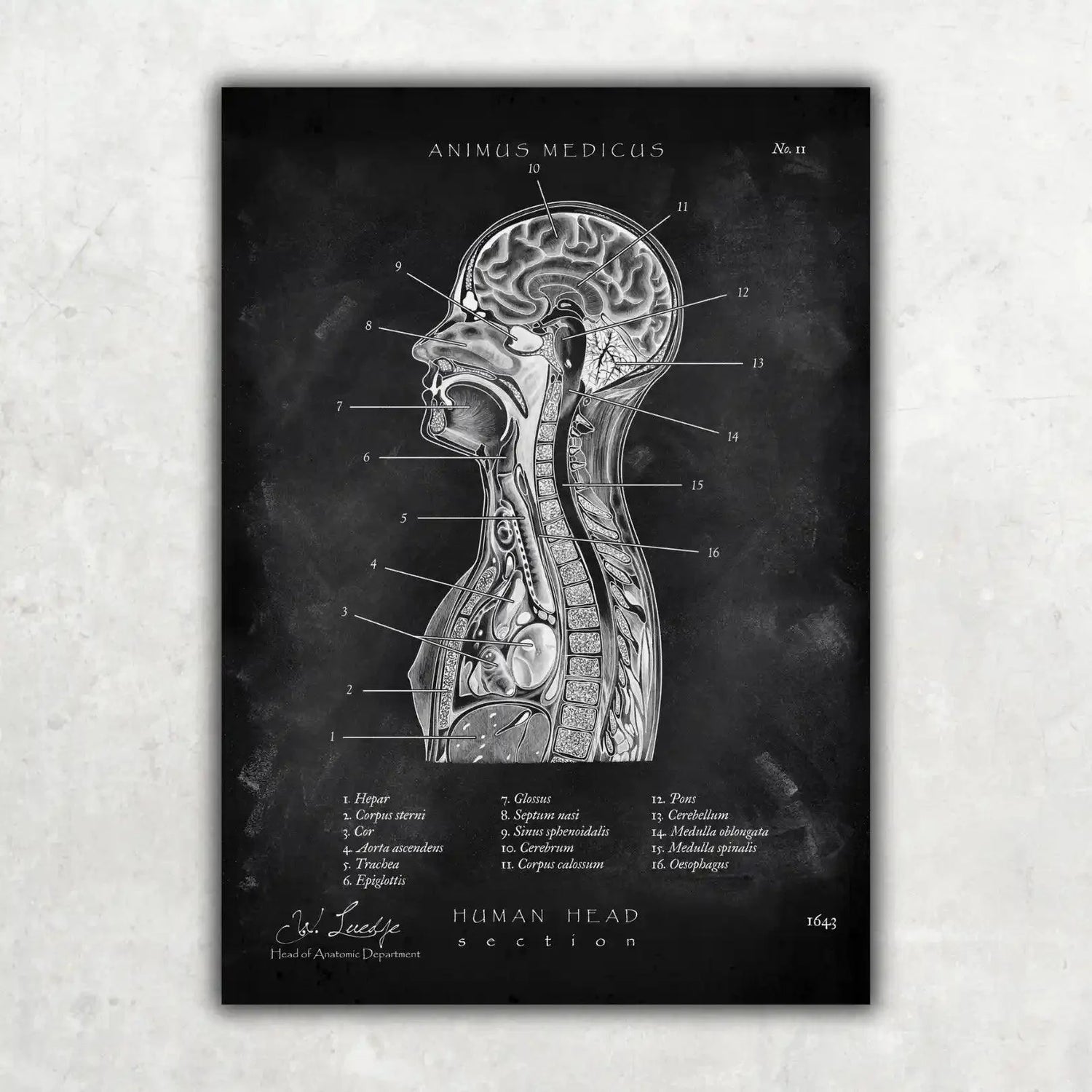
In a sagittal section through the body:
Are you as fascinated by our anatomy as we are? If so, then Head Section is just right for you.
We created this motif to illustrate the numerous organ systems and their location in relation to each other. Now you'll never forget how everything fits together.
And at the same time, it looks incredibly good...
If you are a doctor, student, medical enthusiast, or nurse, or if you are simply looking for the perfect gift for any occasion, then this work of art is a must-have!
What you get:
- Detailed representation of the skull and thorax in sagittal section in the Chalkboard Edition
- Print on high-quality premium paper
- UV protective laminate for long-lasting colors
- 100% satisfaction guarantee
Showing 80/106

- Satisfaction guarantee
- Fast delivery
- Buyer protection
- Satisfaction guarantee
- Fast delivery
- Buyer protection