
Musculoskeletal System
Sort by:
58 products
58 products
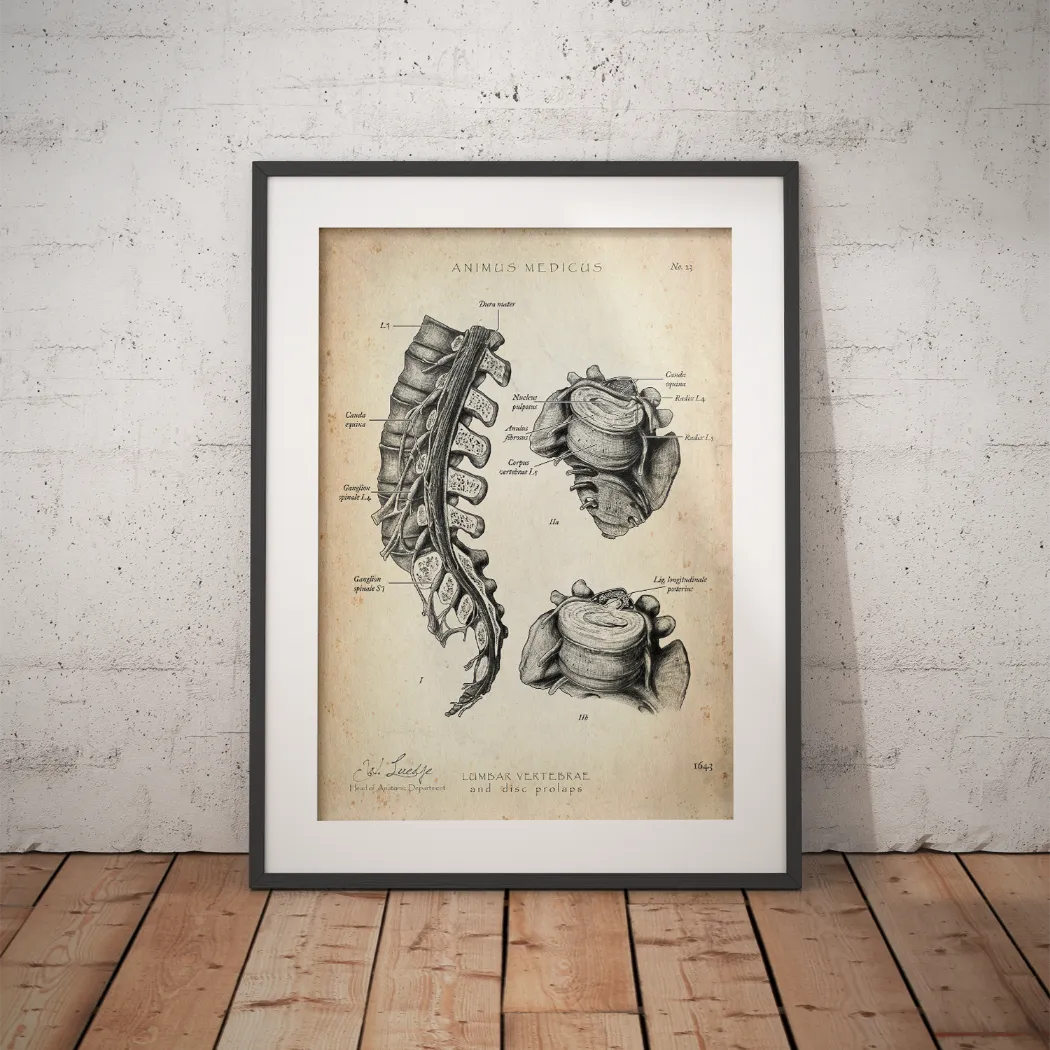
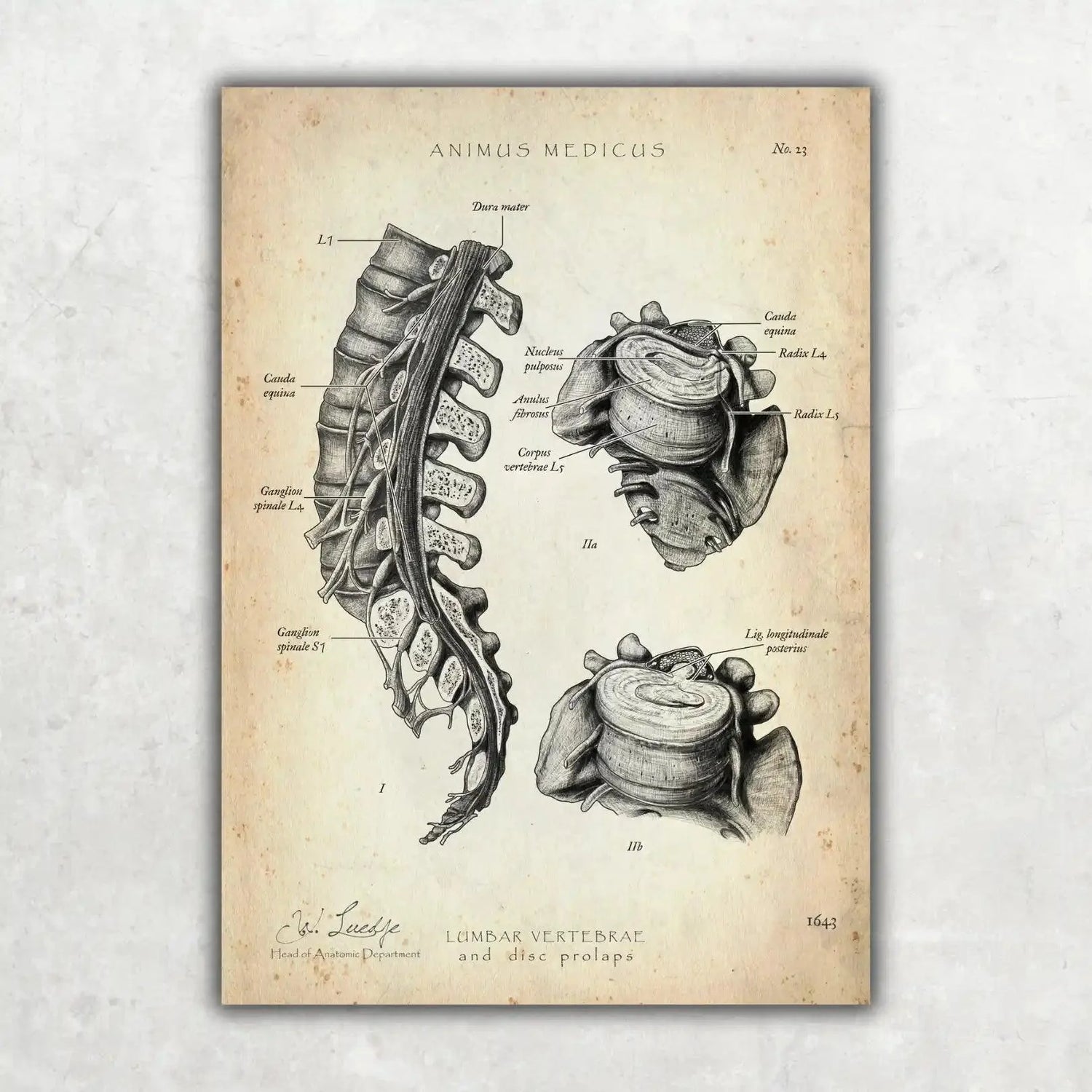
Have You Ever Had Back Pain?
We hope not – but did you know that approximately 20% of people aged 45-55 suffer from a herniated disc? That's qauite common!
It makes sense to know exactly what a herniated disc looks like, how it happens, and what can be done about it.
To help you explain the pathogenesis of a herniated disc to others – and do it with style – we've designed this Prolapse motif.
Whether you're a doctor, student, physiotherapist, nurse, or simply looking for the perfect gift for any occasion, this artwork is a must-have!
What You Get:
- Overview of a herniated disc
- Printed on premium quality paper
- UV-protective laminate for long-lasting colors
- 100% satisfaction guarantee
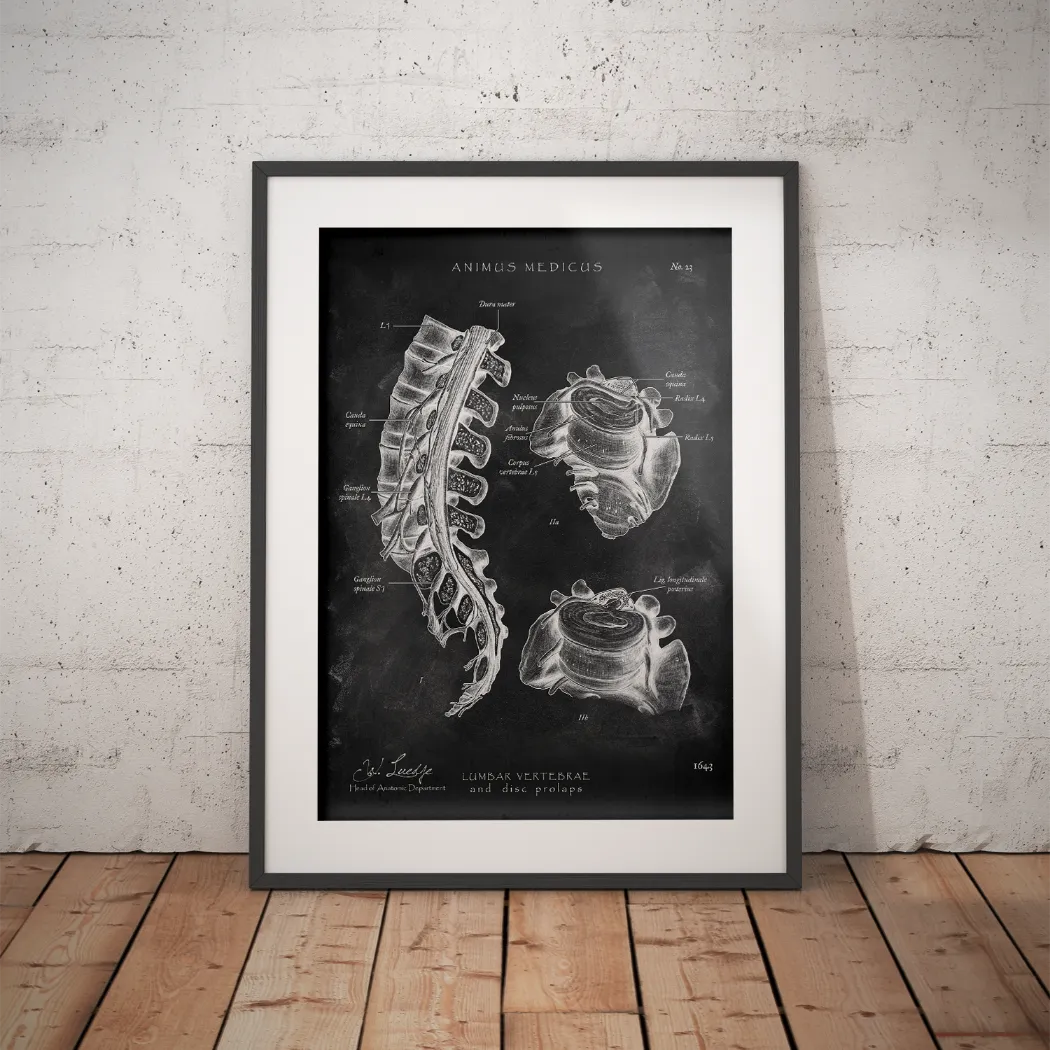
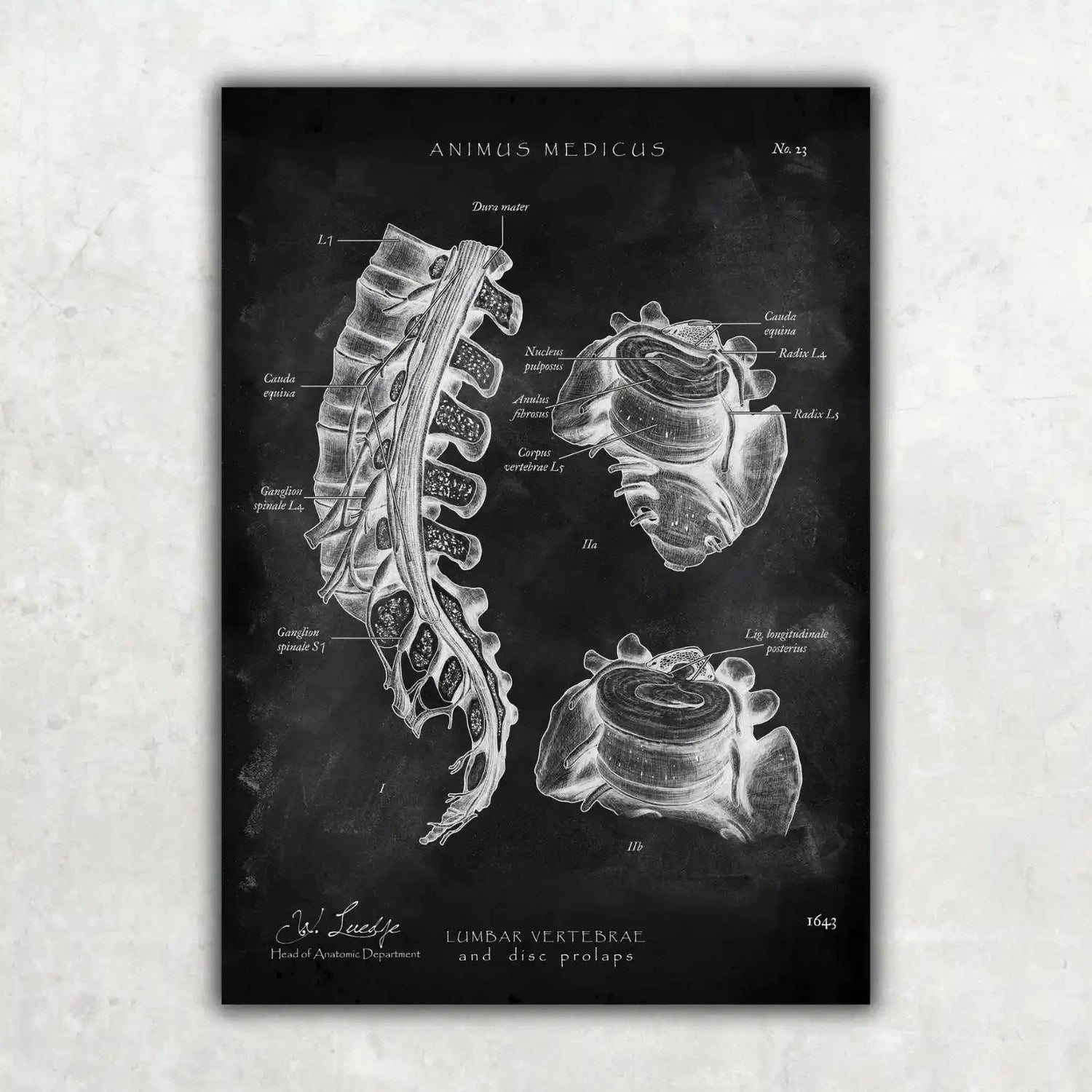
Have you ever had back pain?
We hope not—but did you know that around 20% of all 45- to 55-year-olds suffer from a herniated disc? That's quite common!
So it makes sense to know exactly what a herniated disc looks like, how it happens, and what you can do about it.
To help you explain the pathogenesis of a herniated disc to others—and do so in style—we have designed this prolapse motif.
If you are a doctor, student, physical therapist, or nurse, or if you are simply looking for the perfect gift for any occasion, then this artwork is a must-have!
What you will receive:
- Overview of a herniated disc in the Chalkboard Edition
- Print on high-quality premium paper
- UV protective laminate for long-lasting colors
- 100% satisfaction guarantee
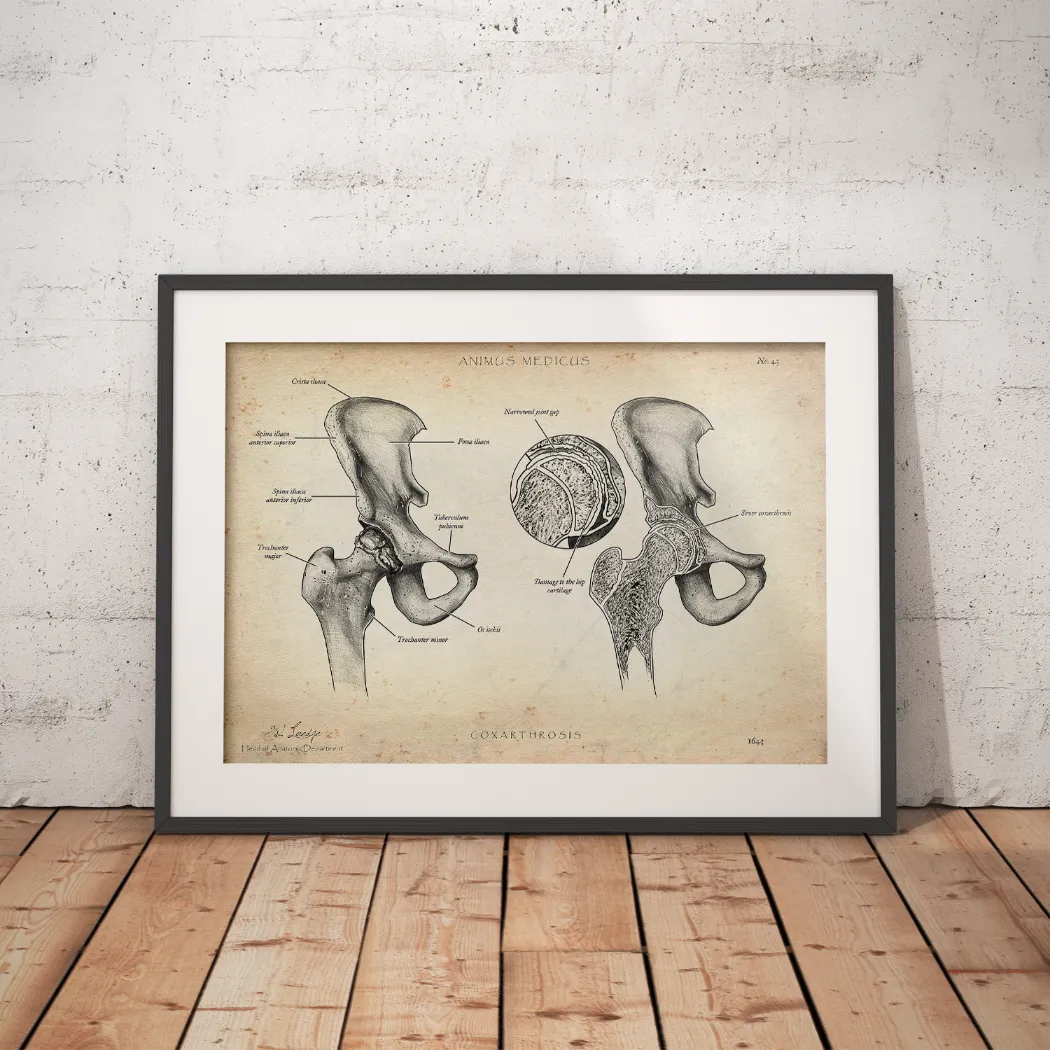
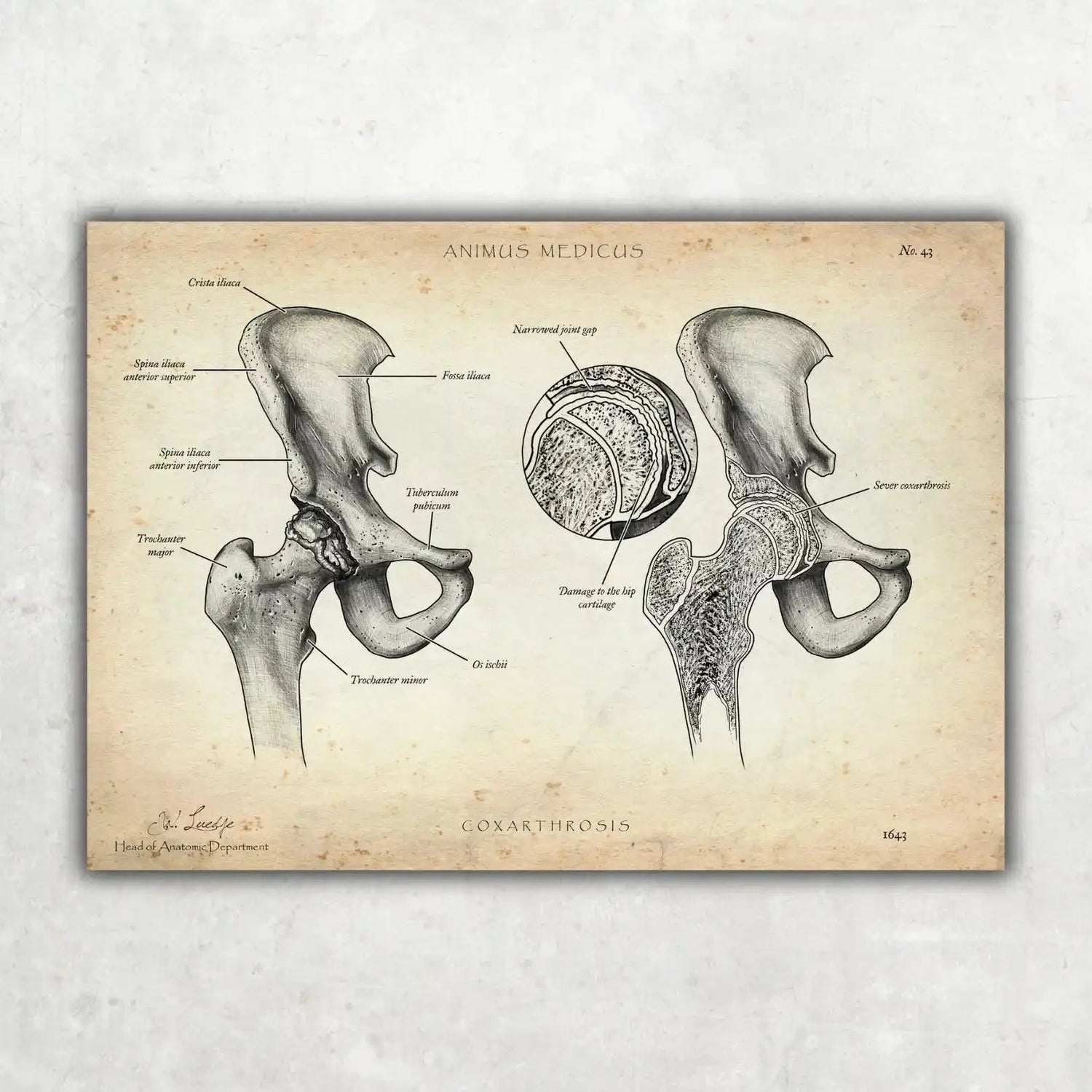
The most common musculoskeletal disorder in old age
Some joints are more susceptible to osteoarthritis than others. The hip joint is definitely the most common site for osteoarthritis.
Almost everyone over the age of 50 reports occasional pain and stiffness in the hip.
But what actually happens in hip osteoarthritis and which structures are damaged exactly?
If you are not yet able to explain this perfectly to your patients, then this motif is perfect for you to help your patients in the best possible way.
What's more, the motif also looks incredibly good.
What you get:
- Overview of hip osteoarthritis
- Printed on high-quality premium paper
- UV protective laminate for long-lasting colors
- 100% satisfaction guarantee
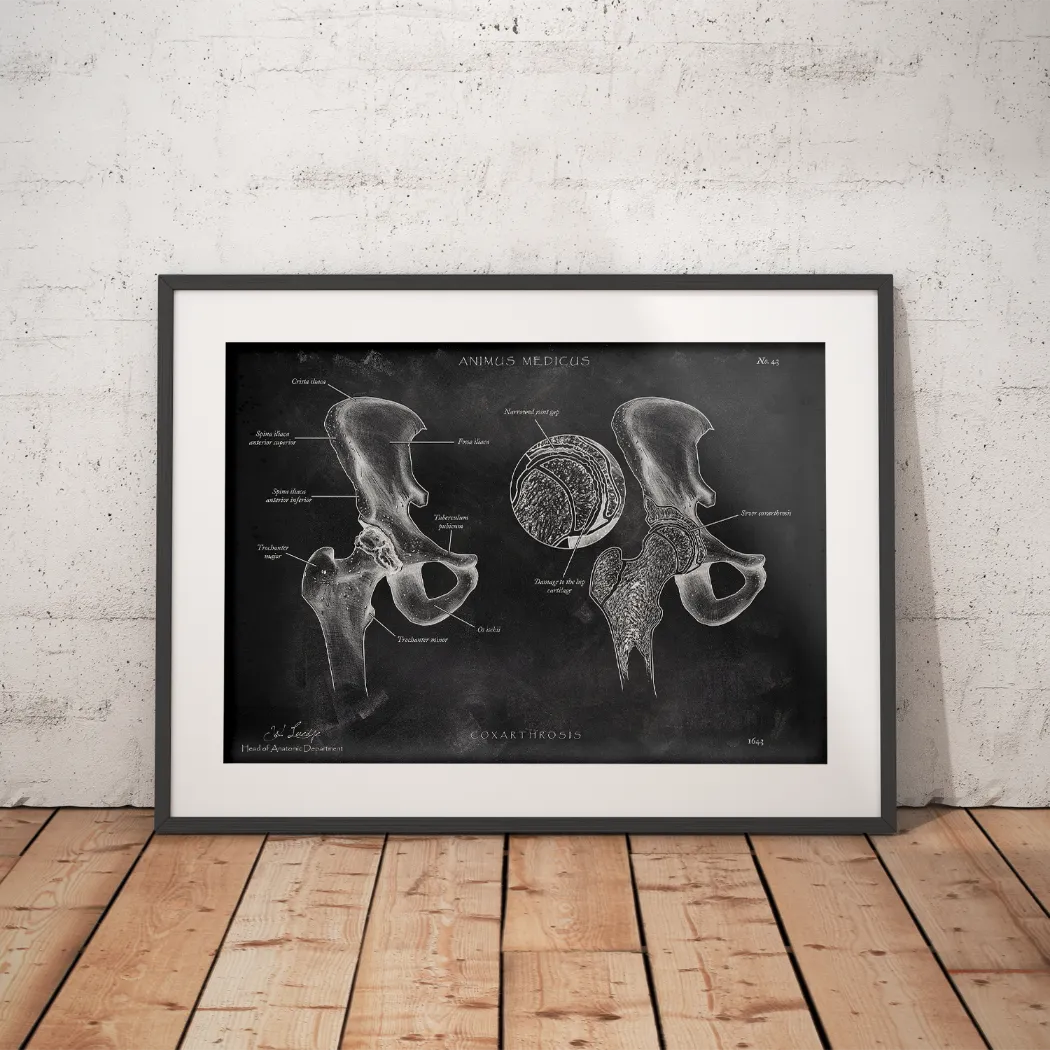
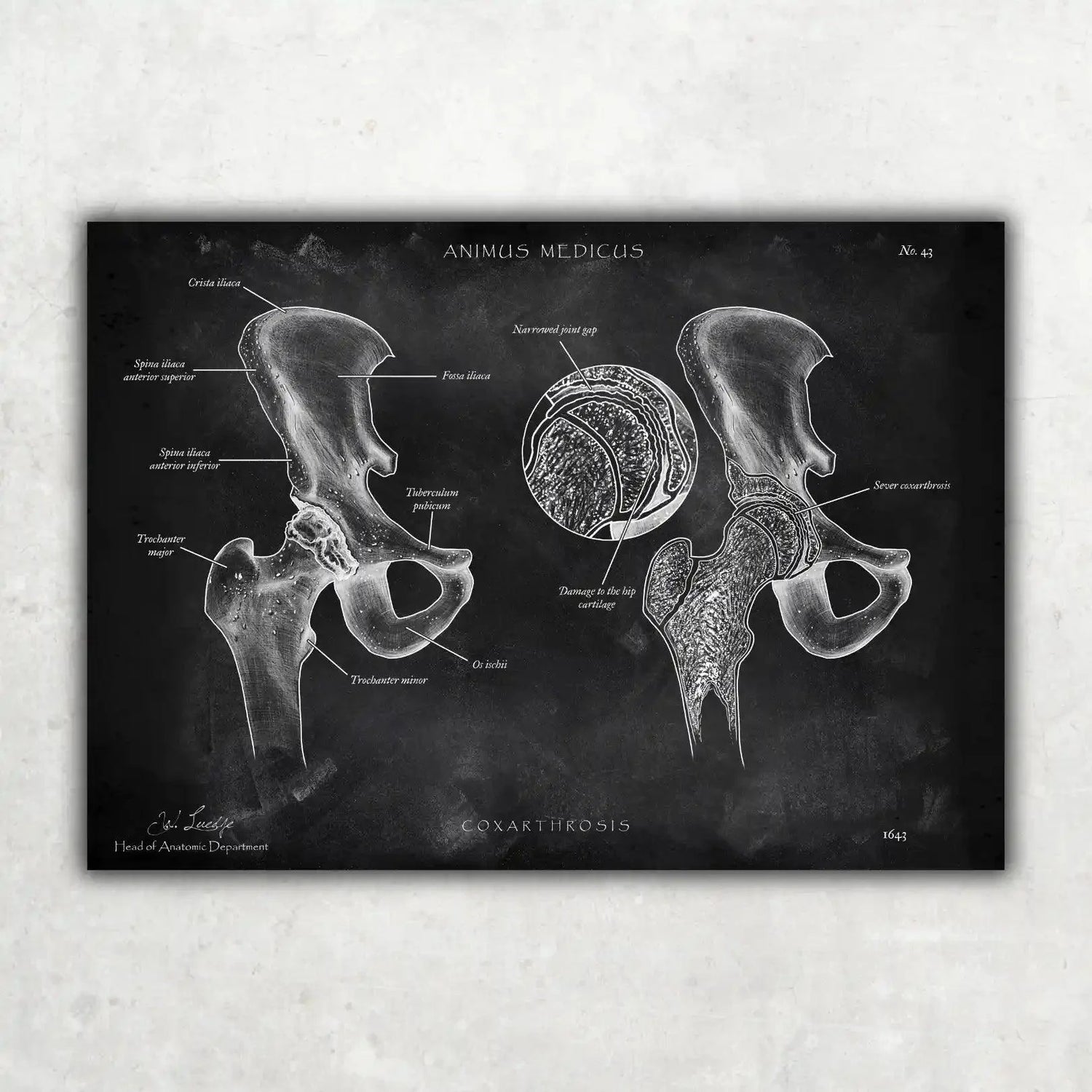
The most common musculoskeletal disorder in old age
Some joints are more susceptible to osteoarthritis than others. The hip joint is definitely the most common site for osteoarthritis.
Almost everyone over the age of 50 reports occasional pain and stiffness in the hip.
But what actually happens in hip osteoarthritis and which structures are damaged exactly?
If you are not yet able to explain this perfectly to your patients, then this motif is perfect for you to help your patients in the best possible way.
What's more, the motif also looks incredibly good.
What you get:
- Overview of hip osteoarthritis in the Chalkboard Edition
- Printed on high-quality premium paper
- UV protective laminate for long-lasting colors
- 100% satisfaction guarantee
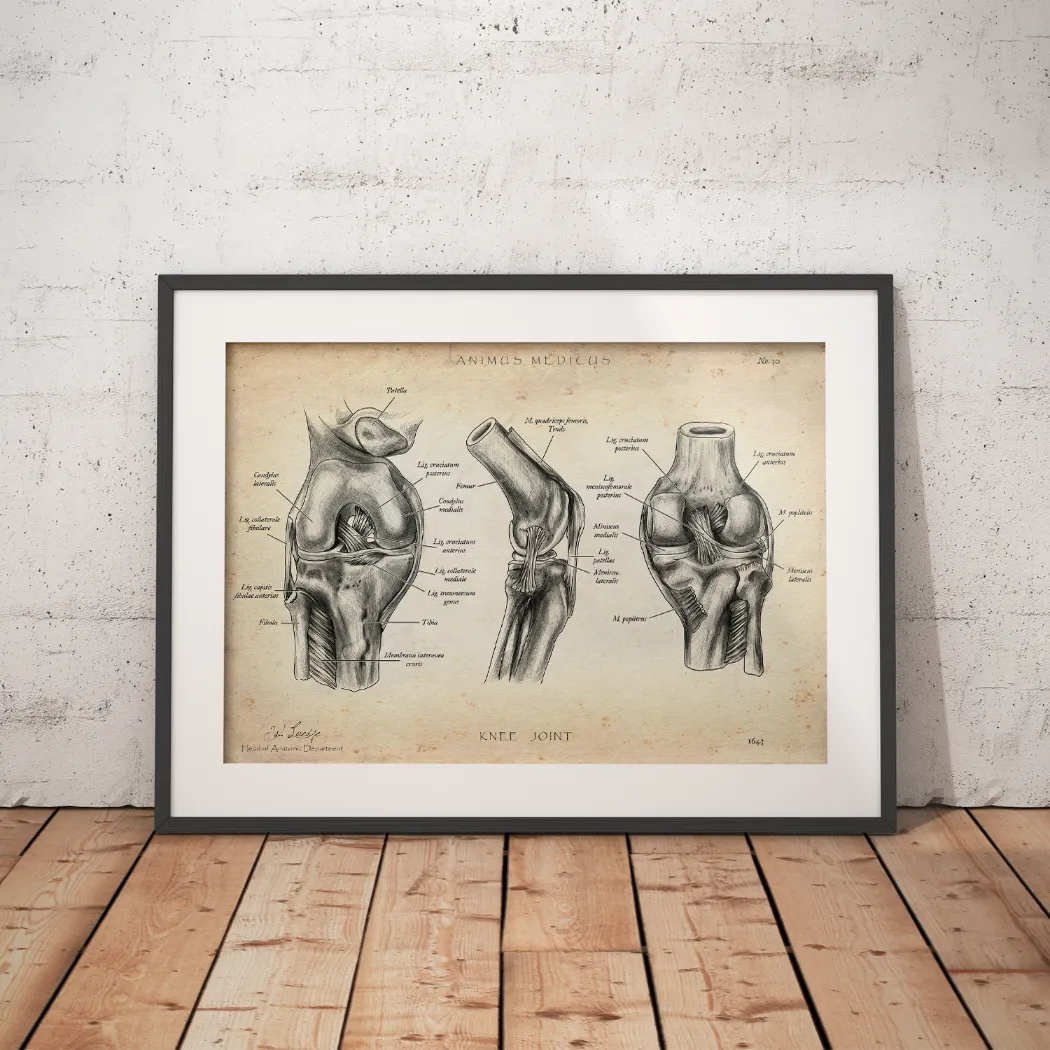
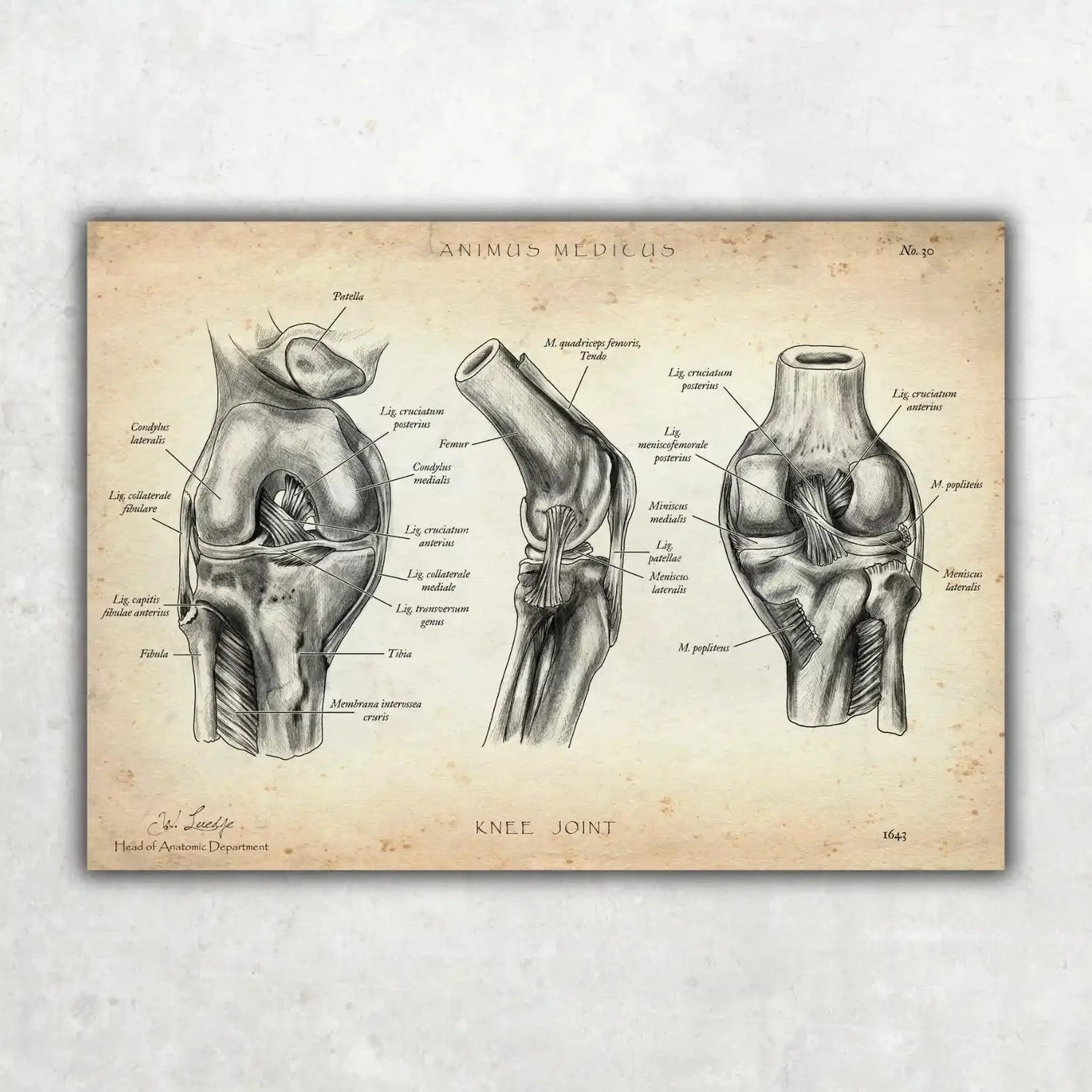
The Princess of Joints
Just one wrong move and you have pain or even an injury. You've probably experienced at least one of these.
The knee joint is not only complex in its structure but also highly susceptible to injuries.
It's crucial to thoroughly understand and explain the various ligaments and sub-joints of the knee to build a better understanding.
If you can't yet perfectly explain the anatomy of the knee joint, then this poster is just what you need!
What You Get:
- Detailed depiction of the knee joint
- Printed on premium quality paper
- UV-protective laminate for long-lasting colors
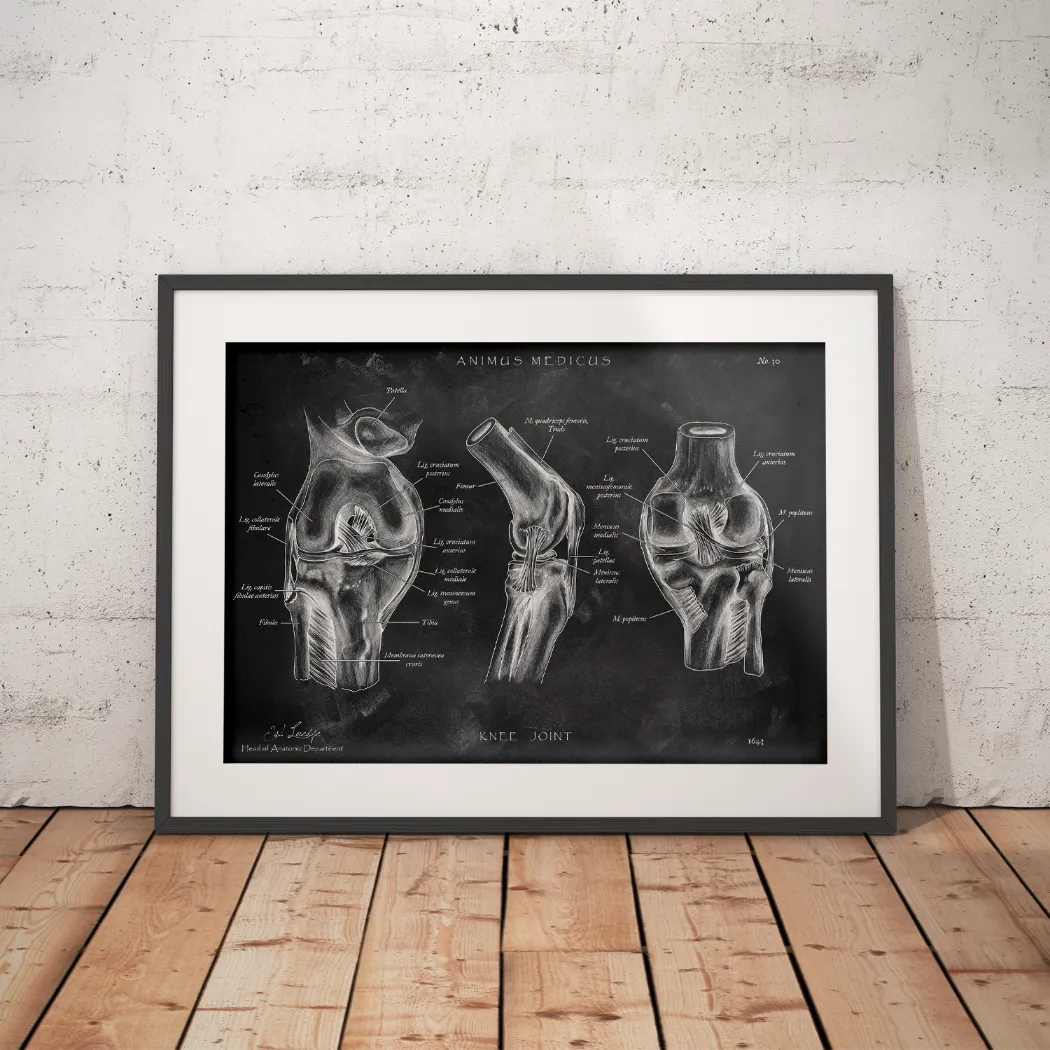
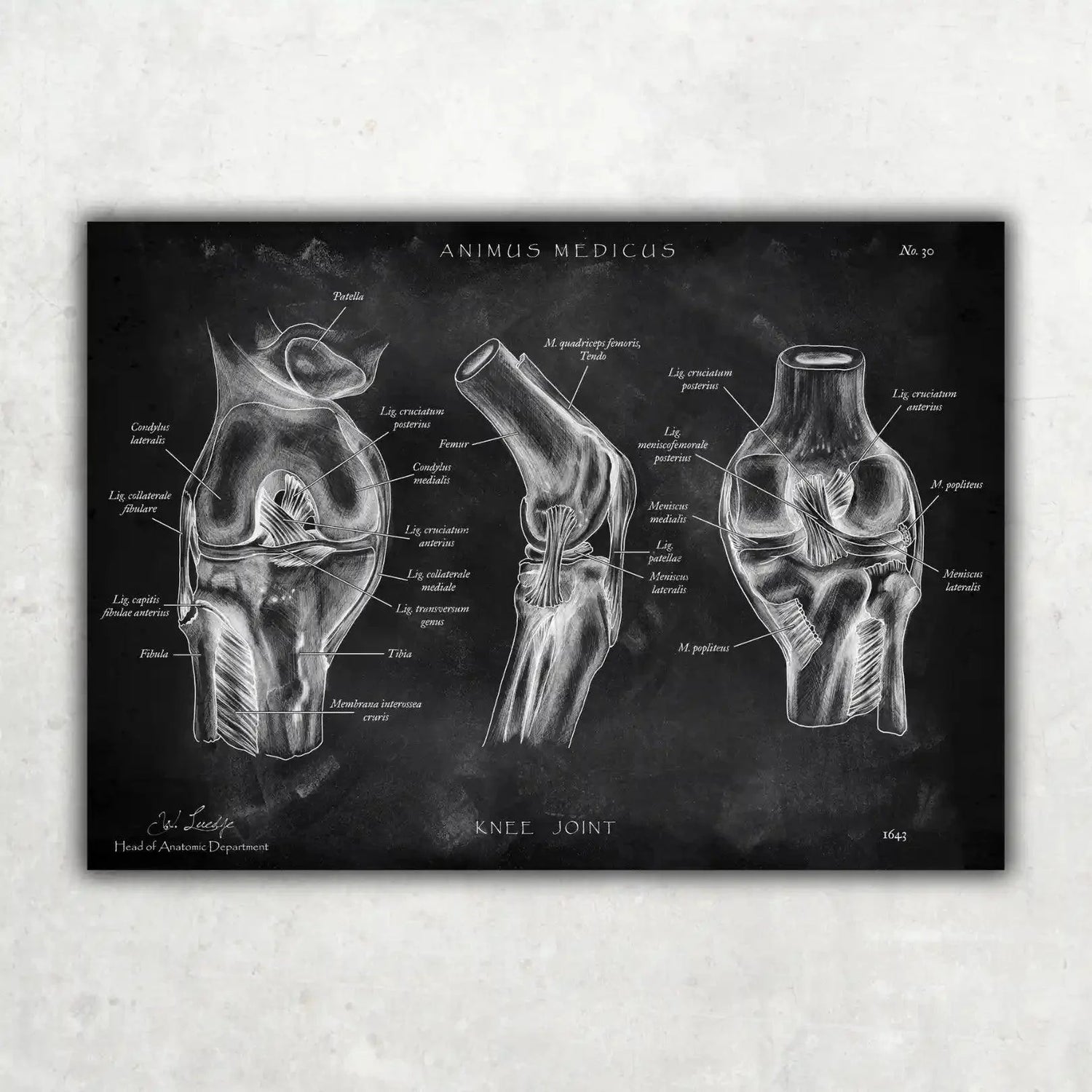
The princess of joints
Just one wrong move and you're in pain or even injured. You've probably experienced at least one of these things.
The knee joint is not only very complex in its structure, but also extremely susceptible to injury.
This makes it all the more important to have a thorough understanding of the various ligaments and sub-joints of the knee and be able to explain them in order to gain a better understanding.
If you can't yet explain the anatomy of the knee joint perfectly, then this motif is just right for you!
What you get:
- Detailed illustration of the knee joint in the Chalkboard Edition
- Printed on high-quality premium paper
- UV protective laminate for long-lasting colors
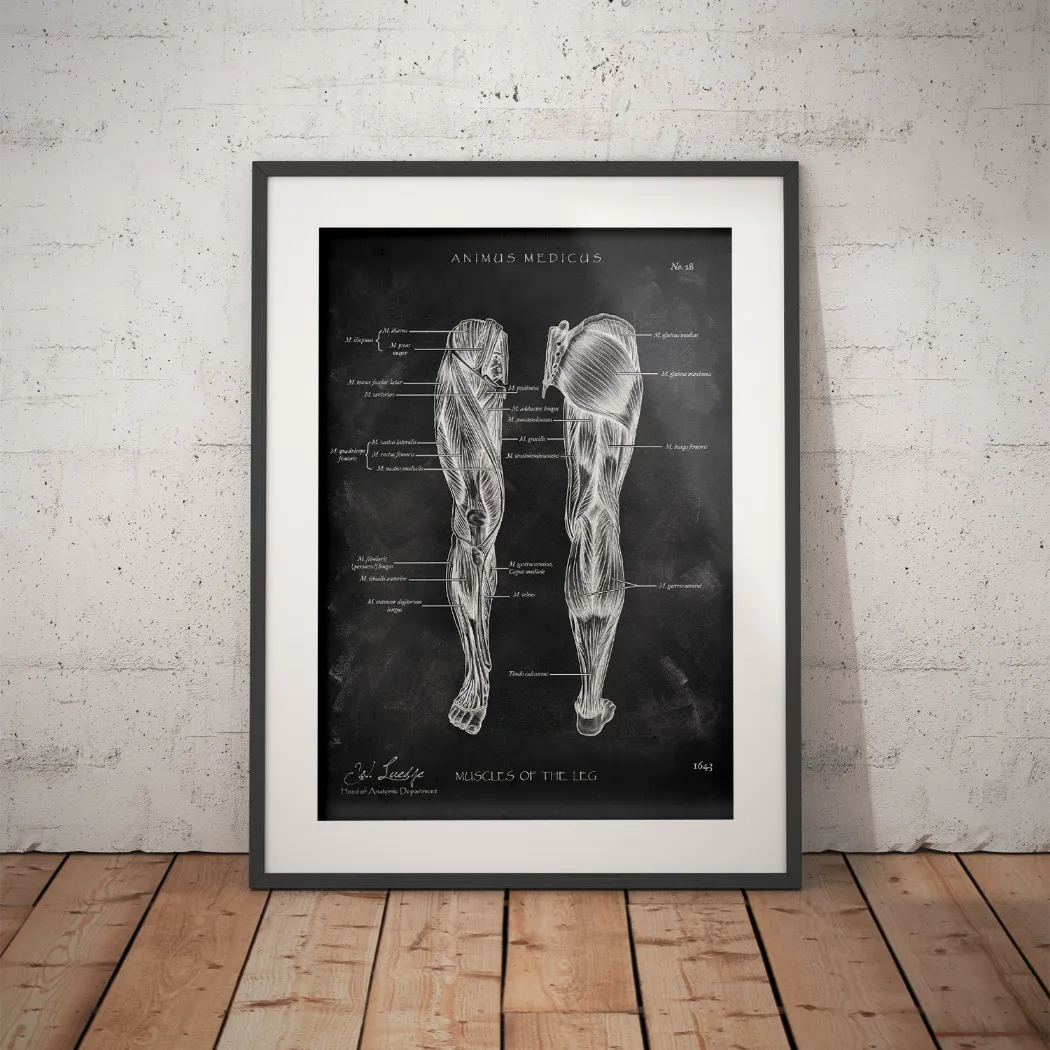
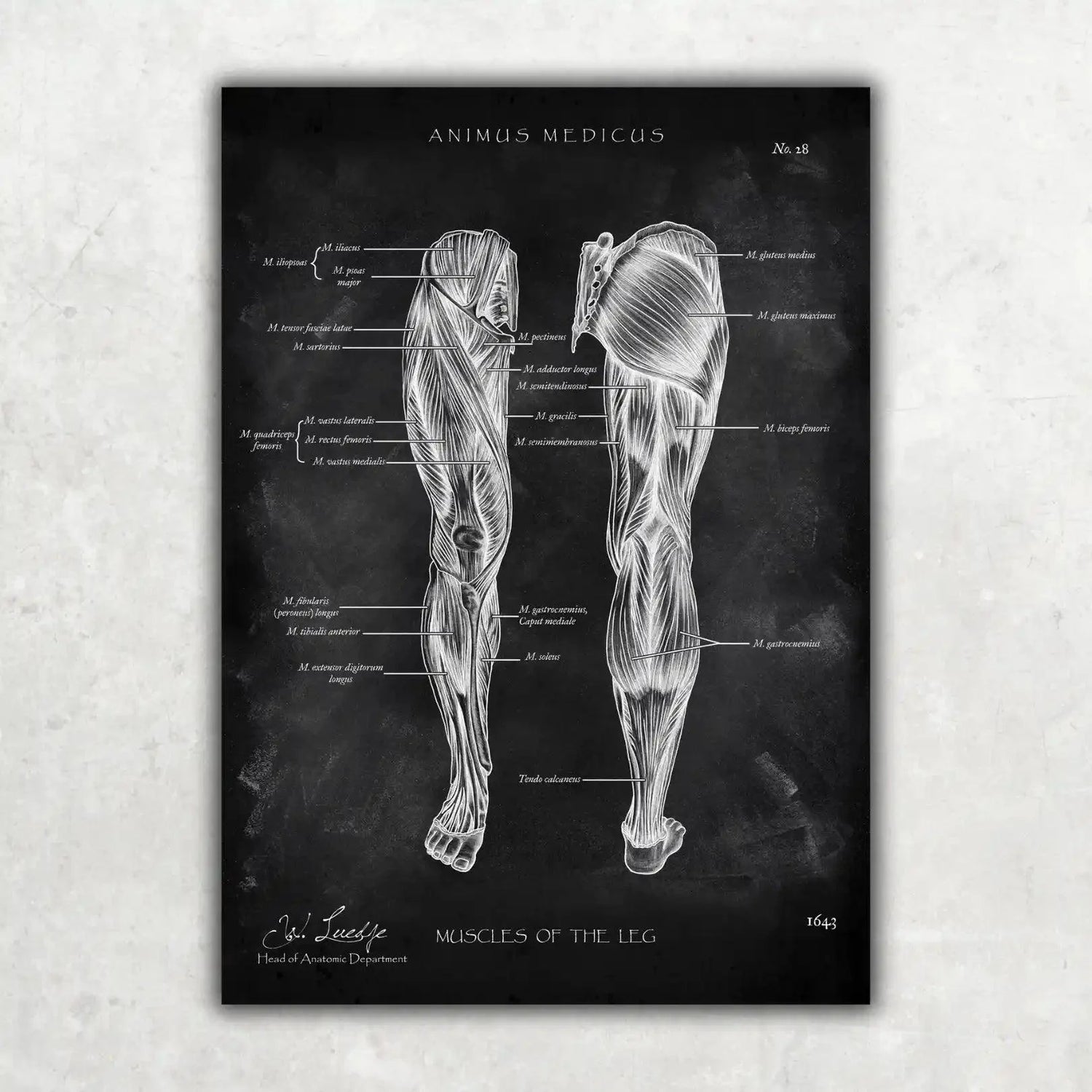
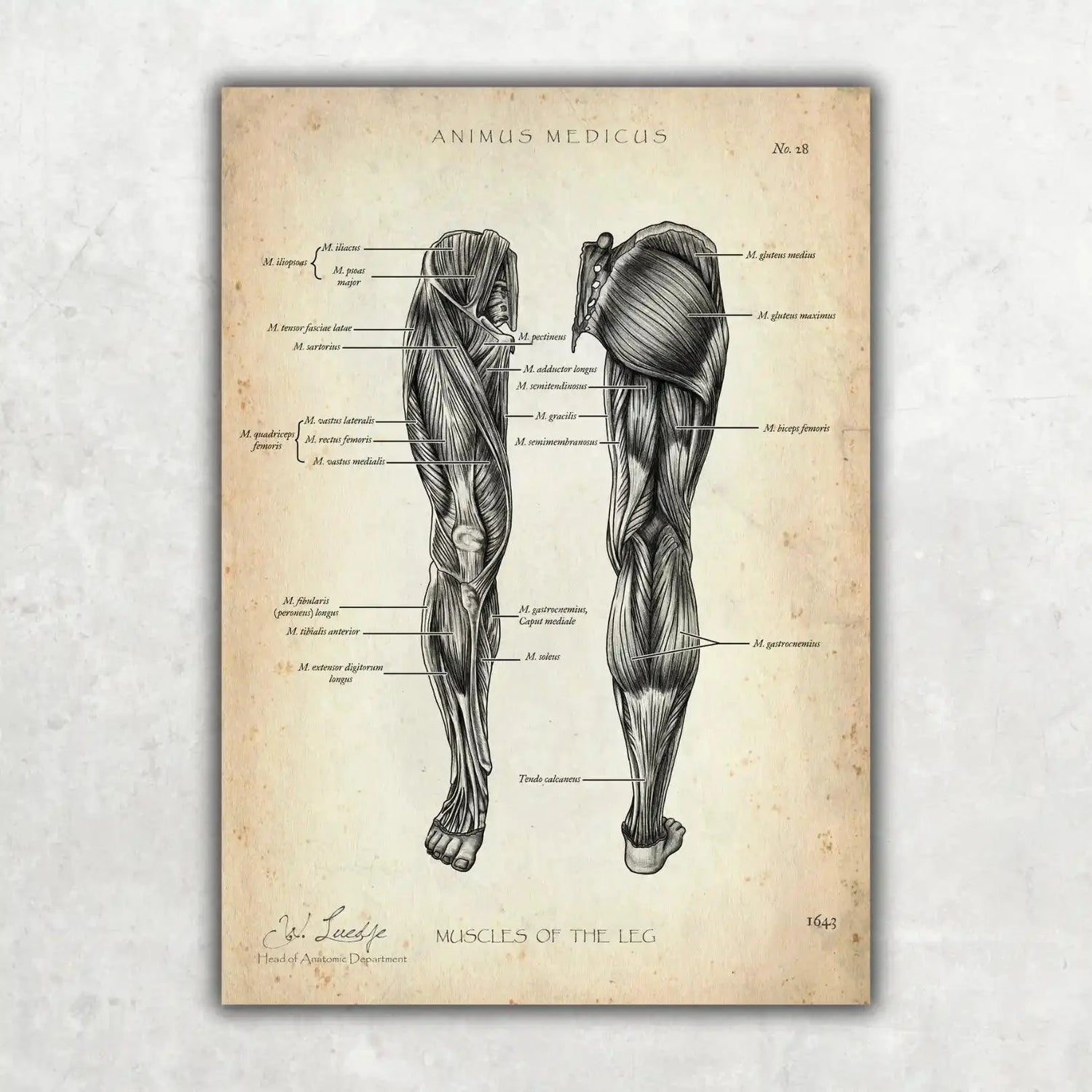
Never skip leg day!
Whether in a sports club or as a hobby, almost everyone exercises these days. And that's a good thing!
But this makes it all the more important to understand the muscular anatomy of the legs.
This motif helps you understand the precise course of the leg muscles so that you can bring even more knowledge and expertise to your training or therapy.
If you can't yet explain the anatomy of the leg muscles perfectly, then this motif is just right for you!
What you get:
- Detailed illustration of the entire leg musculature in the Chalkboard Edition
- Printed on high-quality premium paper
- UV protective laminate for long-lasting colors
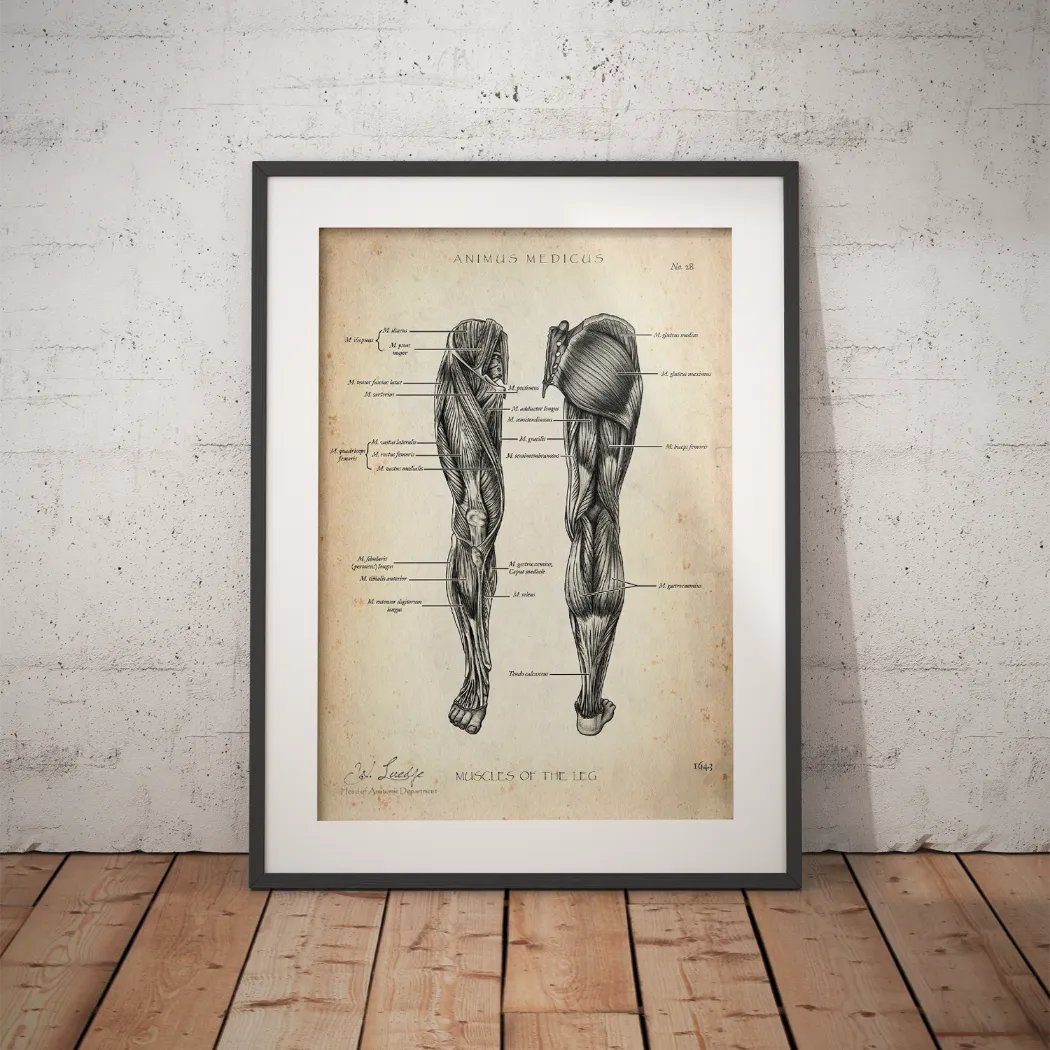
Never Skip Leg Day!
Whether in a sports club or as a hobby, almost everyone trains their body these days. And that's great!
It's even more important to understand the muscular anatomy of the legs.
This poster helps you grasp the precise paths of the leg muscles, allowing you to bring more knowledge and expertise to your training or therapy.
If you can't yet perfectly explain the anatomy of the leg muscles, then this poster is just what you need!
What You Get:
- Detailed depiction of the entire leg musculature
- Printed on premium quality paper
- UV-protective laminate for long-lasting colors
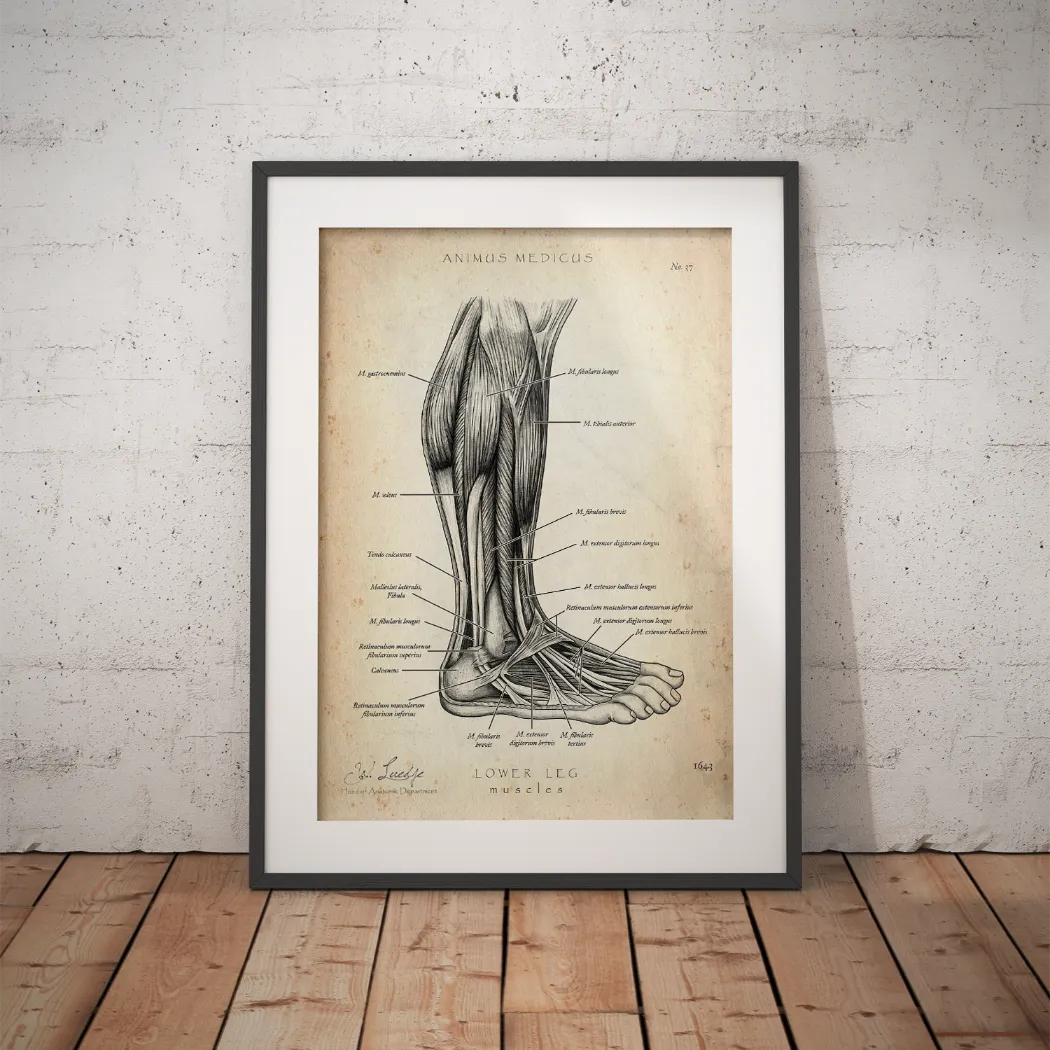
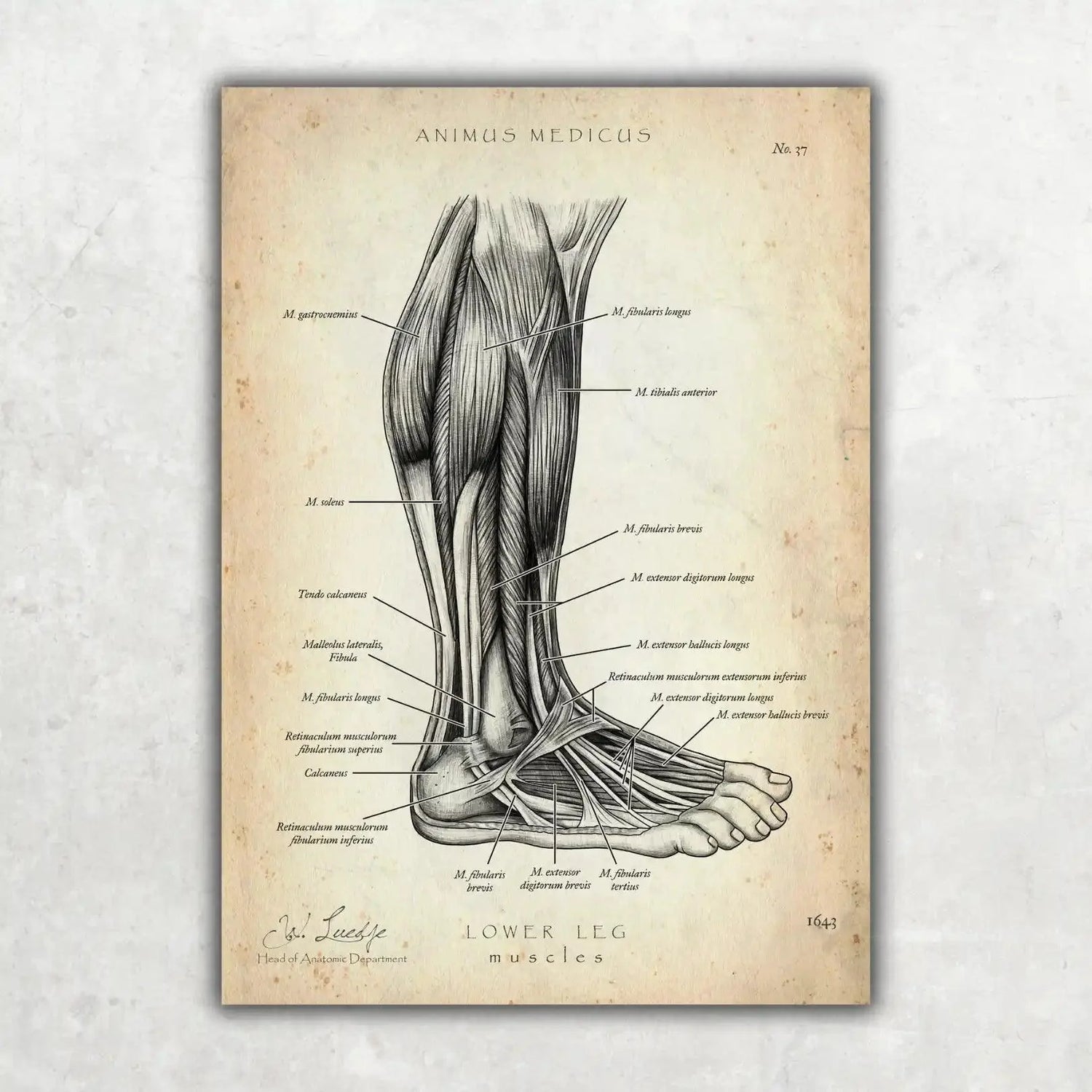
Which muscles stabilize the ankle joint?
The ligaments in the foot are very susceptible to injury. Ligament tears and ruptures are particularly common in sports. ⛹️
But what exercises should you show your patients to help them regain stability?
This motif helps you and your patients to understand the structure of the foot and demonstrates the necessity of certain exercises.
What's more, the motif also looks incredibly good.
What you get:
- Overview of the lower leg muscles
- Printed on high-quality premium paper
- UV protective laminate for long-lasting colors
- 100% satisfaction guarantee
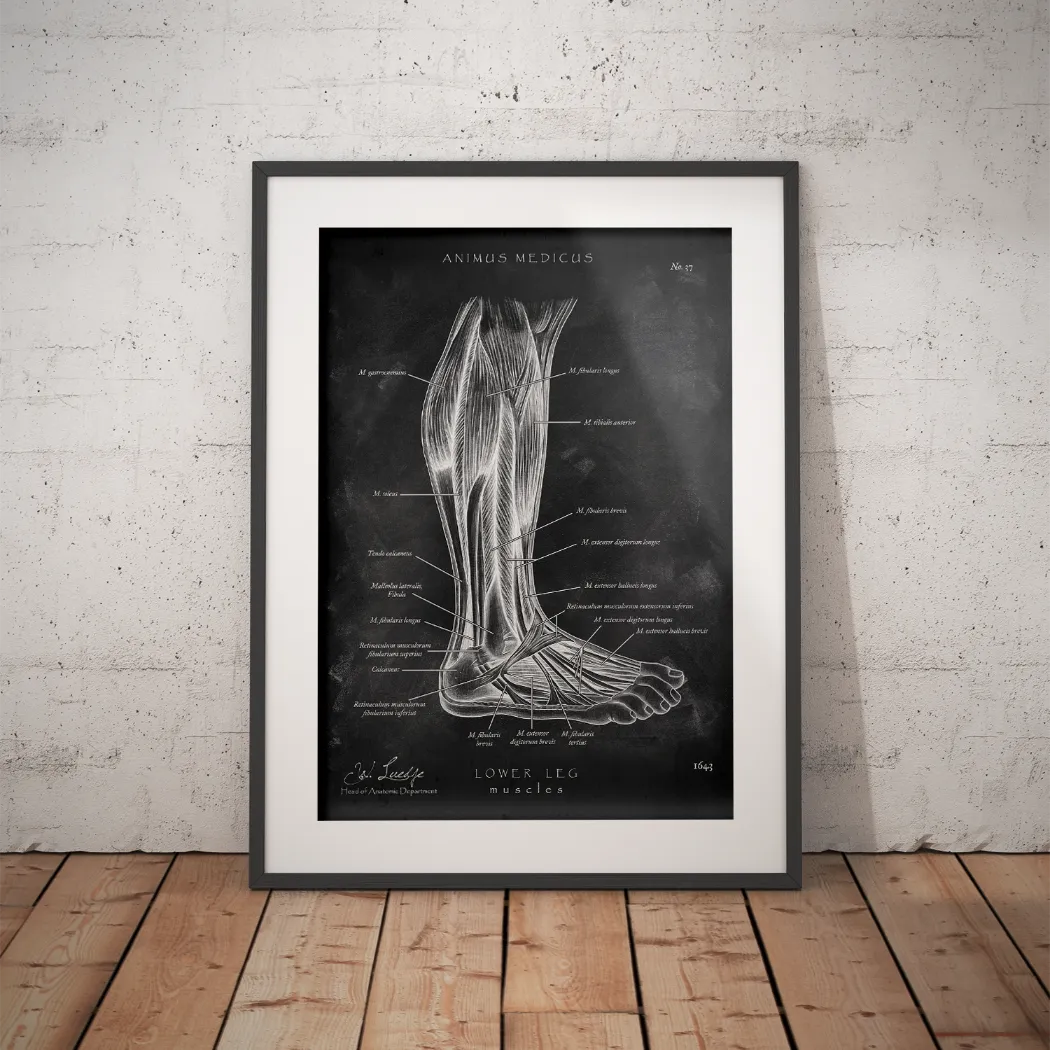
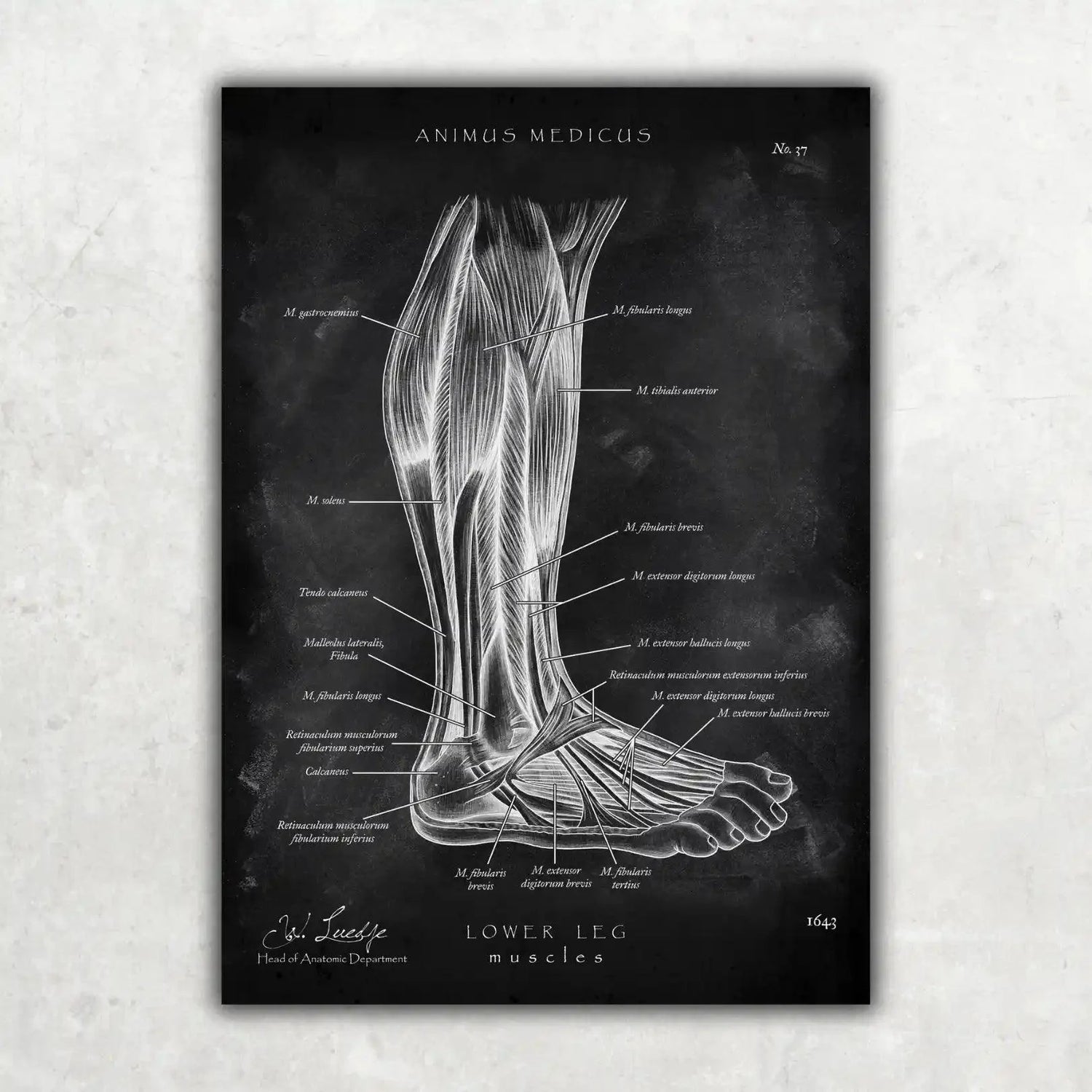
Which muscles stabilize the ankle joint?
The ligaments in the foot are very susceptible to injury. Ligament tears and ruptures are particularly common in sports. ⛹️
But what exercises should you show your patients to help them regain stability?
This motif helps you and your patients to understand the structure of the foot and demonstrates the necessity of certain exercises.
What's more, the motif also looks incredibly good.
What you get:
- Overview of the lower leg muscles in the Chalkboard Edition
- Printed on high-quality premium paper
- UV protective laminate for long-lasting colors
- 100% satisfaction guarantee
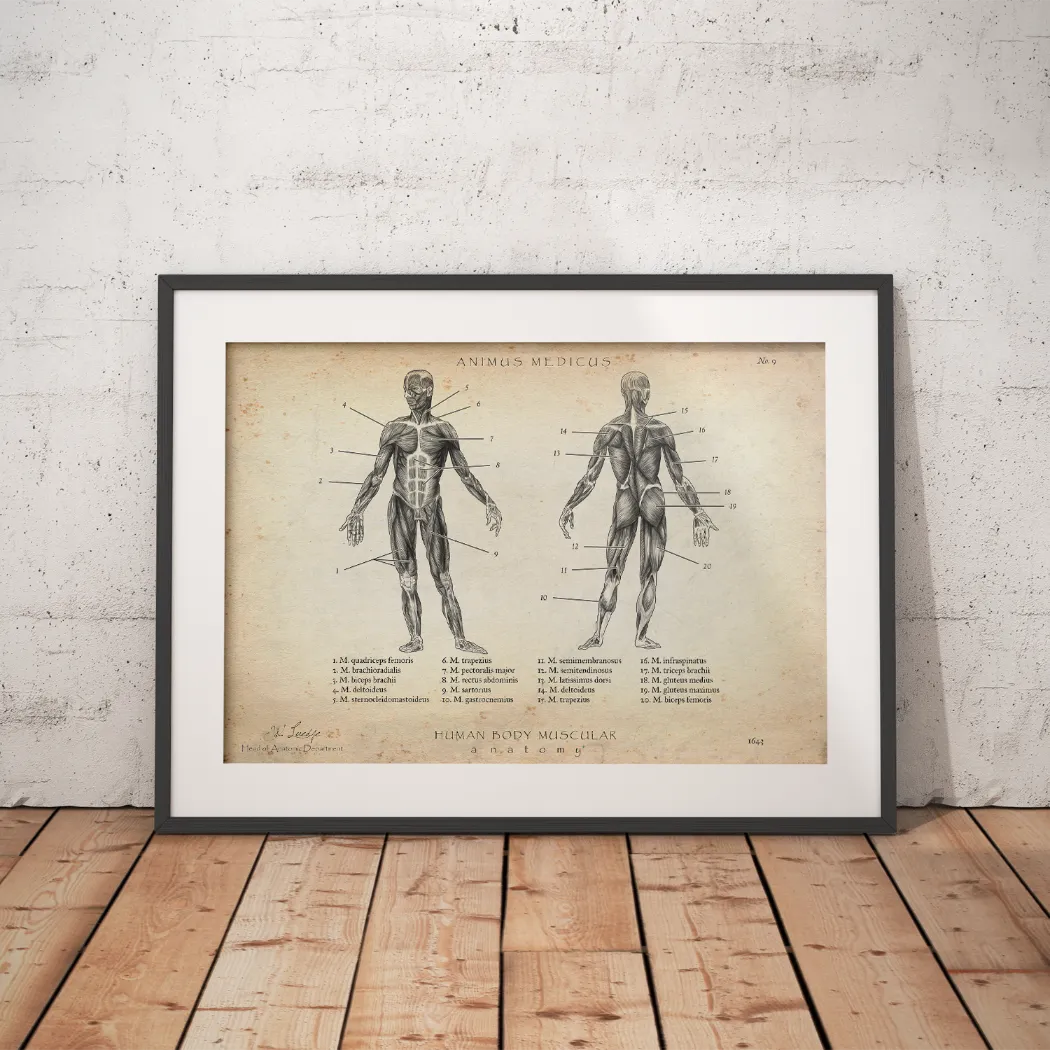
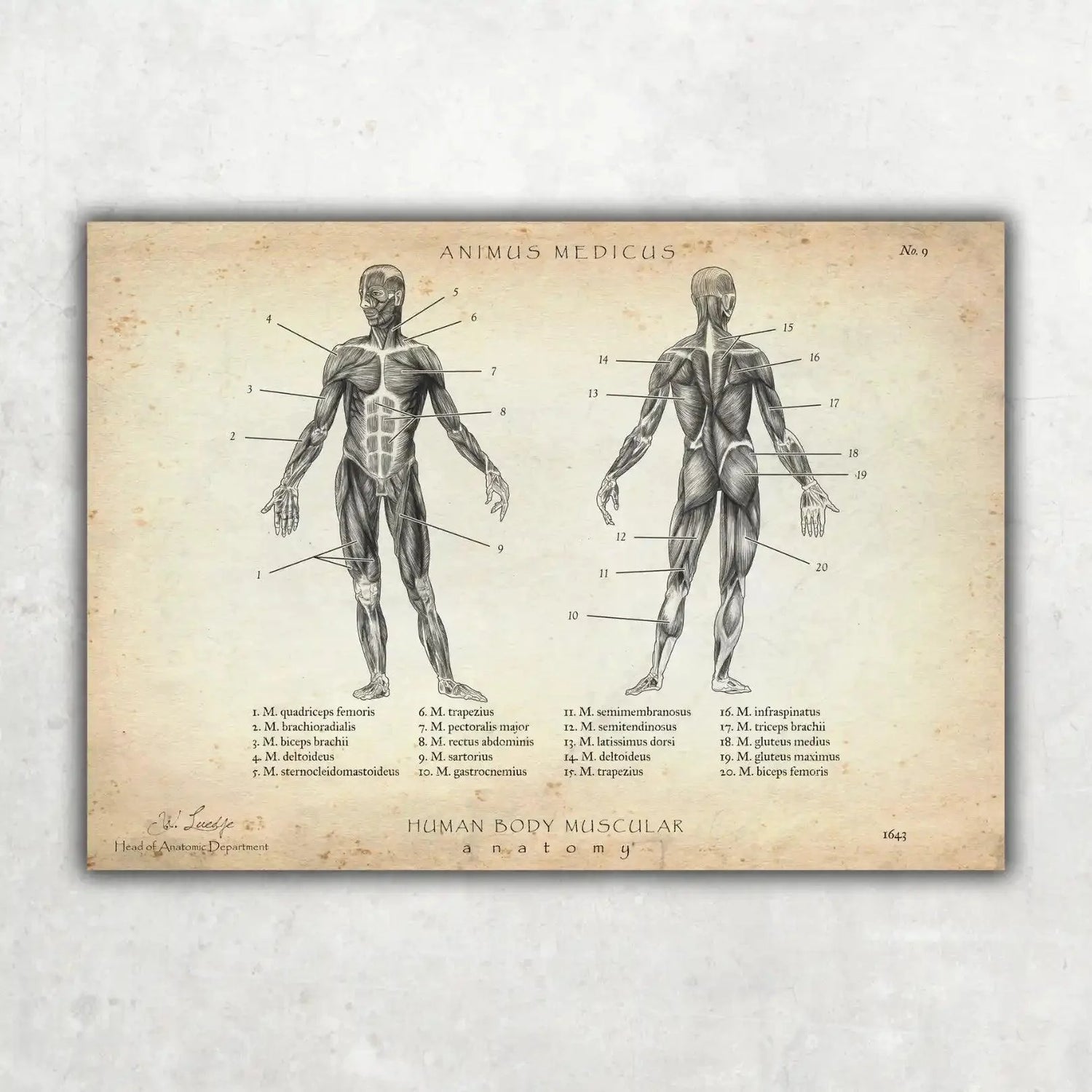
Is the Human Body a Work of Art?
Our answer is a resounding yes! The perfect interplay of muscles, ligaments, bones, and joints is simply impressive.
If you also find the anatomy of the human body fascinating, then you need this poster!
With it, you can admire and study the entire musculoskeletal system of the human body – even outside of anatomy class.
Whether you're a doctor, student, physiotherapist, nurse, or simply looking for the perfect gift for any occasion, this artwork is a must-have!
What You Get:
- Overview of the human musculoskeletal system
- Printed on premium quality paper
- UV-protective laminate for long-lasting colors
- 100% satisfaction guarantee
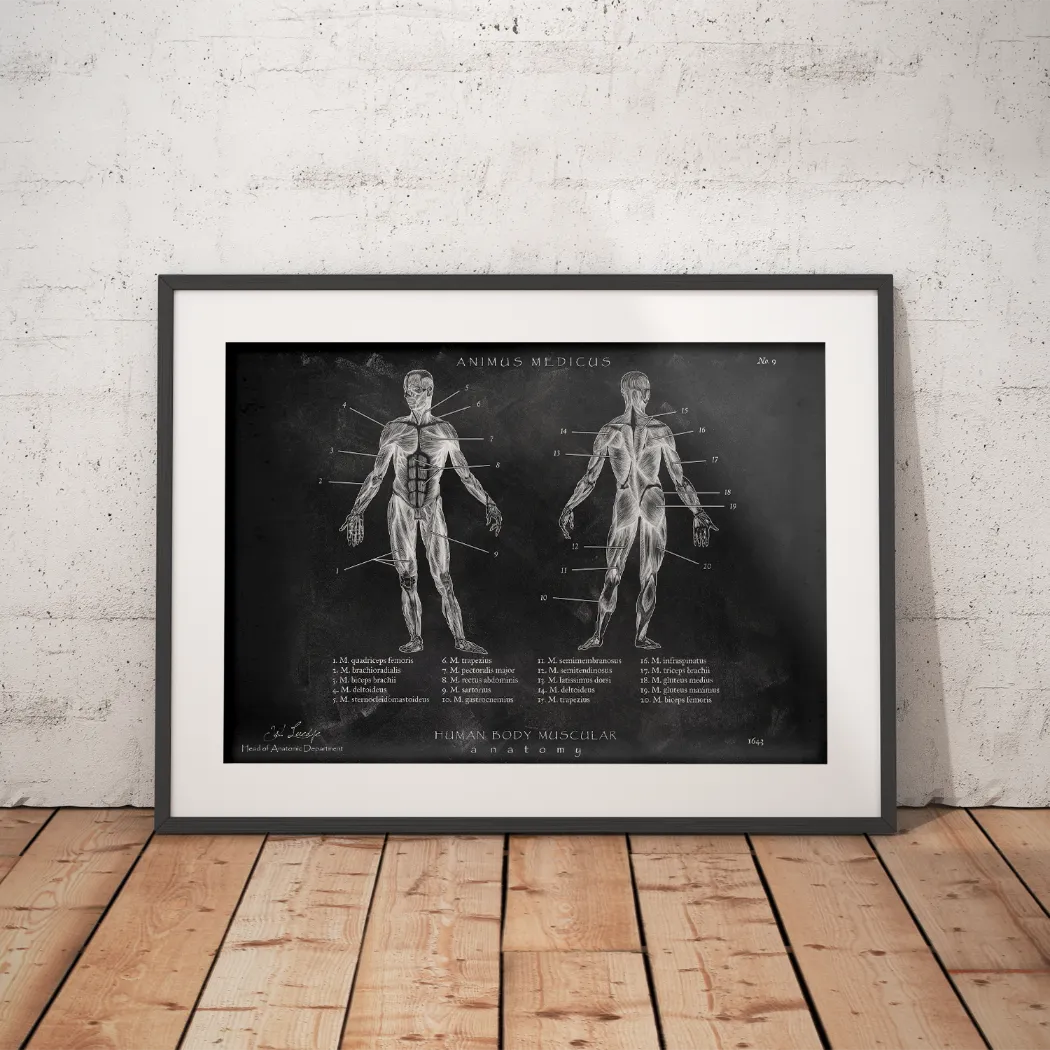
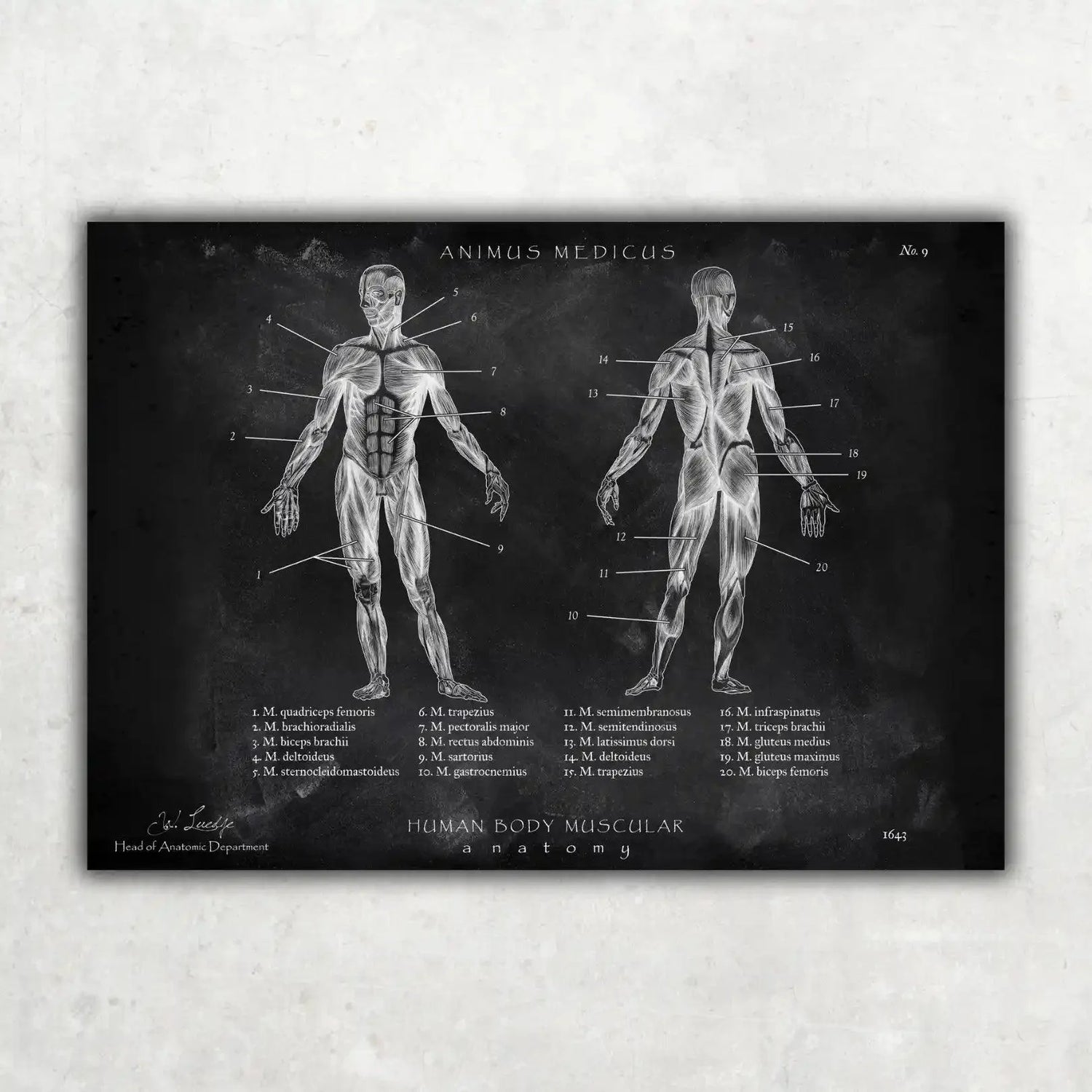
Is the Human Body a Work of Art?
Our answer is a resounding yes! The perfect interplay of muscles, ligaments, bones, and joints is simply impressive.
If you also find the anatomy of the human body fascinating, then you need this poster!
With it, you can admire and study the entire musculoskeletal system of the human body – even outside of anatomy class.
Whether you're a doctor, student, physiotherapist, nurse, or simply looking for the perfect gift for any occasion, this artwork is a must-have!
What You Get:
- Overview of the human musculoskeletal system in the Chalkboard Edition
- Printed on premium quality paper
- UV-protective laminate for long-lasting colors
- 100% satisfaction guarantee
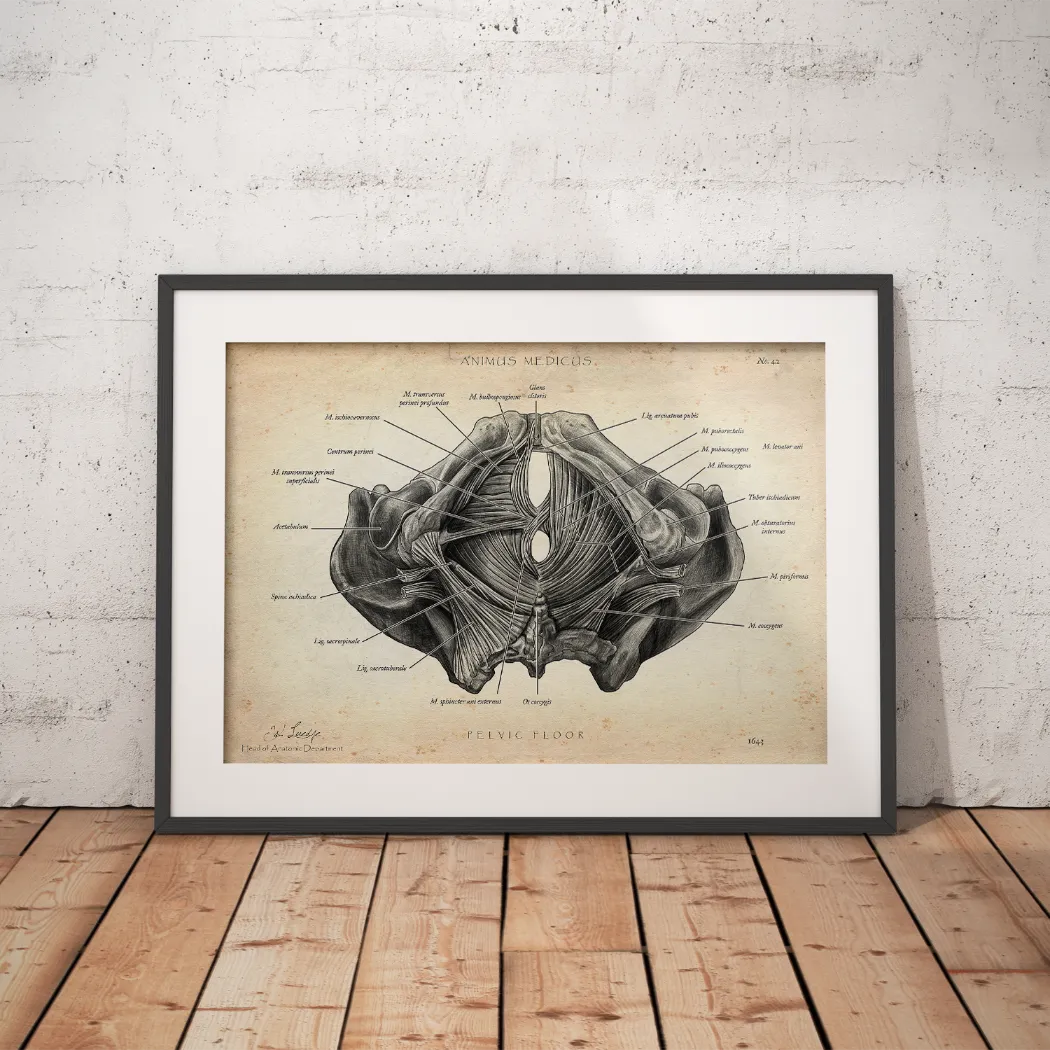
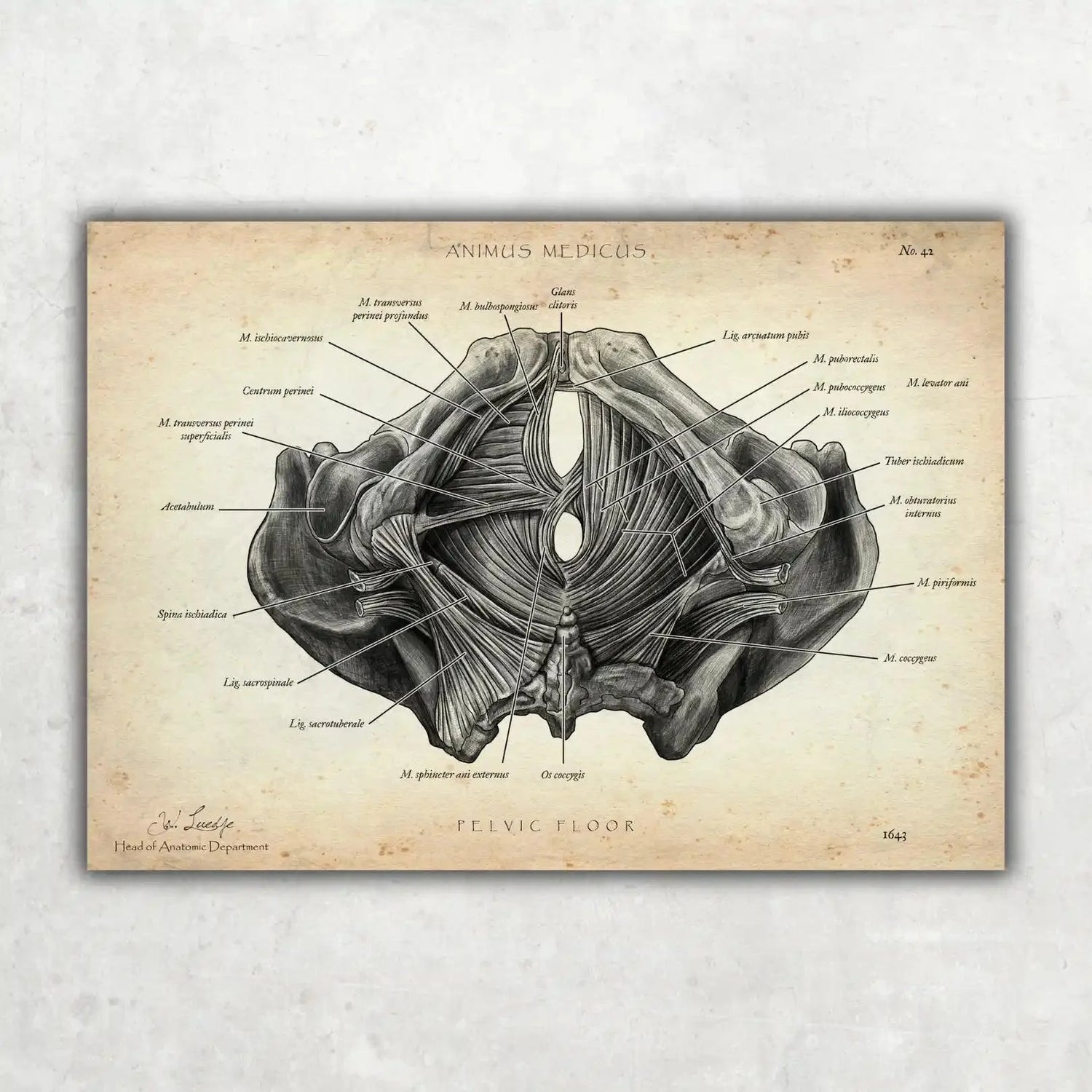
The pelvic floor – important for young and old
Incontinence is a particularly widespread issue among older people. However, the pelvic floor is also put under a lot of strain during pregnancy.
In order to combat the unpleasant and stressful issue of incontinence, it is first important to understand how continence actually works.
The illustration of the pelvic floor shows all the important muscle layers and clearly illustrates the function and importance of the pelvic floor.
If you are not yet able to explain this to your patients perfectly, then this motif is perfect for you to help your patients in the best possible way.
What's more, the motif also looks incredibly good.
What you get:
- Overview of the pelvic floor
- Printed on high-quality premium paper
- UV protective laminate for long-lasting colors
- 100% satisfaction guarantee
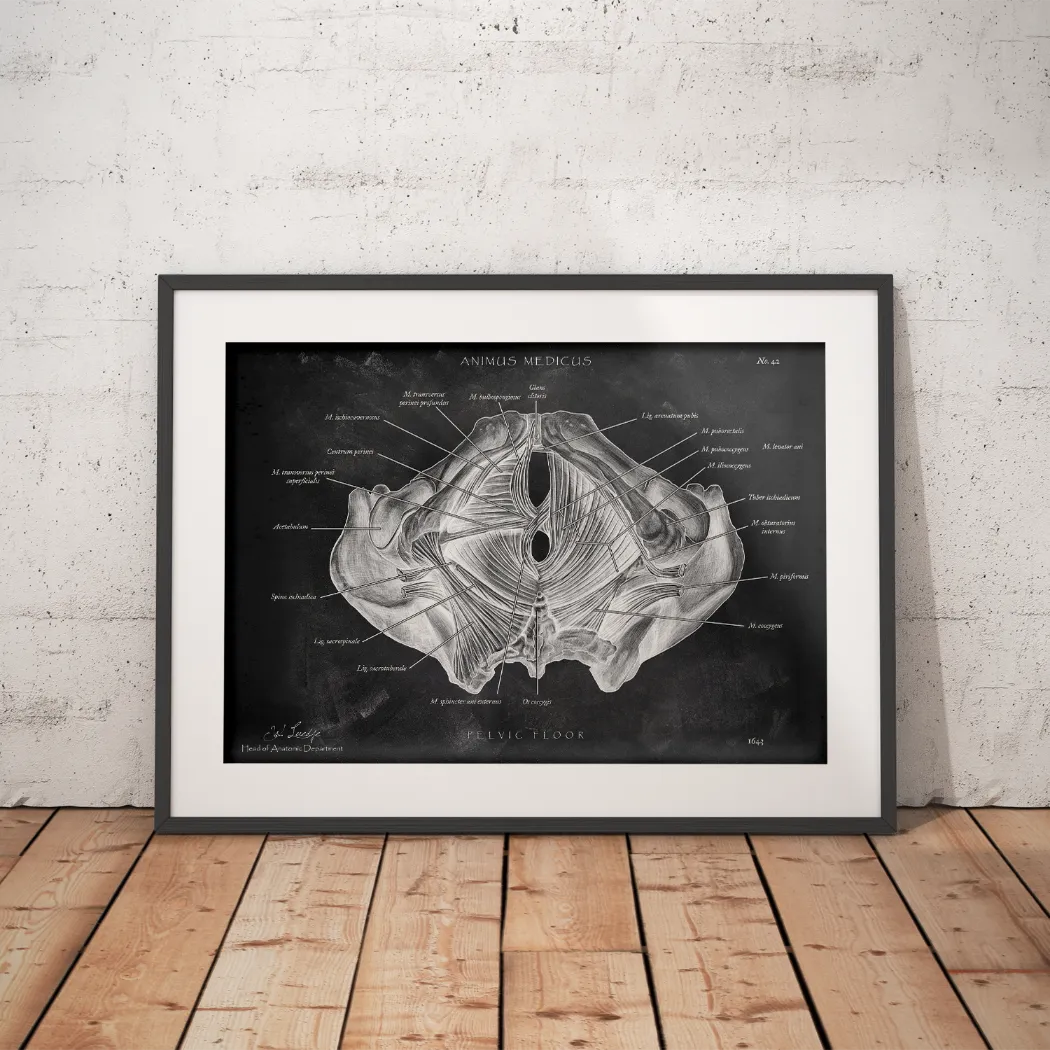
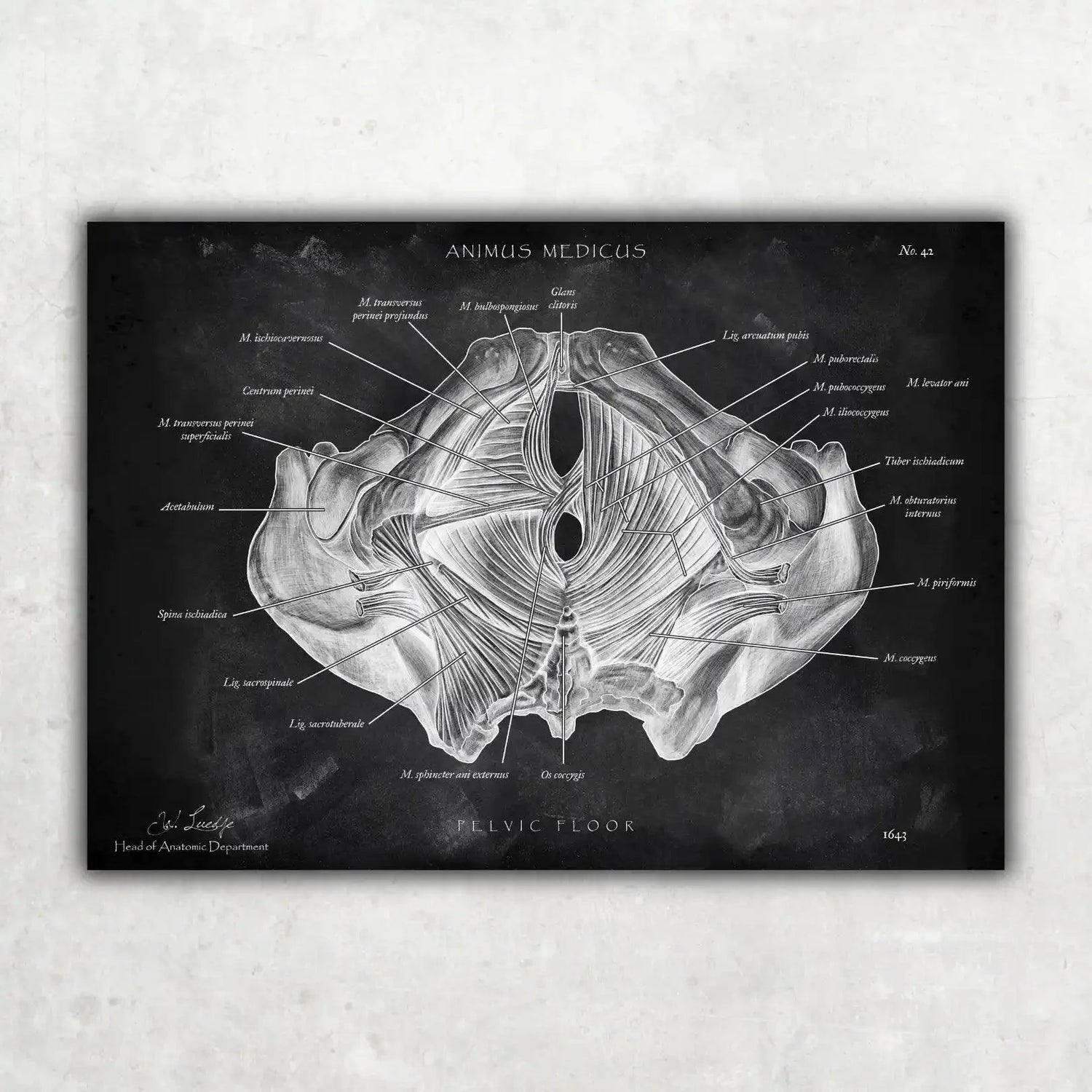
The pelvic floor – important for young and old
Incontinence is a particularly widespread issue among older people. However, the pelvic floor is also put under a lot of strain during pregnancy.
In order to combat the unpleasant and stressful issue of incontinence, it is first important to understand how continence actually works.
The illustration of the pelvic floor shows all the important muscle layers and clearly illustrates the function and importance of the pelvic floor.
If you are not yet able to explain this to your patients perfectly, then this motif is perfect for you to help your patients in the best possible way.
What's more, the motif also looks incredibly good.
What you get:
- Overview of the pelvic floor in the Chalkboard Edition
- Printed on high-quality premium paper
- UV protective laminate for long-lasting colors
- 100% satisfaction guarantee
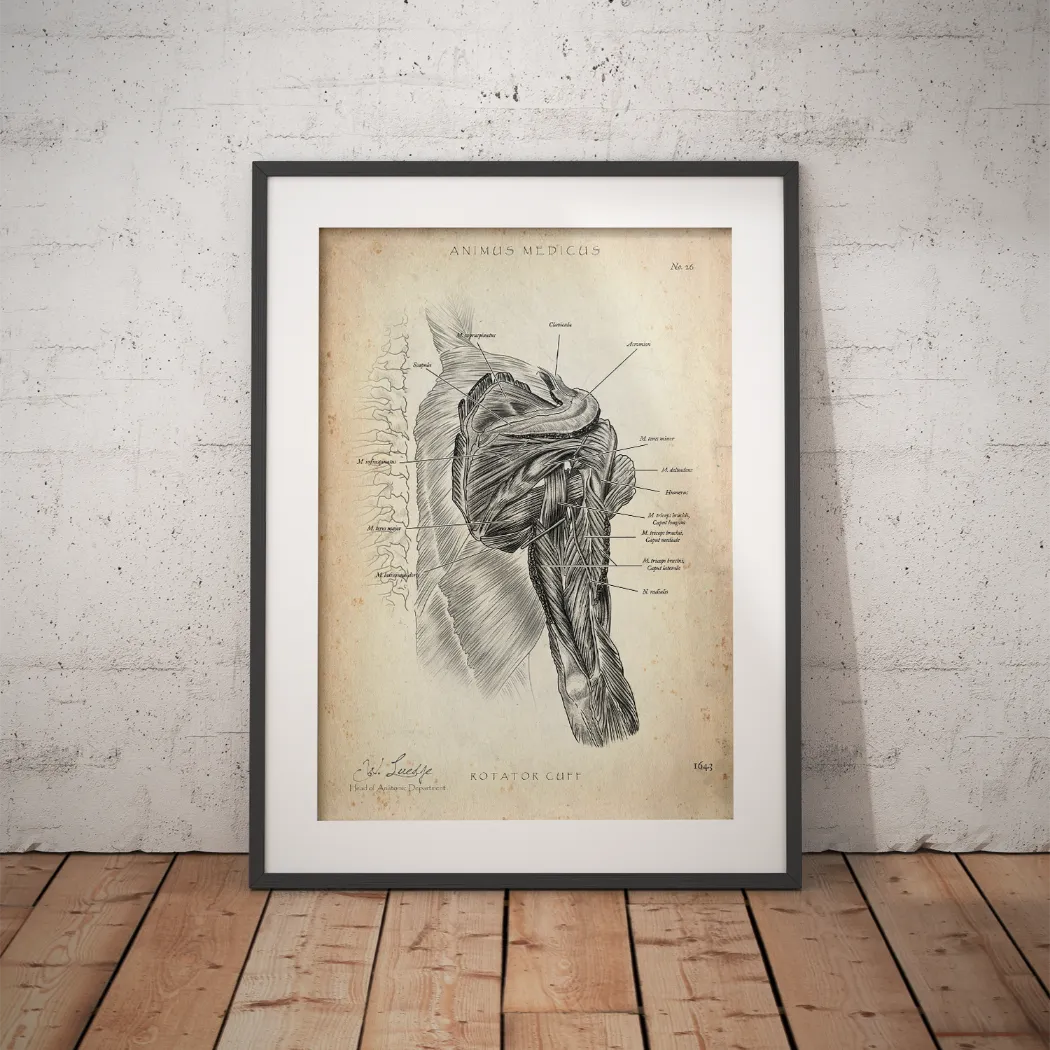
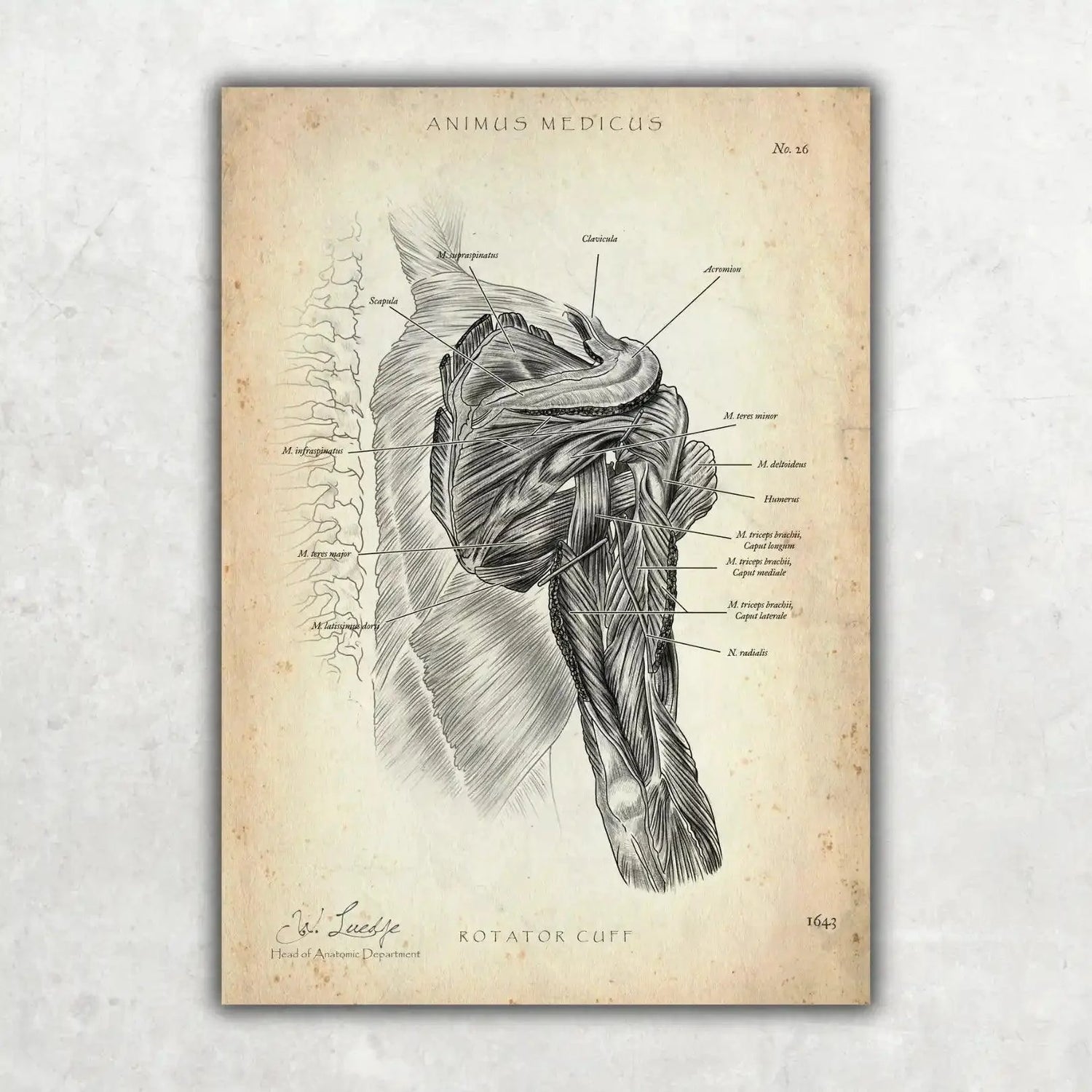
What is the Rotator Cuff?
Unlike the hip joint, the shoulder joint has only a weak bony guidance due to its relatively small glenoid cavity. While it offers a lot of freedom of movement, it provides little stability. Therefore, one of the essential functions of the rotator cuff is to stabilize the shoulder joint. The individual muscles are responsible for internal and external rotation as well as abduction of the arm.
If you're a fan of the shoulder or have difficulty explaining the rotator cuff to others, then this poster is just what you need!
Which Muscles Make Up the Rotator Cuff?
The rotator cuff includes:
- Infraspinatus muscle (M. infraspinatus)
- Supraspinatus muscle (M. supraspinatus)
- Subscapularis muscle (M. subscapularis)
- Teres minor muscle (M. teres minor)
What You Get:
- Overview of the shoulder girdle
- Printed on premium quality paper
- UV-protective laminate for long-lasting colors
- Optionally available with a black frame without matting
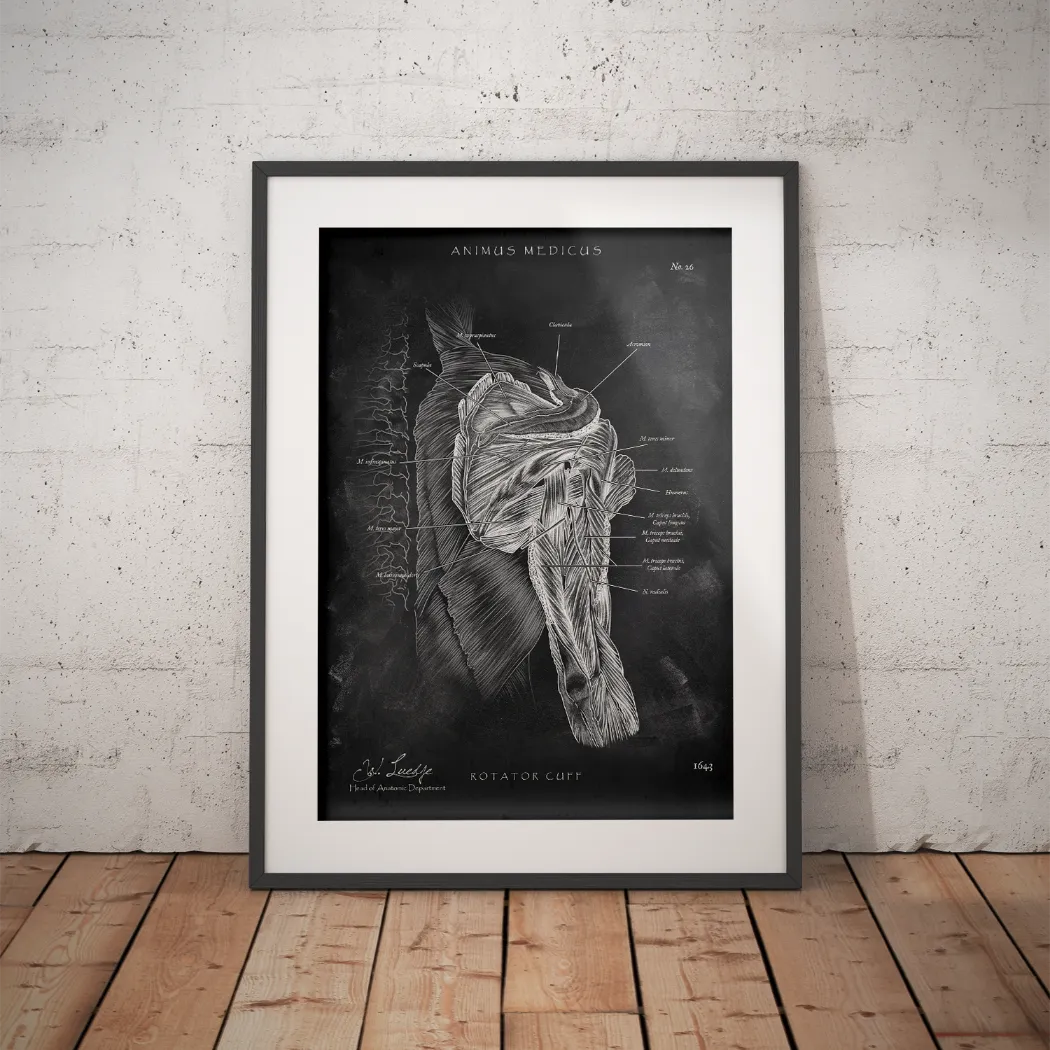
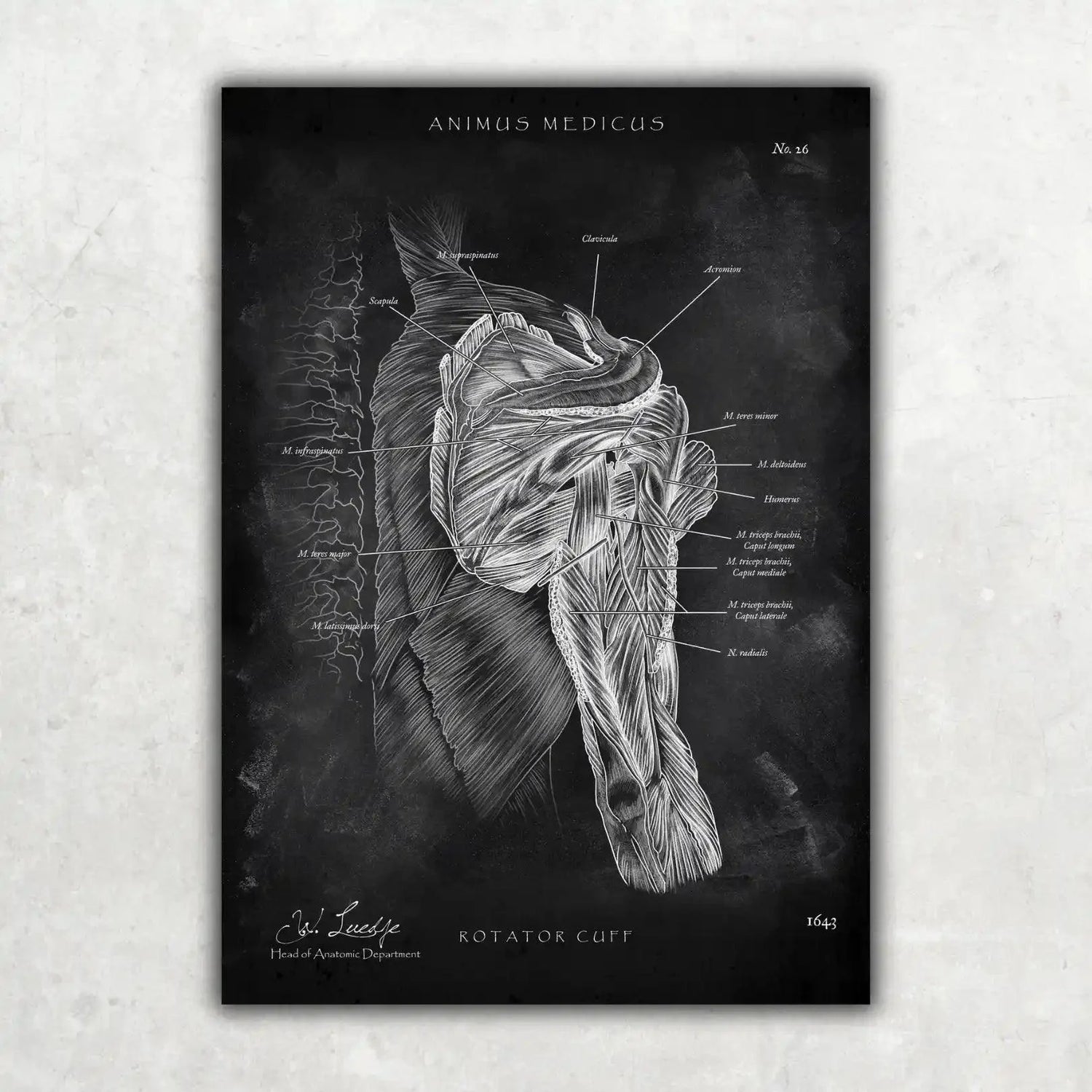
What is the rotator cuff?
Unlike the hip joint, the shoulder joint has only weak bony guidance due to its relatively small socket. Although this allows for a great deal of freedom of movement, it offers little stability. An important function of the rotator cuff is therefore to stabilize the shoulder joint. The individual muscles are responsible for internal and external rotation as well as abduction of the arm.
If you are a fan of the shoulder yourself or have difficulty explaining the rotator cuff to others, then this motif is just right for you!
Which muscles belong to the rotator cuff?
The rotator cuff includes:
1. M. infraspinatus
2. M. supraspinatus
3. M. subscapularis
4. M. teres minor
What you get:
- Overview of the shoulder girdle in the Chalkboard Edition
- Printed on high-quality premium paper
- UV protective laminate for long-lasting colors
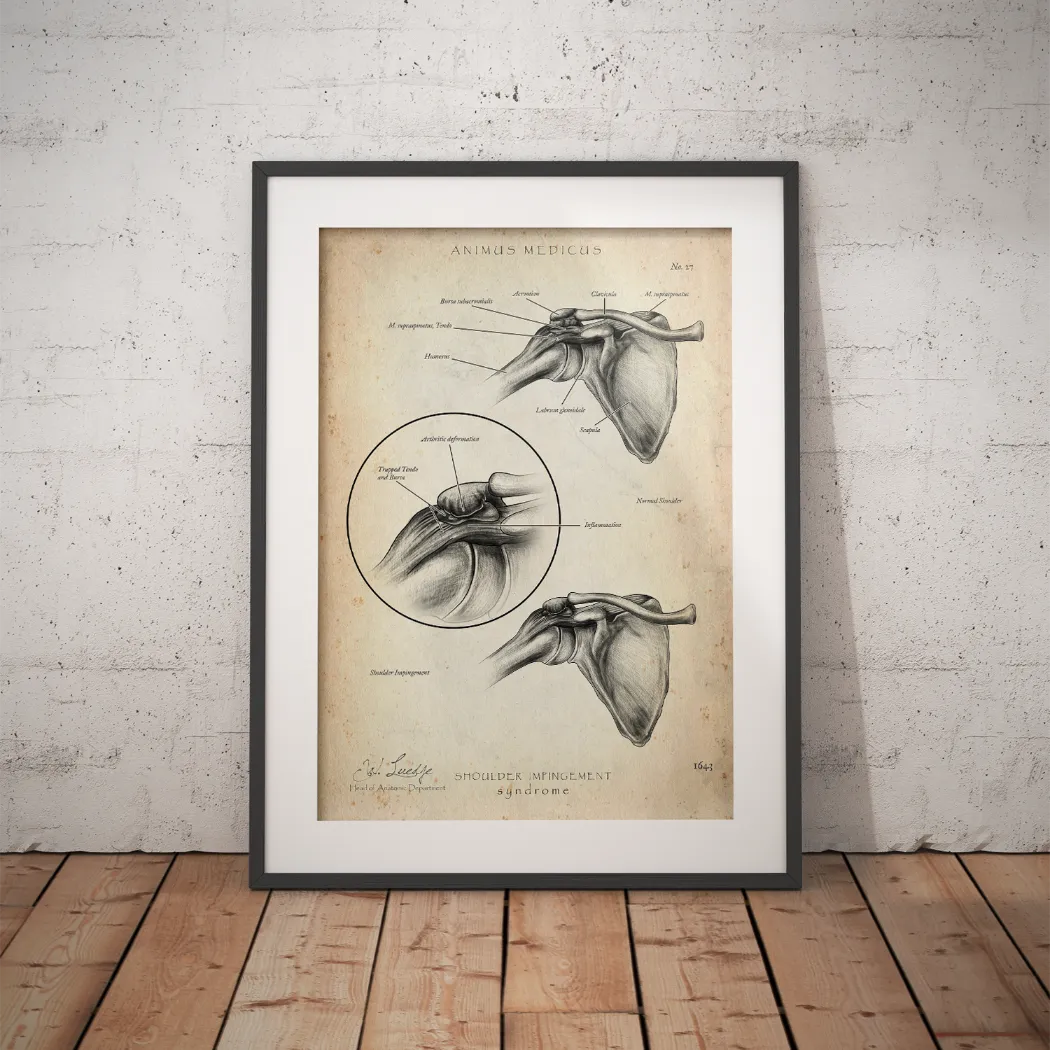
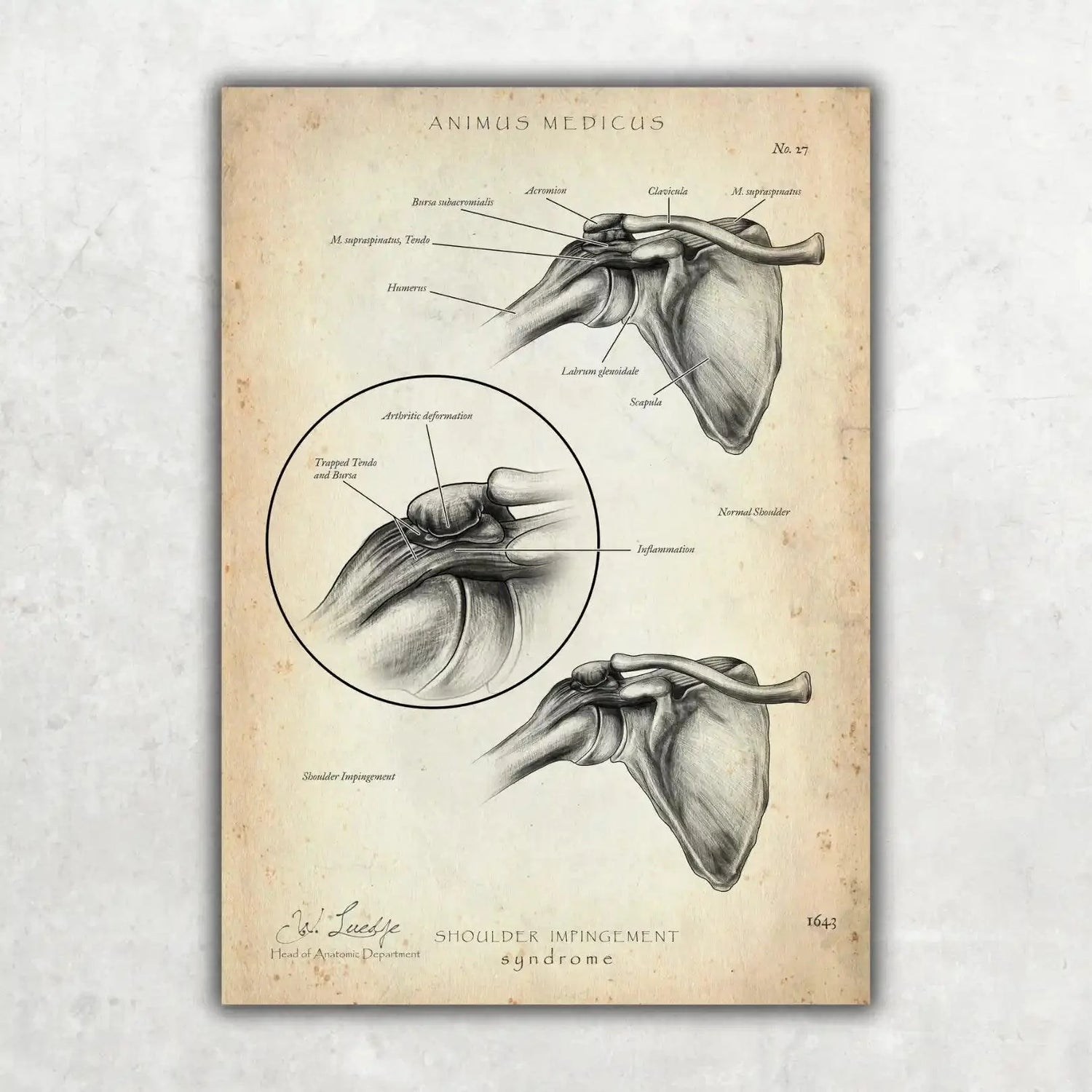
What is Subacromial Impingement Syndrome?
Have you ever experienced shoulder pain when lifting your arm above your head? 74% of people have at least temporarily experienced severe shoulder pain when raising their arm.
So, it seems that this syndrome is quite common. But can you explain it in a way that others can immediately understand?
Subacromial Impingement Syndrome is a condition where the tendons of the rotator cuff and the subacromial bursa become pinched under the acromion (shoulder roof), causing severe pain during arm abduction between 60° and 120°.
If you can't yet perfectly explain the pathogenesis and anatomy of shoulder impingement, then this poster is just what you need!
What You Get:
- Detailed depiction of shoulder impingement
- Printed on premium quality paper
- UV-protective laminate for long-lasting colors
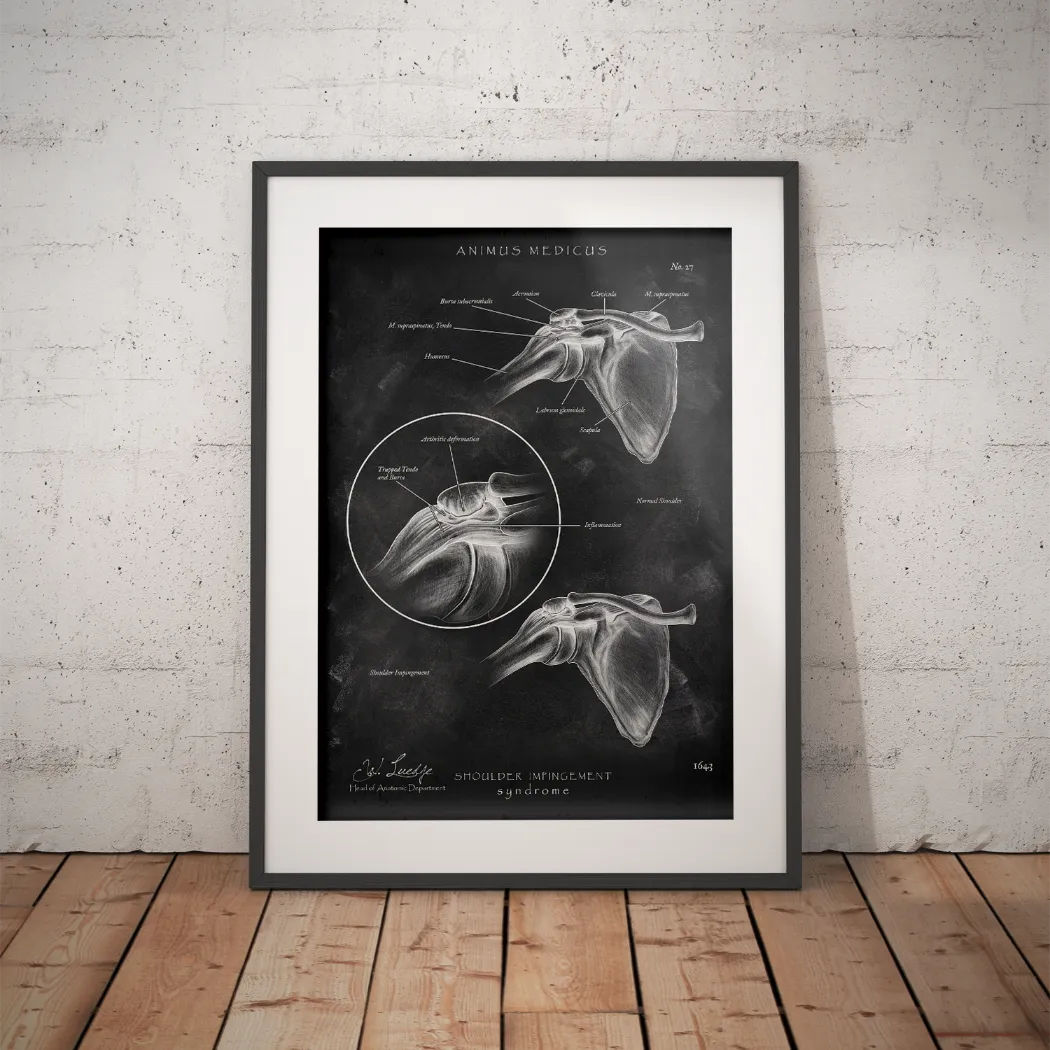
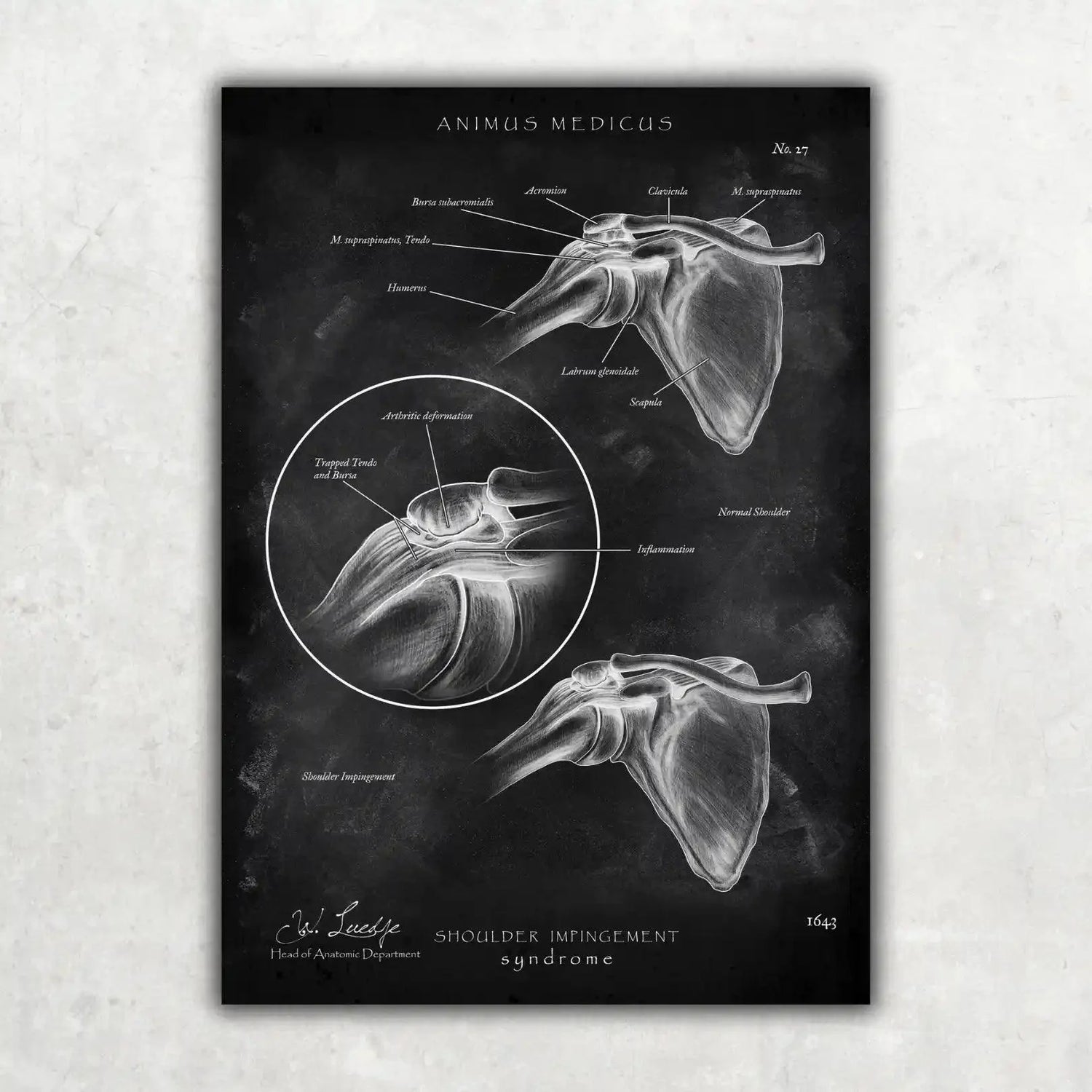
What is subacromial impingement syndrome?
Have you ever experienced pain in your shoulder when raising your arm above your head? 74% of all people experience severe shoulder pain at least once when raising their arm, at least occasionally.
So this syndrome seems to be quite common. But can you explain it in a way that others will understand right away?
Subacromial impingement syndrome is a bottleneck syndrome in which the rotator cuff tendons and subacromial bursa become pinched under the acromion, causing severe pain when the arm is abducted between 60° and 120°.
If you can't yet explain the pathogenesis and anatomy of shoulder impingement perfectly, then this motif is just right for you!
What you get:
- Detailed illustration of shoulder impingement in the Chalkboard Edition
- Printed on high-quality premium paper
- UV protective laminate for long-lasting colors
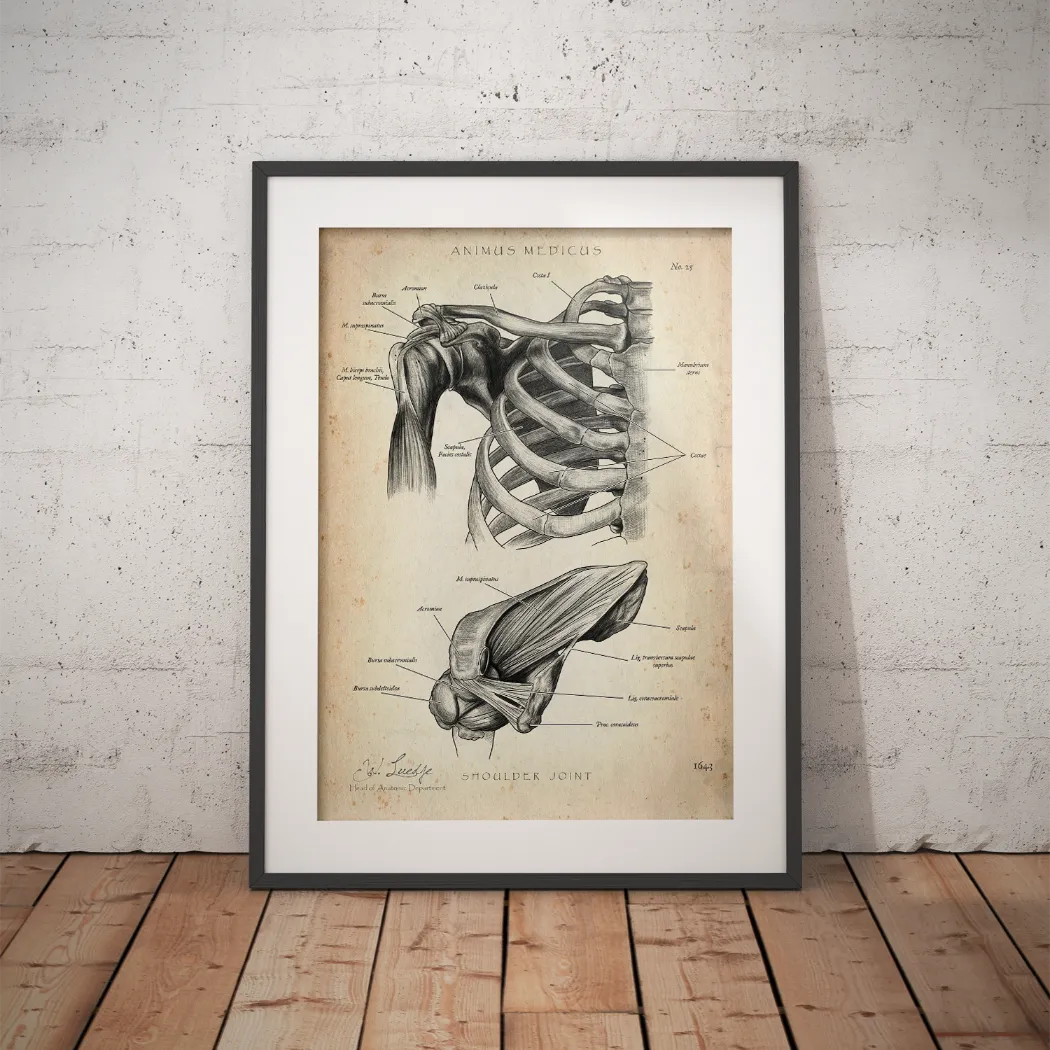
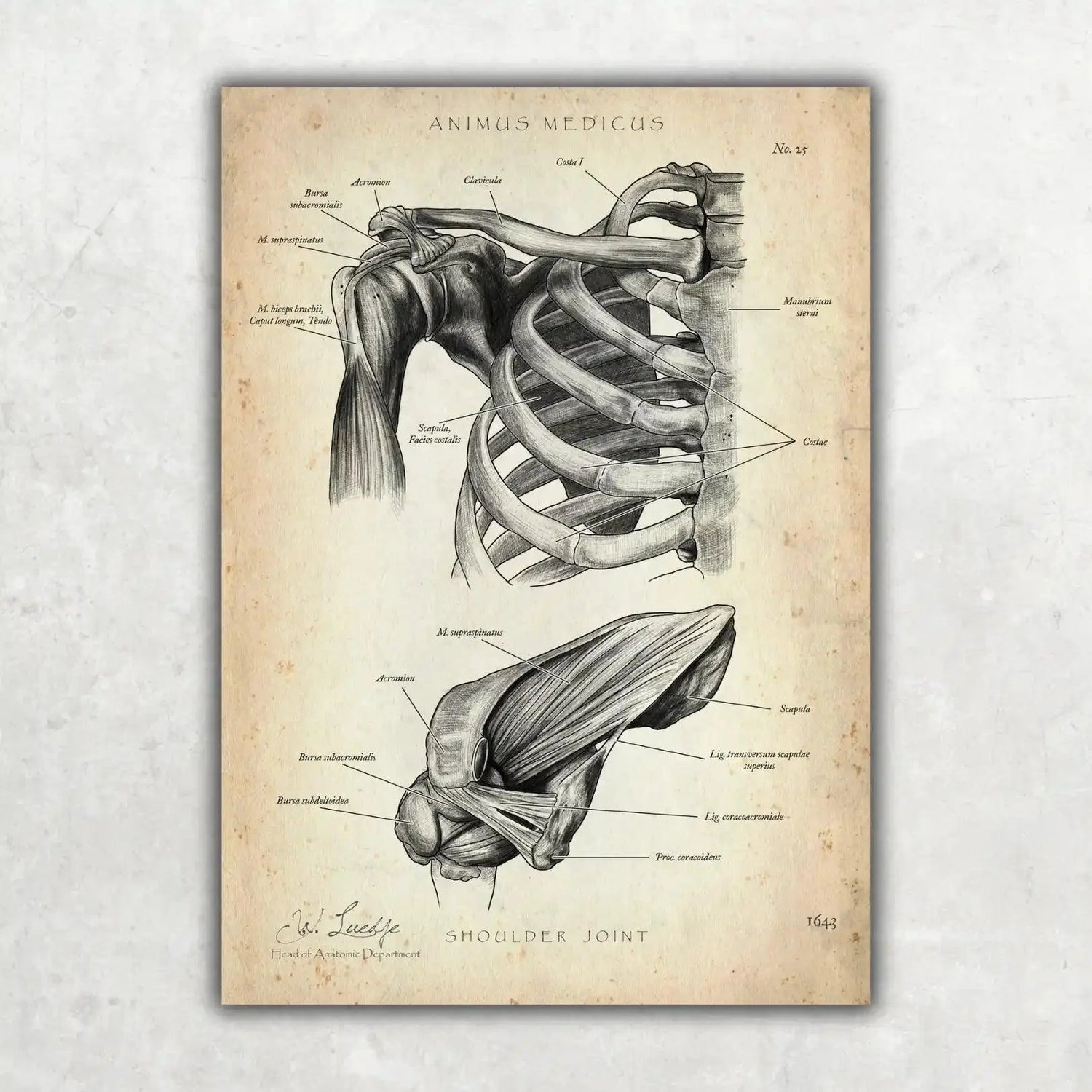
How is the Shoulder Joint Structured?
A total of 5 joints are involved in shoulder movements, along with numerous muscles and ligaments. The shoulder is much more mobile compared to the hip, but it is also less stable.
The largest and most important joint here is the shoulder joint. In the shoulder joint, the head of the humerus articulates with the glenoid cavity of the scapula.
However, the shoulder is also very susceptible to injuries and pain, which is why detailed knowledge of its anatomy can be extremely helpful in preventing, understanding, and treating injuries.
Can you already explain the shoulder perfectly? This poster will definitely help you and looks amazing at the same time...
What You Get:
- Detailed overview of the shoulder joints
- Printed on premium quality paper
- UV-protective laminate for long-lasting colors
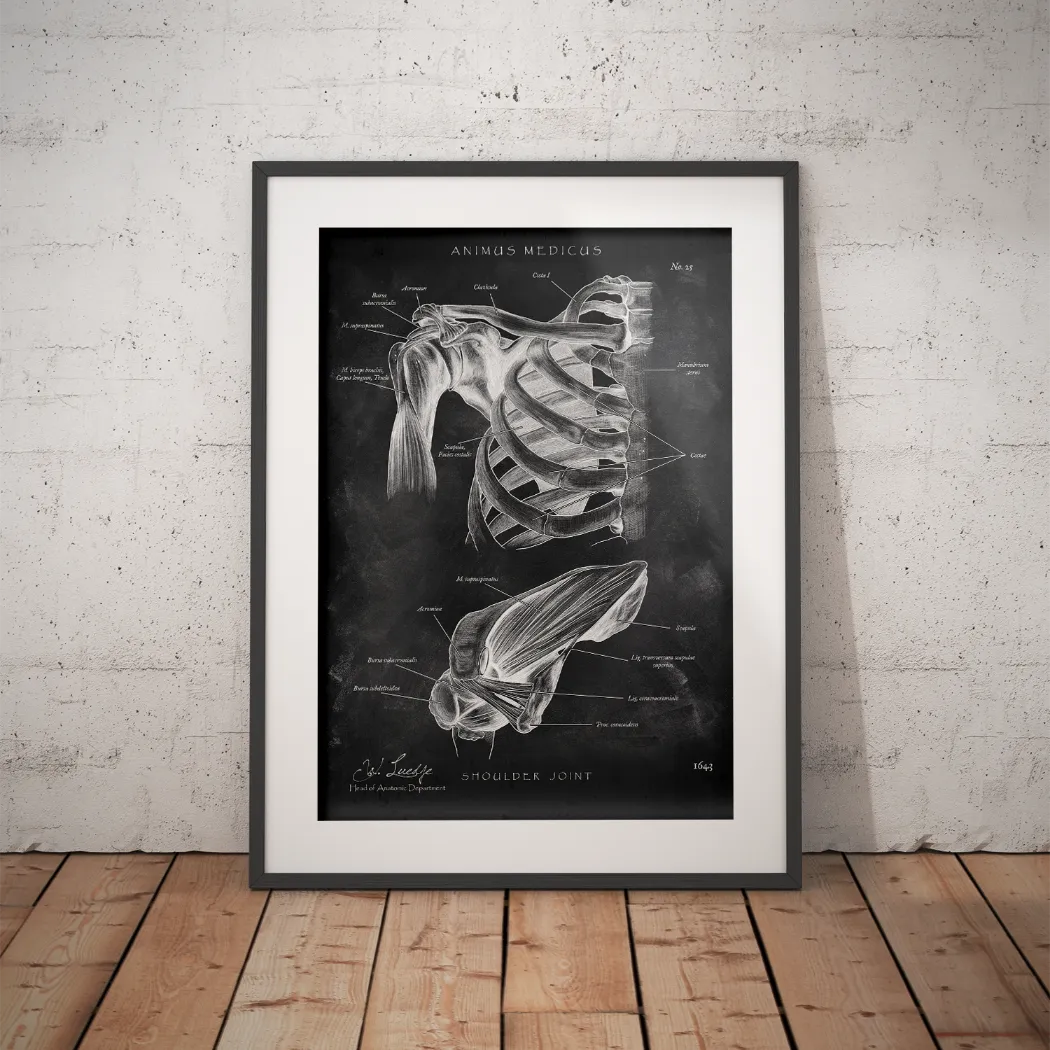
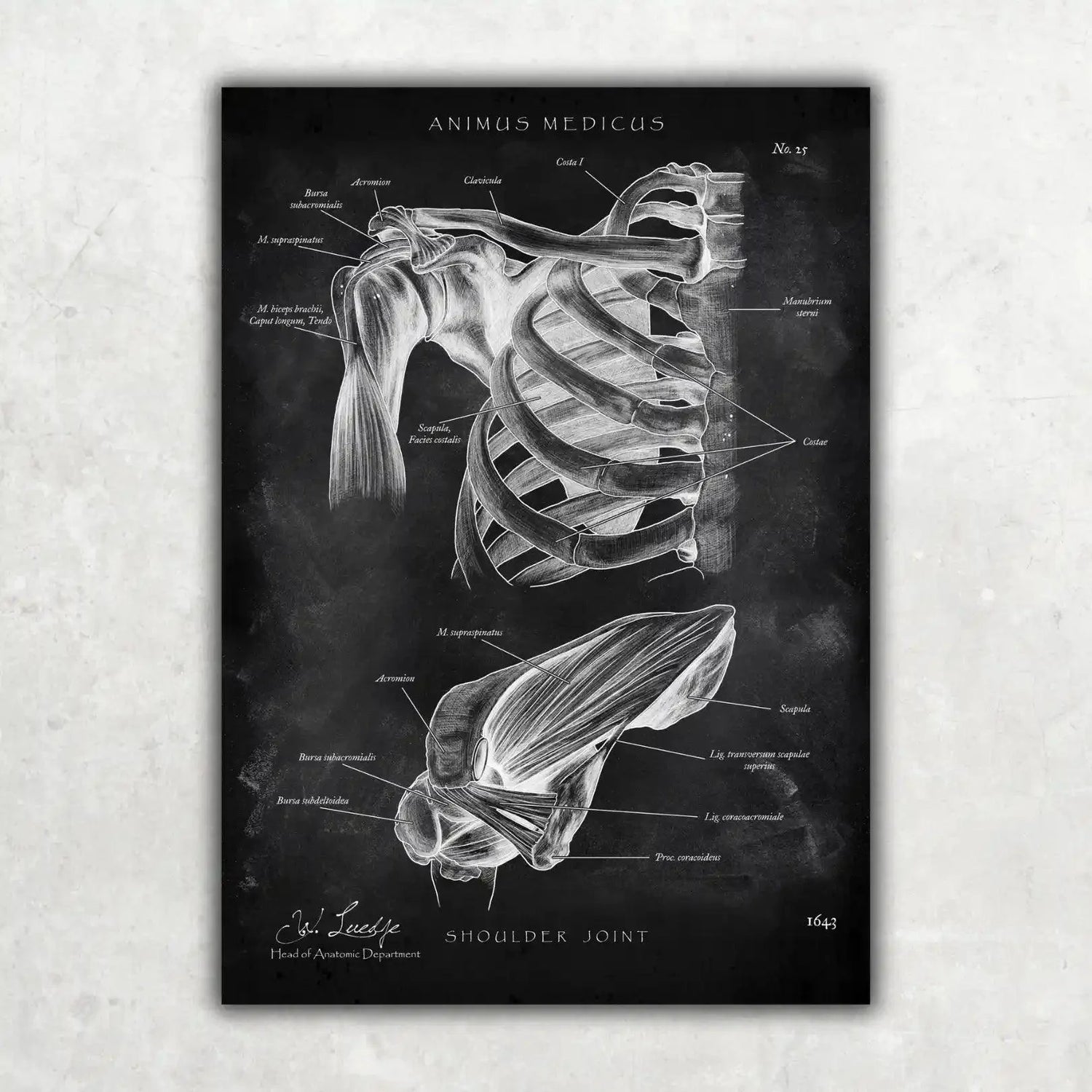
How is the shoulder joint structured?
A total of five joints are involved in shoulder movements. In addition, there are numerous muscles and ligaments. In contrast to the hip, the shoulder is significantly more mobile, but also more unstable.
The largest and most important joint here is the shoulder joint. In the shoulder joint, the head of the humerus articulates with the joint surface of the scapula.
However, the shoulder is also very susceptible to injury and pain, which is why a thorough knowledge of its anatomy can be extremely helpful in preventing, understanding, and treating injuries.
Can you already explain the shoulder perfectly? This motif will definitely help you do so, and it looks great too...
What you get:
- Detailed overview of the shoulder joints in the Chalkboard Edition
- Printed on high-quality premium paper
- UV protective laminate for long-lasting colors
Showing 40/58

- Satisfaction guarantee
- Fast delivery
- Buyer protection
- Satisfaction guarantee
- Fast delivery
- Buyer protection